
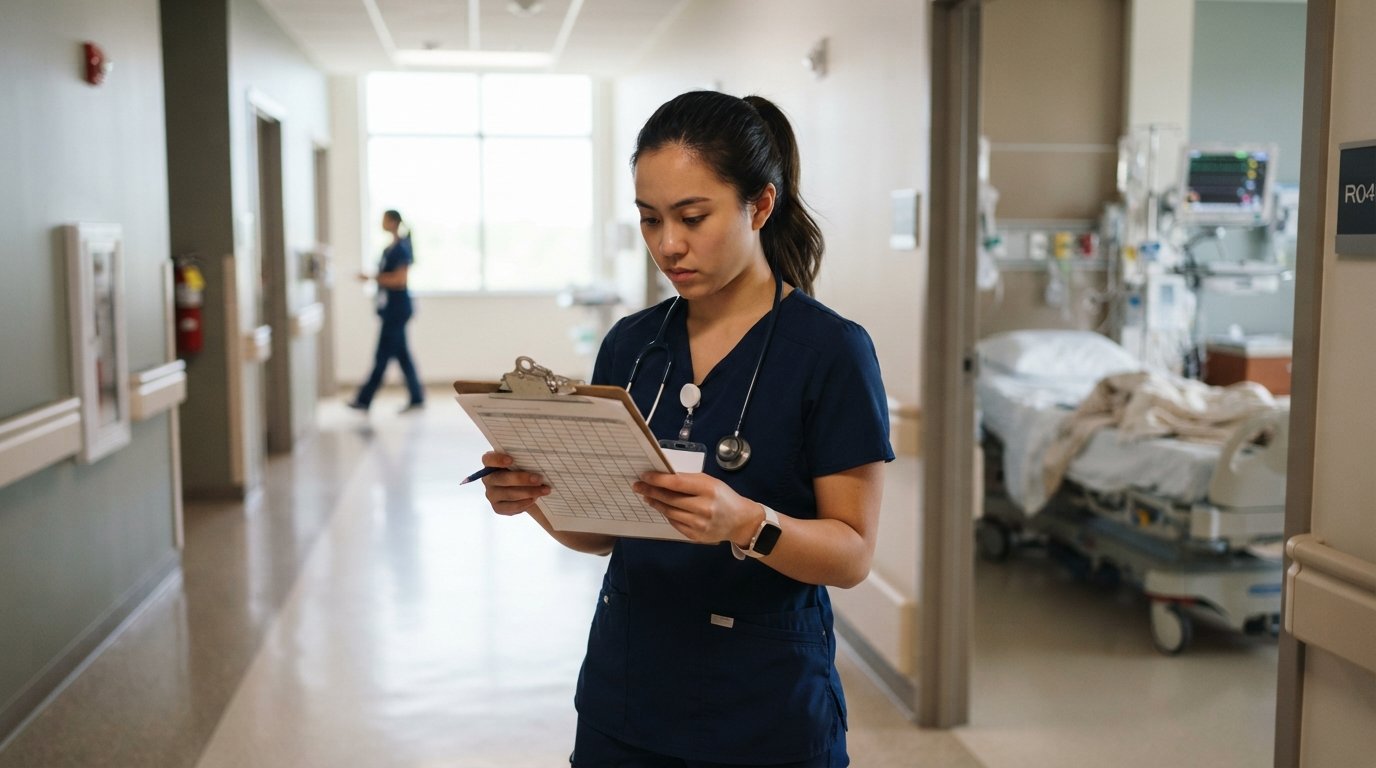
Online Nursing Program Clinical Placement Requirements
Online nursing program clinical placement requirements decide whether your degree stays on track. Call 8772187081 for guidance on placements and funding.

By Ella Thompson
You have probably seen the promise: earn your BSN or MSN from an accredited online nursing program without quitting your job or uprooting your family. Then you reach the fine print and one phrase stops you cold: clinical placement requirements. Suddenly the flexible online degree feels complicated. Where will you complete your hands-on hours? Who finds the preceptor? What happens if your state has strict rules about where students can practice? These are the right questions, and the answers decide whether an online nursing program is truly workable for you. This guide breaks down exactly what clinical placement requirements involve, how schools handle them, what you are responsible for, and how to plan ahead so a placement shortage never derails your graduation date.
What Clinical Placement Requirements Actually Mean
Every nursing program, online or on campus, must include supervised clinical hours because state boards of nursing require them for licensure. Clinical placement requirements are the rules and logistics that govern those hours: how many you need, what settings count, who supervises you, and how your school verifies everything. In an online program, the classroom portion happens virtually, but the clinical portion still happens in person at hospitals, clinics, community health centers, long-term care facilities, and other approved sites.
The typical BSN requires somewhere between 500 and 800 supervised clinical hours, while some accelerated and graduate programs require more. Requirements vary widely by state and by program type, which is why two students in the same online cohort may face very different placement processes depending on their zip code. The core components usually include a minimum hour count, approved clinical settings, a qualified preceptor or faculty supervisor, documentation and compliance paperwork, and sometimes on-campus intensives or simulation labs that supplement direct patient care.
Understanding these components early matters because clinical placement is the single most common reason online nursing students delay graduation. If you know what is required before you enroll, you can choose a program that matches your location and schedule instead of fighting the process later.
How Online Programs Deliver Clinical Experiences
Online nursing programs generally fall into two categories when it comes to clinical placement: programs that find placements for you and programs that require you to find your own. Some schools, particularly larger ones with established hospital partners, maintain placement teams that negotiate directly with clinical sites on your behalf. Others place the responsibility on the student, providing only a list of requirements and a compliance office to approve whatever you secure.Some programs blend the two approaches. They may guarantee placement within a certain radius of your home address, or they may guarantee placement only in specific states where they hold clinical contracts. A growing number of programs also use virtual clinical experiences and high-fidelity simulation to satisfy part of the hour requirement, though hands-on patient care hours are still mandatory for licensure in every state.
Before you commit to any program, ask these questions directly:
- Does the school arrange clinical placements, or am I responsible for finding my own preceptor and site?
- Which states and metropolitan areas does the program have active clinical contracts in?
- How many hours are required, and how many can be completed through simulation?
- What happens if I cannot secure a placement within my required timeframe?
The answers will tell you more about the real experience of the program than any marketing page. A school that guarantees placement in your area removes enormous stress. A school that does not may still work well if you already have professional contacts at a hospital or clinic willing to precept you.
State Regulations and Why They Matter
Nursing is regulated at the state level, and clinical placement rules follow state lines. Some state boards of nursing require that a certain percentage of clinical hours be completed within the state. Others restrict which facilities can serve as clinical sites or impose specific preceptor qualification standards, such as a minimum number of years of experience or a particular certification.
This is why an online program that works beautifully for a student in Texas may be impossible for a student in California or New York. Some states, including California and New York, have historically been difficult for out-of-state online students because of strict approval processes for distance education nursing programs. Before enrolling, verify two things: that the program is approved in your state, and that the program has a workable clinical placement pathway in your area.
If you are exploring programs in a specific region, resources like this guide to accredited online nursing programs in Texas can show how state-specific approvals and placement networks vary from one market to another. The same logic applies in every state: accreditation and state board approval come first, and placement logistics come second.
Steps to Secure Your Clinical Placement
Whether your school finds your placement or you find your own, the process follows a predictable sequence. Knowing the steps in advance helps you move quickly and avoid missing deadlines that push your graduation back by a full semester.
- Confirm eligibility and compliance paperwork. Most sites require a background check, drug screen, immunizations, CPR certification, health insurance, and malpractice coverage before you can step onto a unit. Complete these early because they take weeks.
- Identify potential sites and preceptors. Start with your current employer if you work in healthcare, then expand to hospitals, clinics, urgent care centers, school nursing, public health departments, and long-term care facilities.
- Submit your request for school approval. Your clinical coordinator or compliance office must verify that the site and preceptor meet program and state board standards before you begin.
- Complete the affiliation agreement. The school and the facility sign a legal contract, and this step often causes the longest delays. Begin it at least one semester before your clinical course starts.
- Log and verify your hours. Track every shift in the format your school requires, obtain preceptor signatures, and submit documentation on time so your hours count toward graduation.
Students who treat clinical placement as a semester-long project rather than a last-minute task almost always finish on schedule. Students who wait until the course begins often lose a term waiting on contracts and approvals.
Common Obstacles and How to Overcome Them
The most frequent obstacle is simple scarcity. Clinical sites limit the number of students they accept because precepting takes staff time away from patient care, and many hospitals already have contracts with local brick-and-mortar schools. Online students competing for the same slots can face long waits, especially in dense metropolitan areas.
The second obstacle is the preceptor shortage. Experienced nurses are busy, and precepting a student often comes with little or no extra pay. This is why personal relationships matter so much. If you already work as an LPN, RN, or allied health professional, your current employer and coworkers are your best placement pipeline. If you do not work in healthcare, start building relationships early through volunteering, informational interviews, and networking in professional nursing organizations.
The third obstacle is geography. Rural students may find that the nearest approved site is an hour away, while urban students may find every nearby hospital already at capacity. Some programs solve this with dedicated placement coordinators who maintain relationships across a wide region. Others offer travel or hybrid options. If placement flexibility is your top priority, compare programs on this specific dimension before you compare tuition.
Questions to Ask Before You Enroll
Choosing an online nursing program is a financial and career decision, and clinical placement sits at the center of whether the program actually works for you. Ask these questions during the admissions process and get the answers in writing when possible.
- What percentage of students in my state successfully secure placements on time?
- Does the program have a dedicated clinical placement team, or is placement self-directed?
- Are there waitlists for clinical courses, and how long are they typically?
- What support exists if my first placement falls through?
- Are there additional fees for placement services, compliance tracking, or site contracts?
Cost is part of this conversation. Clinical courses sometimes carry extra fees for compliance tracking software, background checks, and travel, and those costs are rarely included in the advertised tuition. If you are comparing funding options, general resources on college degrees and higher education pathways can help you think through the total cost of a program, not just the sticker price per credit.
Funding Your Clinical Semester
Clinical semesters are often the hardest financially because they frequently require reduced work hours or unpaid time away from your job. That makes financial aid planning essential. Federal student aid, state grants, employer tuition assistance, and nursing scholarships can all help cover the semester when your income dips.
Nursing-specific scholarships are especially valuable because many are designed for students in accelerated or online programs who face exactly this clinical semester crunch. Look for scholarships from professional nursing organizations, hospital systems, state nursing associations, and private foundations. Deadlines are often early, so apply a full year before your clinical courses begin.
Also ask your school whether financial aid disbursements align with clinical course start dates. A disbursement that arrives two weeks after your clinical semester begins does not help you pay for travel, scrubs, or reduced work hours in week one. Planning your cash flow around the clinical calendar prevents a lot of stress.
Making the Requirements Work for You
Clinical placement requirements are not obstacles designed to trip you up. They exist because hands-on patient care is the heart of nursing education, and no online module can replace the experience of assessing a real patient, communicating with a care team, and making decisions under supervision. The students who succeed in online programs are the ones who treat placement as a core part of the curriculum rather than an administrative afterthought.
Start your research before you enroll, confirm your state's rules, ask hard questions about placement support, and begin your compliance paperwork months in advance. Do those things, and the clinical portion of your online nursing program becomes a manageable milestone instead of a surprise roadblock. The flexibility of online learning is real, and so is the reward: a nursing degree that fits your life and a career that starts the moment your final clinical hours are verified.