
Surgical Technology Associate's Degree at El Paso CC
The Surgical Technology/Technologist Associate's degree, usually 2 years In-person at El Paso Community College, prepares you for the OR. Here is how to plan, pay, and apply.

By Priya Foster
A surgical technologist stands beside the operating table, anticipating the surgeon's next move before it is spoken. That readiness comes from focused training, and for many residents of far west Texas, the path begins with a Surgical Technology/Technologist Associate's degree, usually 2 years In-person at El Paso Community College. The program blends anatomy and aseptic technique with hundreds of hours in real operating rooms, preparing graduates for one of health care's most hands-on support roles. This guide breaks down what the degree covers, how to get admitted, what it costs, and how financial aid and scholarships can reduce the burden.
What the Surgical Technology Associate's Degree Covers
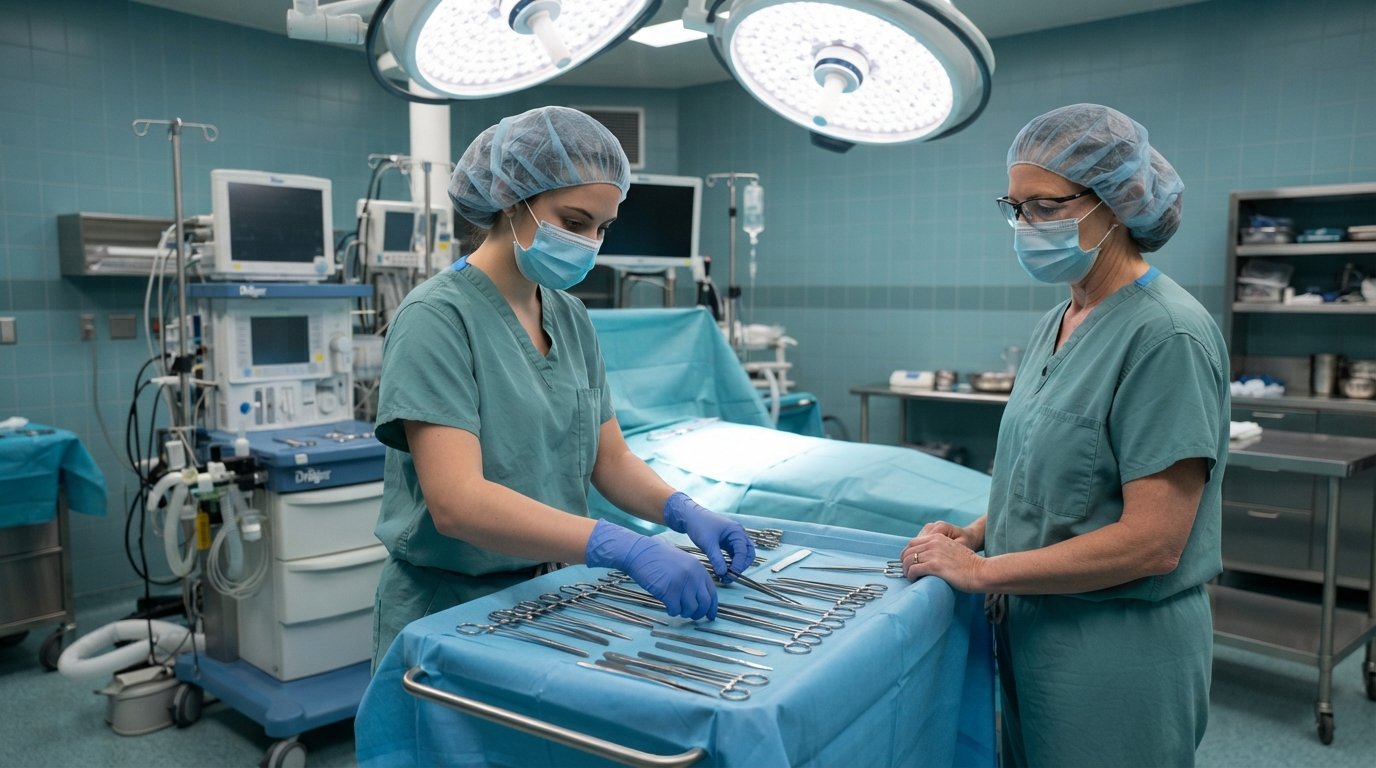
The Associate of Applied Science in Surgical Technology at El Paso Community College is built around a simple premise: a scrub tech must understand both the science of surgery and the rhythm of the operating room. Coursework moves from microbiology and medical terminology into surgical procedures, pharmacology, and sterile technique. Students learn how to set up a sterile field, pass instruments, retract tissue, and manage supplies during operations across specialties such as general surgery, orthopedics, obstetrics, and cardiovascular procedures.
What separates this degree from a short certificate is the depth of clinical practice. The program is delivered in person because the core skill, working under pressure inside an operating room, cannot be learned from a screen. Labs simulate surgical environments, and clinical rotations place students in hospitals and surgery centers where they assist under supervision. By graduation, students have logged the case counts and hours required to sit for the national Certified Surgical Technologist exam.
Because the schedule is cohort-based and clinical sites have limited slots, seats fill quickly. Prospective students should plan applications months ahead and treat prerequisites as the first real test of readiness. Anatomy and physiology, especially, rewards students who review early and often.
Admission Steps and Prerequisites
El Paso Community College uses a competitive, selective admission process for allied health programs, and surgical technology is no exception. Meeting the minimum is not a guarantee of a seat; the strongest applicants usually exceed baseline requirements and demonstrate that they understand the demands of the field.
- Apply to the college and complete any required placement testing or developmental coursework.
- Finish prerequisite courses such as anatomy and physiology, medical terminology, and English composition with strong grades.
- Submit the program application by the published deadline, including transcripts and any health or immunization documentation.
- Attend an information session or advising appointment to confirm you understand clinical schedules, background check requirements, and physical demands.
- Prepare for a possible interview or ranking process, since selective programs often weigh grades, prior health care experience, and essays.
Applicants should also budget for costs beyond tuition, including uniforms, background checks, drug screens, immunizations, and certification exam fees. These items are easy to overlook and can add several hundred dollars to the first semester. A conversation with a program advisor early in the process helps families plan for the full cost rather than just the sticker price of credit hours.
Cost, Financial Aid, and Scholarship Strategy
As a public community college, El Paso Community College offers one of the more affordable routes into health care. Tuition for in-district students is substantially lower than at four-year universities, and the two-year timeline means graduates enter the workforce sooner. Still, tuition is only part of the equation. Books, supplies, clinical travel, and living expenses all matter, and many students balance school with part-time work.
Federal student aid is the first stop for most applicants. Completing the FAFSA opens access to Pell Grants, federal work-study, and subsidized loans, and community college students often qualify for need-based grants that do not require repayment. Texas residents should also explore state grant programs and institutional scholarships through the college's financial aid office. Our guide to community college grants and financial aid options walks through the major sources in more detail, including how to compare award letters and avoid unnecessary borrowing.
Scholarships deserve special attention because they do not need to be repaid. Health care employers, professional associations, and local hospitals frequently fund awards for surgical technology students, and many of these competitions receive far fewer applications than general scholarships. Students should also check whether their employer, if they already work in a hospital, offers tuition assistance for allied health training.
- File the FAFSA early, since some aid is awarded on a first-come basis.
- Search professional associations and hospital foundations for surgical technology awards.
- Ask the college financial aid office about emergency funds and payment plans.
- Track deadlines in a single calendar so no application slips past.
- Apply to several small scholarships rather than only one large one.
For students comparing programs or looking for additional degree pathways, CollegeDegree.Education connects prospective students with accredited colleges, universities, and degree programs, making it easier to weigh options beyond a single campus. Scholarship.Education receives compensation from listed schools through advertising, links, and search placement, which may influence how programs appear and rank; readers should treat listings as a starting point and verify details directly with each institution.
What to Expect During the Two Years
The first year leans heavily on classroom and lab instruction. Students study sterilization methods, surgical instruments, patient positioning, and the legal and ethical responsibilities of the role. Expect memorization-heavy weeks early on, followed by practical exams where technique matters as much as knowledge. Study groups form quickly because the material rewards repetition and peer quizzing.
The second year shifts toward clinical rotations. Students report to hospitals and surgery centers at early hours, often before sunrise, and work alongside surgical teams. This is where classroom concepts become muscle memory. Clinical schedules can be demanding, and students should arrange transportation and childcare well in advance, particularly given El Paso's sprawling geography and the possibility of assignments across multiple facilities.
Professionalism is graded as seriously as technical skill. Punctuality, communication, and composure under pressure are all part of the evaluation. Many students find that clinical rotations double as extended job interviews, since hospitals frequently hire graduates they have already seen work.
Certification and Career Outlook
Graduating from an accredited program qualifies students to sit for the Certified Surgical Technologist exam administered by a national certifying body. Certification is not always legally required, but many employers prefer or require it, and it strengthens negotiating power at hiring. Maintaining certification involves continuing education, which keeps technologists current as surgical techniques evolve.
Demand for surgical technologists is steady because surgery itself is not optional. An aging population means more procedures, and hospitals continually need trained staff who can support operating room teams. New graduates typically start in hospital operating rooms, ambulatory surgery centers, or specialty practices, and some later pursue roles in sterile processing, sales, or education. The two-year degree is a practical entry point that avoids the debt load of a longer program while still offering room to grow.
For El Paso residents, the local health care market includes major hospital systems and a growing number of outpatient surgery centers. That local demand, combined with the college's clinical partnerships, gives graduates a realistic path to employment without leaving the region.
Is This Program the Right Fit?
The Surgical Technology/Technologist Associate's degree, usually 2 years In-person at El Paso Community College, suits students who want a direct route into health care, prefer hands-on learning, and can commit to a demanding clinical schedule. It is less suited to students who need fully online flexibility or who are unsure about working in high-pressure environments. Visiting an operating room through a job shadow or volunteer opportunity before applying can confirm whether the setting feels right.
Prospective students should also consider timing. Because admission is competitive and clinical placement is limited, starting the prerequisite sequence a semester or two early improves the odds of landing a seat when applications open. Advising appointments are free and can clarify which credits transfer and how to sequence courses to avoid delays.
Financial planning deserves equal attention. A realistic budget, a filed FAFSA, and a short list of scholarship applications can dramatically reduce out-of-pocket costs. Students who treat financial aid as part of the application process, not an afterthought, often graduate with less debt and more career flexibility. With careful preparation, the program can be a launchpad into a stable, respected role on the surgical team.