
Enterprise State Industrial Mechanics Certificate Guide
The Industrial Mechanics and Maintenance Technology/Technician Certificate at Enterprise State builds job-ready skills in under a year, with hands-on lab training.

By Nathan Ellis
Manufacturing floors across Alabama hum with conveyor systems, hydraulic presses, and robotic arms that only perform when someone knows how to keep them running. The Industrial Mechanics and Maintenance Technology/Technician Certificate, 12 weeks to less than 1 year In-person at Enterprise State Community College, is built for people who want to be that someone. This short, hands-on credential prepares students for entry-level maintenance and repair roles in factories, processing plants, and distribution centers, and it does so without asking them to commit to a two-year degree or a four-year university track.
If you are weighing a fast path into a skilled trade, the details matter: what the program covers, how long it takes, what it costs, and how financial aid fits in. This guide walks through each of those questions so you can decide whether this certificate belongs in your plan for 2026 and beyond.
What the Industrial Mechanics Certificate Covers
Industrial mechanics, sometimes called millwrights or maintenance technicians, install, troubleshoot, and repair the machinery that keeps production moving. The work blends mechanical reasoning with electrical knowledge and a healthy respect for safety procedures. A certificate program condenses the core of that skill set into a focused sequence of courses rather than a broad academic survey.
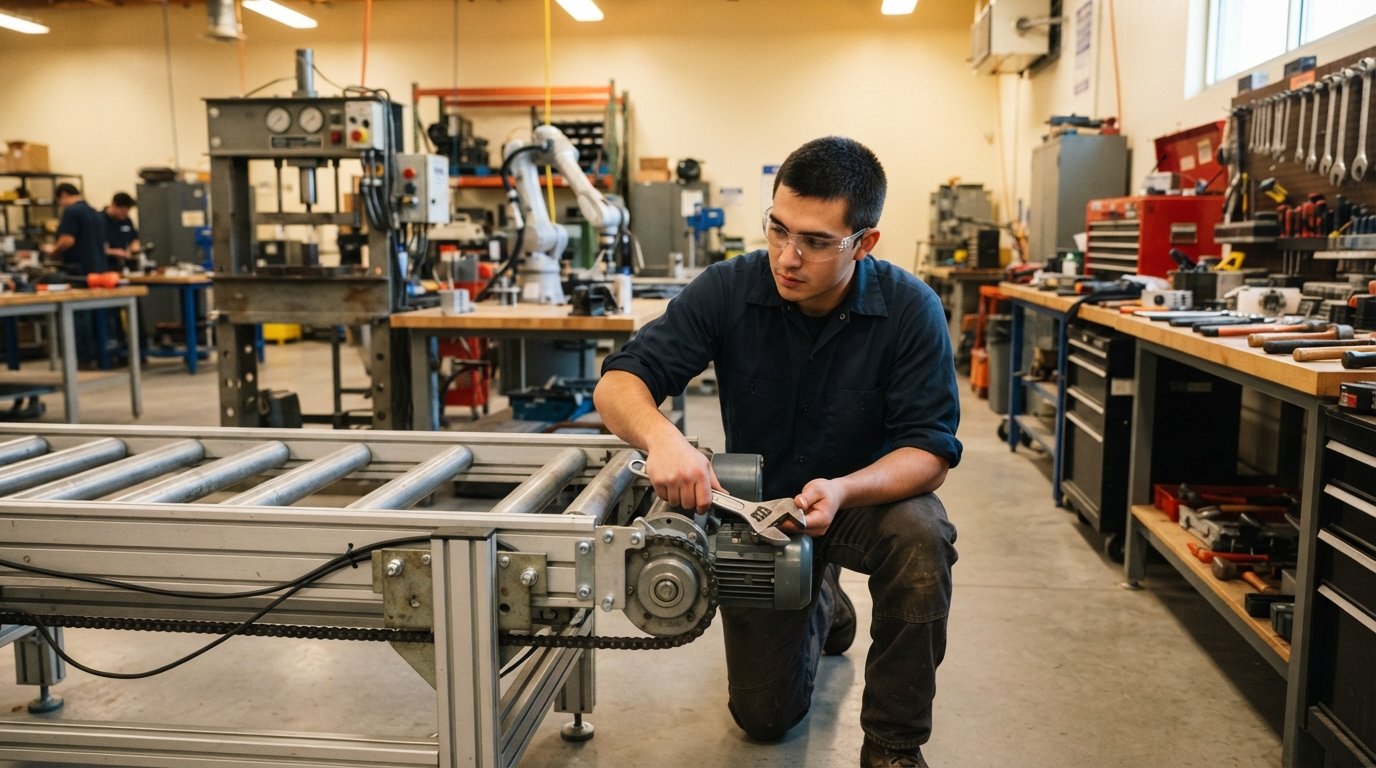
At Enterprise State Community College, the Industrial Mechanics and Maintenance Technology/Technician Certificate is delivered in person, which matters in a field where you learn by touching equipment, not just reading about it. Students typically work with trainers and lab equipment that mirror what they will encounter on a plant floor. Coursework generally touches on several foundational areas:
- Mechanical systems: bearings, couplings, belts, chains, and alignment procedures
- Hydraulics and pneumatics: reading schematics, tracing faults, and rebuilding components
- Electrical fundamentals: motors, controls, and basic troubleshooting with meters
- Preventive maintenance: lubrication schedules, inspections, and record keeping
- Workplace safety: lockout/tagout, personal protective equipment, and OSHA-aligned practices
These topics are not abstract. A student who can diagnose a failing pump seal or trace a wiring fault through a control panel becomes immediately useful to an employer. That practicality is the point of a certificate: it signals to hiring managers that you have already practiced the tasks the job requires.
Because the program runs 12 weeks to less than 1 year, it fits between a single semester and two full semesters of study. That compressed timeline means students move through material quickly, so readiness to attend class consistently and study between sessions matters. In-person delivery also builds habits that online formats struggle to replicate, such as working alongside classmates on a shared machine and learning to communicate about repairs in real time.
How Long It Takes and What the Schedule Looks Like
The phrase 12 weeks to less than 1 year is deliberate. Some students complete the certificate in a single intensive term, while others spread courses across two terms depending on course availability, prior credit, and personal scheduling. Either way, the credential is designed to be finished well within a year, which is a meaningful advantage for adults who need to start earning sooner rather than later.
In-person programs at community colleges usually schedule classes in blocks, with lecture paired directly with lab time. A typical week might include several hours of hands-on practice in a shop or lab environment plus classroom instruction on theory and safety. Students who work full time should ask the college about evening or split schedules before enrolling, since lab access is tied to scheduled sections.
Here is a practical way to think about the timeline:
- Confirm the current course sequence and start dates with an advisor.
- Check whether any prior coursework or industry experience can substitute for a required class.
- Plan your weekly availability around lab sessions, which cannot be made up easily.
- Apply for financial aid and scholarships before the term begins so funding is in place.
Finishing in under a year does more than save time. It reduces the total tuition bill and gets you into the workforce while demand for maintenance technicians remains strong. Employers in manufacturing, food processing, and logistics routinely report difficulty filling these roles, which gives certificate holders a realistic shot at interviews soon after completion.
Admissions, Costs, and Financial Aid Options
Community college certificate programs generally have straightforward admissions requirements: a high school diploma or equivalent, completion of a college application, and sometimes placement testing in math and reading. Because the program is technical, advisors may also discuss basic math readiness, since measurements, tolerances, and electrical calculations come up in coursework.
Cost is where many prospective students pause, but certificate programs are typically far less expensive than degree programs, and aid is often available. Federal student aid can apply to eligible certificate programs, though eligibility rules depend on the program's length and the school's participation. Our guide to the Pell Grant for certificate programs explains how eligibility is determined and what documentation students need. In addition to federal aid, students should check state workforce grants, employer tuition assistance, and local scholarship funds, all of which can reduce out-of-pocket costs.
It also helps to compare the certificate against other funding paths. A student who later decides to pursue an associate degree may be able to apply certificate credits toward that credential, so asking about articulation before enrolling can protect both time and money. For students exploring broader options, platforms such as CollegeDegree.Education connect prospective students with accredited colleges and programs, which can be useful when comparing this certificate to adjacent training paths in the same region.
One more financial consideration: tools and supplies. Some programs require students to purchase basic safety gear or a small tool kit. Ask the department for a supply list early so these costs do not appear as a surprise mid-term.
Career Outcomes and Who This Certificate Suits
Graduates of industrial mechanics and maintenance programs typically pursue roles such as maintenance technician, machine repairer, millwright helper, or facilities maintenance worker. Pay varies by region and industry, but maintenance roles generally offer stable hours, overtime opportunities, and clear pathways to specialization. Many technicians eventually move into controls, reliability, or supervisory positions after gaining experience.
This certificate tends to fit several kinds of students especially well:
- Recent high school graduates who want a skilled trade without a long degree commitment
- Career changers from retail, construction, or warehouse work who want technical skills
- Veterans and military spouses seeking short, employer-valued training
- Working adults who need a credential they can finish in under a year
It is equally important to be honest about who it does not suit. Students who prefer purely desk-based work or who cannot commit to regular in-person lab attendance may find the format demanding. The program rewards people who like solving physical problems and are comfortable getting their hands dirty.
Employers in the region often build relationships with community college programs, which can translate into internships, apprenticeships, or direct hiring pipelines. Students should ask the college's career services office which local employers recruit from the program, and they should treat lab instructors as references, because instructors in technical programs frequently hear about openings before jobs are posted publicly.
How to Decide If This Program Fits Your Plan
The strongest reason to choose the Industrial Mechanics and Maintenance Technology/Technician Certificate, 12 weeks to less than 1 year In-person at Enterprise State Community College, is alignment between your goals and what the credential delivers: fast, practical, employer-facing training in a field with steady demand. Before applying, visit campus if possible, meet an instructor, and look at the lab equipment. Ask about completion rates, job placement support, and whether graduates typically continue into an associate degree.
If the answers line up with your budget and schedule, this certificate can be one of the more efficient investments available in career training today. It will not guarantee a job, and no program can, but it can position you to compete for roles that reward reliability, mechanical reasoning, and a willingness to learn. For students who want to keep exploring options first, scholarship databases and program comparison tools make it easier to weigh this certificate against other short-term credentials before committing.
Take the next step by contacting the college's admissions office, confirming start dates, and filing financial aid paperwork early. A twelve-week to under-one-year timeline moves quickly once the term begins, and the students who prepare before day one are the ones who get the most out of every lab session.