
Health Aide Certificate in Under 12 Weeks at Central Lincoln
The Health Aide Certificate, less than 12 weeks In-person at Central Lincoln County Adult Education, can put you on a fast path to paid patient-care work.

What if you could start a career in healthcare before the next season changes? That timeline is not a fantasy: it is the promise of the Health Aide Certificate, less than 12 weeks In-person at Central Lincoln County Adult Education. For adults balancing jobs, families, and tight budgets, this short, hands-on program offers a realistic on-ramp into one of the most durable job markets in the country. Instead of spending years in a classroom before earning a paycheck, you can build core patient-care skills in a matter of weeks and step into entry-level roles that hospitals, nursing homes, assisted living facilities, and home care agencies need to fill every single day.
The appeal is not only speed. It is the combination of in-person instruction, local accessibility, and a curriculum focused on the exact competencies employers screen for: safety, communication, mobility assistance, infection control, and basic clinical support. In this guide, we break down what the program covers, who it is designed for, how to pay for it, and how to turn a short certificate into a longer career ladder. Whether you are re-entering the workforce, changing industries, or planning a stepping stone toward nursing, this pathway deserves a close look.
Why a Short Health Aide Certificate Makes Sense Right Now
Healthcare employers are not waiting for four-year degrees to fill direct-care positions. The demand for nursing assistants, patient care technicians, home health aides, and personal care aides continues to outpace supply in many regions, and the fastest route into those roles is a focused certificate program. The Health Aide Certificate, less than 12 weeks In-person at Central Lincoln County Adult Education, is built around that reality. It compresses the essential training into a schedule that respects adult responsibilities while still delivering the supervised practice that employers and state regulators expect.
There is also a financial argument. Short programs generally cost far less than semester-long academic tracks, and they get you earning sooner. That matters if you are paying out of pocket, using workforce grants, or trying to avoid student debt. You can explore broader cost-planning strategies through resources like CollegeAndTuition, which helps students and families understand tuition, aid, and college affordability. The key is to treat the certificate as an investment with a fast payback period, not as a detour from your long-term goals.
Finally, in-person training carries a credibility advantage. Clinical skills are physical: you learn body mechanics, transfer techniques, and resident communication by doing them under supervision, not by watching videos. That hands-on component is exactly what hiring managers want to see when they review applicants for direct-care roles.
What You Will Learn in the Program
The curriculum in a health aide certificate is practical by design. Expect a blend of classroom instruction, lab practice, and supervised clinical experience, all delivered in person. Core topics typically include patient safety and fall prevention, infection control and hand hygiene, vital signs, positioning and transfers, nutrition and hydration support, and documentation. You will also spend significant time on communication and resident rights, because direct-care work depends as much on empathy and observation as it does on technical skill.
Here is a realistic snapshot of the skills and competencies most programs emphasize:
- Safe patient handling, including transfers, ambulation, and mobility support
- Infection prevention, personal protective equipment, and standard precautions
- Vital sign measurement and basic clinical observation
- Communication with residents, families, and the care team
- Documentation and reporting of changes in condition
Beyond the checklist of skills, strong programs build professional habits: punctuality, teamwork, confidentiality, and the ability to stay calm under pressure. Those soft skills are often what separate a good hire from a great one. Because the program runs in person, instructors can correct technique in real time and coach you through the interpersonal moments that make caregiving work sustainable.
Clinical Practice and Supervision
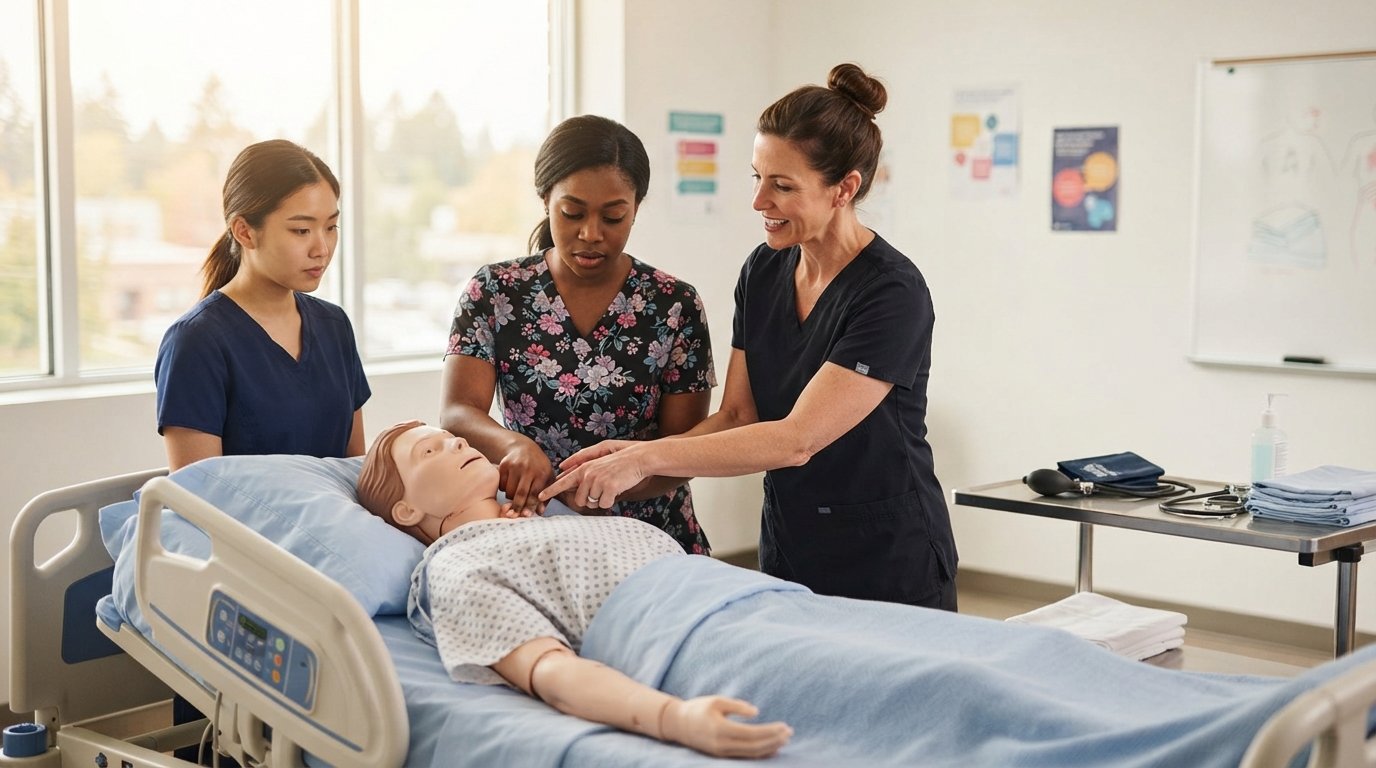
Supervised practice is where the certificate becomes real. You will likely practice on mannequins and peers in a lab setting before moving to a clinical or practicum placement. The goal is not perfection on day one; it is competence and confidence. Ask during enrollment how clinical hours are structured, what site partners are involved, and what documentation you will receive at completion. Those details matter when you apply for state certification or a entry-level job.
Who Should Enroll at Central Lincoln County Adult Education
Adult education programs are designed for people whose lives do not fit a traditional campus schedule. The Health Aide Certificate, less than 12 weeks In-person at Central Lincoln County Adult Education, suits career changers, recent high school graduates, parents returning to work, and incumbent workers who want to move up. If you are considering nursing school eventually, this certificate is a low-risk way to test your interest in healthcare while earning income and building a resume.
It is also a strong fit for people who learn best by doing. If you prefer structured, hands-on instruction with immediate feedback over self-paced online modules, an in-person cohort will keep you accountable. The compressed timeline means you need to be ready to commit, but the payoff is a credential you can use quickly.
Before enrolling, confirm the basic requirements, which usually include a high school diploma or equivalent, a background check, immunization records, and sometimes a brief interview or assessment. Requirements vary, so verify the current list directly with the program office.
How to Pay for a Short Certificate Program
Cost is often the first question, and the good news is that short certificate programs are frequently eligible for workforce funding that does not apply to traditional degrees. Start with the program office, which can point you to local workforce development boards, adult education grants, employer sponsorships, and scholarship opportunities. Many states also maintain retraining funds for adults entering high-demand fields like healthcare.
If you are planning a longer academic path later, understanding aid rules early is smart. Our guide on in-person public health grad programs explains how advanced study builds on earlier credentials and how to plan financing across multiple stages of education. The same principle applies here: a certificate can be the first rung, and the funding you use now should not close doors later.
Practical funding steps include:
- Ask the program whether it is eligible for workforce grants or tuition waivers.
- Check with your state's workforce agency for short-term training funds.
- Ask local healthcare employers about sponsorship or tuition reimbursement.
- Compare out-of-pocket cost against expected starting wages to estimate payback time.
Keep receipts and completion documents. Some employers reimburse tuition after hire, and some scholarships require proof of enrollment or completion. A short program is affordable for many students, but free money is always better than debt.
From Certificate to Career: Job Outlook and Advancement
Entry-level health aide roles are among the most accessible jobs in healthcare, and they are also among the most in demand. Hospitals, skilled nursing facilities, assisted living communities, home care agencies, and rehabilitation centers all hire direct-care staff. Starting pay varies by region and setting, but the bigger story is the ladder: many employers promote from within, and experienced aides often move into team lead, scheduling, or specialized technician roles.
The certificate also creates a natural path toward nursing. Many registered nurses and licensed practical nurses began as aides, and the experience gives them a foundation in patient care that makes nursing school more manageable. If that is your goal, plan the next credential while you are still in the program, and use your aide job to build relationships with nurses and managers who can mentor you.
When comparing your options, look beyond the sticker price. A program that includes clinical placement, job placement support, and state certification preparation may deliver more value than a cheaper option without those services. The goal is not just to finish a course; it is to get hired and to keep growing.
Questions to Ask Before You Enroll
A short program moves fast, so ask smart questions up front. Confirm the total cost, including uniforms, background checks, CPR certification, and exam fees. Ask about attendance policies, because a compressed schedule leaves little room for missed days. Find out what credential you will receive and whether it satisfies state requirements for the roles you want.
Also ask about outcomes: graduation rates, certification exam pass rates, and job placement support. A reputable program will share this information or point you to public data. Finally, visit the classroom if you can. Meeting the instructor and seeing the lab tells you more about the learning environment than any brochure.
If you are still weighing whether a short credential is the right first step, explore scholarship and program resources at Scholarship.Education, where you can compare training options, find funding guides, and plan your next move with better information.
Disclosure: Scholarship.Education receives compensation from listed schools through advertising, links, and search placement, which may influence how programs appear. Information here is for general reference only and is not legal, academic, or career advice. Always confirm program details, costs, and requirements directly with Central Lincoln County Adult Education.
A health aide certificate will not solve every career question, but it can answer one important one quickly: can I build a stable, meaningful career in healthcare starting now? For many adults, the answer is yes, and a program that takes less than 12 weeks to complete makes that answer practical rather than theoretical.