
Cal State East Bay History MA: In-Person Graduate Guide
The History, General Beyond bachelor's degree In-person at Cal State East Bay builds research and teaching skills through face-to-face seminars and flexible electives.

By Nathan Ellis
A bachelor's degree in history opens doors, but the graduate years are where analytical skills, research methods, and professional networks deepen into real career leverage. If you are searching for a rigorous, in-person graduate program in history that balances broad historical training with flexible specialization, the History, General Beyond bachelor's degree In-person at California State University-East Bay deserves a close look. Cal State East Bay (CSUEB) has built a Master of Arts in History that serves teachers, public historians, archivists, and future doctoral students who want face-to-face mentorship in the East Bay region of California. This guide explains what the program offers, how to prepare, what it costs, how to find funding, and how to decide whether it fits your goals.
What the History MA at Cal State East Bay Actually Offers
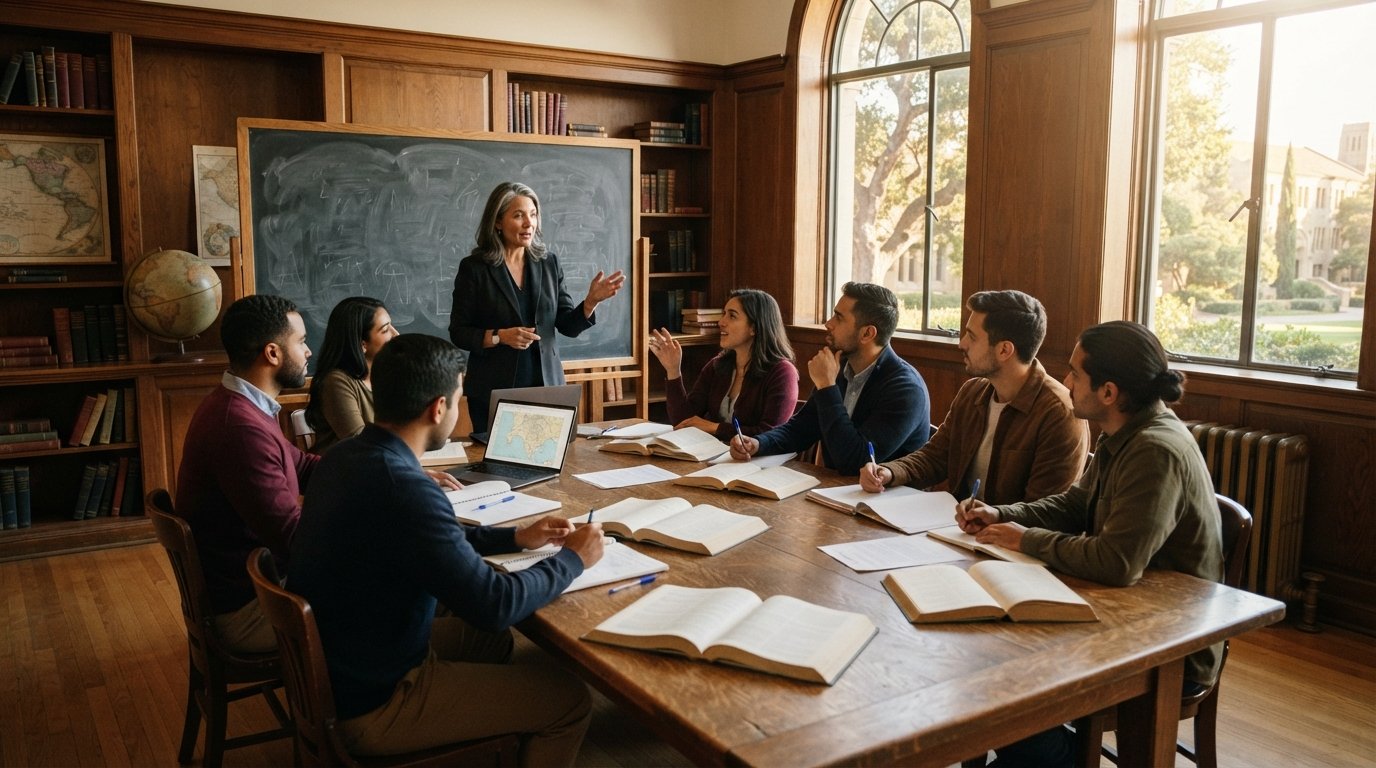
The History, General Beyond bachelor's degree In-person at California State University-East Bay is a traditional Master of Arts program delivered on the Hayward campus. Unlike fully online history degrees that emphasize asynchronous discussion boards, this program places students in seminar rooms with faculty and peers, which matters for anyone who thrives on live debate, immediate feedback, and the kind of intellectual community that forms when people read and write together in the same space. The curriculum is described as general, meaning it is not narrowly confined to one subfield such as United States history or European history. Instead, students take a core of historiography and research methods, then build a specialization through electives and a culminating thesis or project.
That general structure is a feature, not a limitation. Many graduate history programs force applicants to declare a single track from day one. A broader framework lets students explore public history, world history, gender history, ethnic studies, environmental history, or the history of science before committing to a thesis topic. For working teachers who need to deepen content knowledge across multiple subject areas, this flexibility is especially valuable. For students eyeing a doctorate, the program provides the historiographical grounding and writing sample that admissions committees expect.
The in-person format also connects students to regional archives, museums, historical societies, and school districts across Alameda and Contra Costa counties. Faculty members who teach on campus often maintain relationships with these institutions, which can translate into internships, research access, and job leads. That proximity to practice is difficult to replicate in a purely virtual program.
Admissions Requirements and How to Prepare a Strong Application
Admission to the History, General Beyond bachelor's degree In-person at California State University-East Bay follows the California State University graduate application system. Applicants generally need a bachelor's degree from an accredited institution, a satisfactory grade point average (often a 3.0 or better in the last 60 semester units), and evidence of readiness for graduate-level historical work. Because the program is in history, the strongest applicants usually hold an undergraduate major or a substantial minor in history, though related fields such as political science, English, or ethnic studies can work if the applicant demonstrates historical research experience.
The application typically requires transcripts, a statement of purpose, and letters of recommendation. Some cycles may request a writing sample, which is often the single most important document in a humanities application. A strong sample is a research paper of 10 to 20 pages that uses primary sources, engages secondary scholarship, and shows that you can sustain an argument. If your undergraduate writing feels rusty, revise an old seminar paper with faculty feedback before submitting.
Here is a practical checklist for building a competitive file:
- Request transcripts early, including any community college coursework, since CSU graduate admissions reviews all prior work.
- Draft a statement of purpose that names two or three faculty members whose research aligns with your interests and explains why an in-person seminar setting matters to you.
- Ask recommenders who have seen your historical writing, not just your attendance, and give them your statement and writing sample.
- Polish a writing sample that uses primary sources and cites scholarship properly in Chicago style.
- Confirm application deadlines with the history department, because graduate deadlines differ from undergraduate ones.
Beyond the paperwork, prepare for the reality of graduate seminars. Faculty expect students to read 150 to 300 pages per week and to lead discussion. If you have been out of school for years, spend a few months reading academic monographs and journal articles in your intended field before the term begins. That habit makes the first semester far less overwhelming.
Costs, Financial Aid, and Funding Strategies for History Graduate Students
Graduate study in the humanities is rarely free, but it is often more affordable than prospective students fear, especially at a public institution like Cal State East Bay. Tuition for California residents in CSU graduate programs is substantially lower than at private universities, and nonresident tuition, while higher, still compares favorably with many alternatives. The real budget question is not just tuition but the total cost of attendance: fees, books, parking or transit, childcare, and the income you forgo while studying.
Financial aid for this program comes from several directions. The Free Application for Federal Student Aid (FAFSA) unlocks federal loans and work-study, and graduate students may borrow through the Direct Unsubsidized Loan program and, in some cases, Grad PLUS loans. California residents should also investigate state-funded scholarships and grants, and our guide to California state-funded scholarships explains how to identify and apply for those programs. In addition, the history department and the university's financial aid office may offer partial tuition waivers, teaching associateships, or research assistantships that reduce costs while building professional experience.
Scholarships specifically for history graduate students exist through professional organizations, local historical societies, and national foundations. A disciplined search strategy helps:
- File the FAFSA as soon as the window opens each year, because some aid is first come, first served.
- Search the Scholarship.Education database for graduate-level awards in history, humanities, and public history.
- Ask the department about teaching associateships, which often include stipends and partial fee remission.
- Look for regional historical society grants that fund thesis research and travel to archives.
- Track every deadline in a spreadsheet and reuse essays across applications with tailored revisions.
It also pays to comparison shop the total cost of attendance across programs. Resources such as CollegeAndTuition help students and families compare tuition, fees, and financial aid offers so that decisions about college affordability rest on real numbers rather than assumptions. A public in-person program like CSUEB's often wins on cost per credit, but only a side-by-side comparison reveals the full picture once housing and transportation are included.
Careers and Outcomes: What a History MA Unlocks
The History, General Beyond bachelor's degree In-person at California State University-East Bay is not a credential that leads to a single job title. It is a skill-building degree, and the skills it builds (research, analysis, writing, argumentation, and the ability to synthesize complex information) are valued across education, government, nonprofits, museums, publishing, and the private sector. Graduates commonly pursue several paths.
Teaching is the most familiar route. Many students in the program are current K-12 teachers who want to deepen their subject knowledge, qualify for community college instruction, or move into administrative roles. A master's degree is often the minimum credential for teaching at a California community college, and the in-person format helps candidates build the professional relationships that lead to adjunct and full-time openings. Others move into public history: archives, museums, historic preservation, and cultural resource management. The East Bay region's rich historical institutions provide internship and volunteer pipelines that can become paid positions.
A third path is the doctorate. Students who want to become university professors use the MA to sharpen a research agenda, produce a writing sample, and secure strong letters of recommendation. Faculty mentors who know a student's work in person can speak to seminar performance and research potential in ways that a purely online instructor cannot. Finally, some graduates carry historical training into law, public policy, journalism, or business, where the ability to research and communicate clearly is a durable advantage.
In-Person vs. Online: Why the Campus Format Matters
Online degrees have expanded access to graduate education, and they are a strong fit for many learners. But the History, General Beyond bachelor's degree In-person at California State University-East Bay offers something specific: structured, scheduled, face-to-face intellectual engagement. Seminars that meet weekly create accountability. Office hours become real conversations. Cohort relationships turn into study groups, conference collaborators, and job referrals. For students who learn best through discussion and who want mentorship that extends beyond email, the in-person format is a genuine advantage.
The campus setting also matters practically. The Hayward campus sits within driving distance of archives at universities, county historical societies, and cultural institutions across the Bay Area. Students can visit collections, attend public lectures, and participate in regional historical conferences without relocating. If you are weighing online options, compare them honestly: ask how seminars are conducted, how much direct faculty contact students receive, and whether the program arranges internships. The answers will tell you whether a virtual format can deliver the mentorship you need.
How to Decide If This Program Fits Your Goals
Before applying, clarify why you want a graduate degree in history. The strongest applicants can articulate a specific question or career outcome, whether that is teaching dual enrollment courses, working in an archive, or preparing for a PhD. Once your goal is clear, evaluate the program against it. Does the general curriculum let you take the electives you need? Are there faculty members whose work supports your thesis direction? Can you commute to campus reliably for evening or daytime seminars? What financial aid and assistantship options are realistic?
It also helps to visit. Attend an information session, sit in on a public lecture, and email a faculty member whose research interests you. Ask current students about workload, funding, and time to degree. A short conversation can reveal more than a brochure. If you are also exploring scholarship options before you apply, browse the Scholarship.Education blog for application timelines and funding guides that keep the process organized.
Finally, plan your finances before you enroll. Build a simple budget that includes tuition, fees, books, transportation, and living expenses, then subtract expected aid. If the gap is large, pursue assistantships, external scholarships, and employer tuition benefits before taking on loans. Graduate study in history is an investment in analytical capability and professional credibility, and a clear financial plan protects that investment.
The History, General Beyond bachelor's degree In-person at California State University-East Bay rewards students who want serious historical training in a community of scholars. It is flexible enough for teachers and career changers, rigorous enough for future doctoral students, and rooted in a region rich with archives and public history institutions. If that combination matches your ambitions, start early on the application, the funding search, and the relationships that will carry you through the program.