
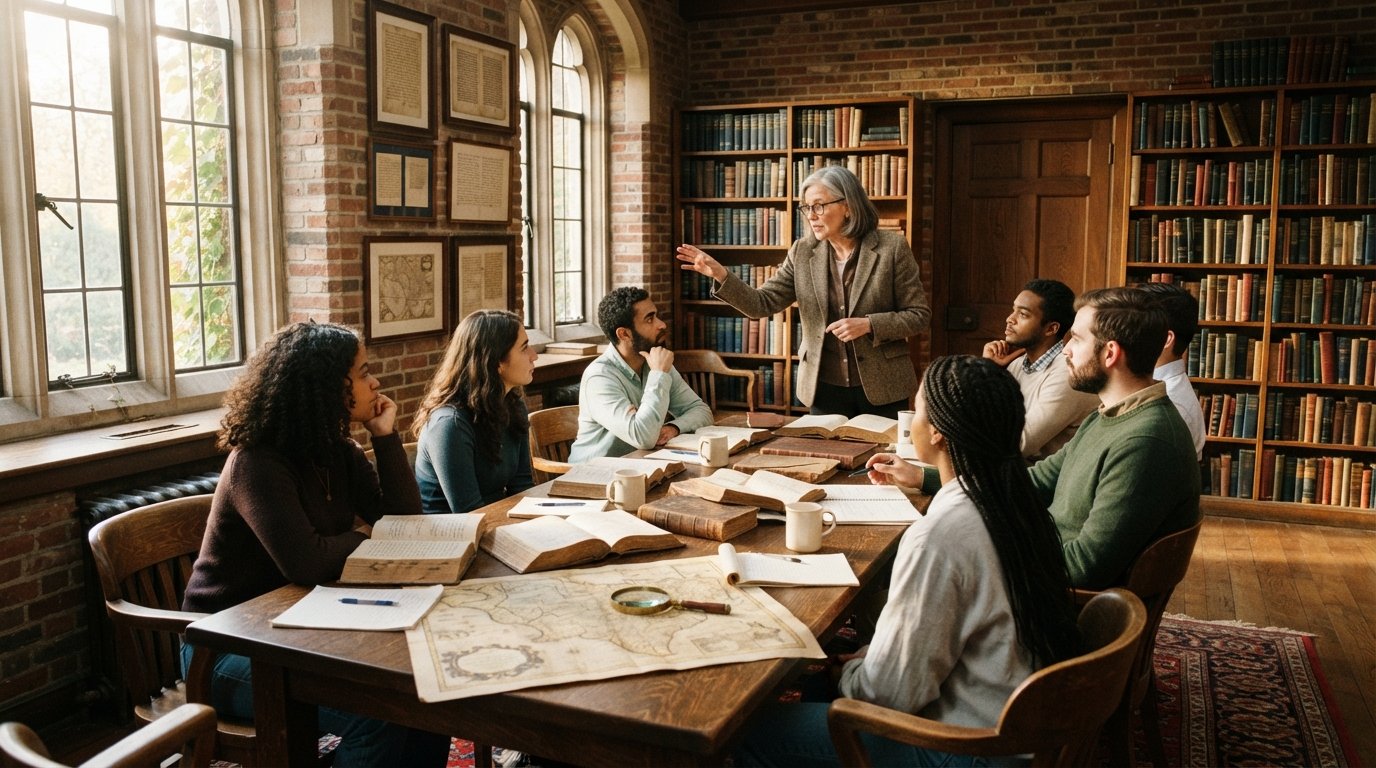
History General Bachelor's Degree at Allegheny College
Explore the History, General Bachelor's degree at Allegheny College: a 4-year in-person program with small classes, a senior capstone, and strong career flexibility.

By Priya Foster
Choosing a college major is one of the most consequential decisions a student will make, and for those drawn to the past, a History, General Bachelor's degree, usually 4 years In-person at Allegheny College, offers a distinctive path. This program combines the rigor of a traditional liberal arts education with the intimate, discussion-driven environment that small colleges do best. But what does that actually mean for your four years, your wallet, and your career after graduation? This article breaks down the structure, outcomes, and financial considerations of pursuing a general history bachelor's degree on Allegheny's historic Meadville, Pennsylvania campus.
What a General History Bachelor's Degree Involves
A general history bachelor's degree is not simply a march through dates and names. At a residential liberal arts college like Allegheny, the history major is designed to teach you how to think: how to read primary sources critically, how to weigh competing interpretations, and how to construct persuasive arguments from evidence. The "general" designation means you are not locked into a single regional or thematic track. Instead, you sample broadly across time periods and geographies, from ancient civilizations to modern global conflicts, before choosing electives that align with your interests.
Most students complete between 10 and 12 courses in the major, typically including a historical methods seminar, a capstone research project, and distribution requirements that ensure exposure to U.S., European, and non-Western history. Because Allegheny operates on a semester calendar, the four-year timeline is standard, though students who arrive with AP or transfer credit can sometimes accelerate. The in-person format matters here: history seminars depend on live debate, close reading of shared texts, and the kind of spontaneous discussion that is difficult to replicate online. If you are weighing residential versus remote options more broadly, our guide on how to choose the best online college for a bachelor's degree can help you compare formats objectively.
Beyond the classroom, the degree builds transferable skills that employers consistently rank highly: written communication, research design, information literacy, and the ability to synthesize complex material. These are not abstract benefits. They translate directly into internships at museums, archives, law offices, and nonprofit organizations, many of which Allegheny students pursue during junior year or over the summer.
Why Allegheny College Stands Out for History Majors
Allegheny College, founded in 1815, is one of the oldest colleges west of the Allegheny Mountains, and its history department reflects that deep institutional heritage. Class sizes in the major are small, often capped in the teens, which means professors know students by name and can mentor them through research projects. The college's senior comprehensive project, a graduation requirement for all students, gives history majors a chance to produce an original piece of scholarship, a tangible credential for graduate school or job applications.
The location in Meadville, Pennsylvania, offers access to regional archives, historical societies, and the broader cultural resources of nearby Erie and Pittsburgh. The college also maintains strong study-abroad and off-campus study options, which history majors frequently use to pursue coursework in Europe, Latin America, or Asia. For students who want the structure and mentorship of a residential campus, this is a meaningful advantage over large lecture-hall programs at state universities.
It is worth being clear-eyed about cost. Private liberal arts colleges carry higher sticker prices than public institutions, and Allegheny is no exception. That is why financial aid strategy matters as much as the academic plan. Before committing, families should understand how need-based aid, merit scholarships, and federal work-study interact. Resources like CollegeAndTuition provide plain-language explanations of tuition structures, net price calculators, and aid appeals, which can help you compare Allegheny's actual out-of-pocket cost against alternatives.
Four-Year Timeline and Coursework
The typical four-year sequence for a general history major at Allegheny follows a predictable arc, though students customize electives based on interests and advising. Here is a representative progression:
- Year 1: Complete introductory survey courses in U.S. and world history while fulfilling general education requirements in writing, quantitative reasoning, and the sciences.
- Year 2: Take the historical methods seminar, begin distribution courses in non-Western and European history, and explore possible minor fields such as political science, economics, or English.
- Year 3: Pursue upper-level electives, complete an internship or study-abroad semester, and begin preliminary research for the senior project.
- Year 4: Finish the capstone, present findings at a departmental symposium, and complete remaining electives or a minor.
This structure gives students room to double major or add a minor, which is common among history majors planning careers in law, education, or public policy. A double major in history and political science, for example, can strengthen a law school application, while pairing history with secondary education certification leads directly to teaching licensure. Because the general degree is flexible, the four-year plan is less about checking boxes and more about building a coherent intellectual portfolio.
Students should also plan for the financial side of each year. Federal Student Aid, institutional grants, and outside scholarships can shift year to year, so reapplying for aid and maintaining satisfactory academic progress are ongoing responsibilities, not one-time tasks.
Career Outcomes and Graduate Study
What can you do with a history degree? The honest answer is that history is a foundational major, not a vocational one, and its value shows up in versatility. Graduates pursue law, education, museum and archival work, publishing, journalism, government service, and business roles that reward research and communication skills. According to broad liberal arts employment data, history majors often earn starting salaries comparable to other humanities graduates, with earnings rising significantly for those who pursue graduate study or professional degrees.
For students considering graduate school, the senior capstone at Allegheny serves as a writing sample and a preview of graduate-level research. Alumni frequently go on to master's programs in history, library and information science, public history, or education. Others enter law school, where the analytical reading and argumentation skills honed in history seminars prove directly applicable.
It is also worth noting that career outcomes depend heavily on experiential learning. Internships, undergraduate research grants, and networking through alumni networks make a measurable difference. Students should treat these opportunities as part of the curriculum, not extras.
Financial Aid and Scholarship Strategy for History Majors
Funding a four-year residential degree requires a plan. History majors are eligible for the same federal, state, and institutional aid as any other student, and many private scholarships exist for humanities students specifically. The key is to start early and apply broadly. Here are the primary funding sources to pursue:
- Federal Student Aid: Complete the FAFSA each year to access Pell Grants, Direct Loans, and work-study.
- Institutional aid: Allegheny offers merit and need-based awards; some require separate applications or interviews.
- Outside scholarships: Search databases for history-specific, essay-based, and community service awards.
- State grants: Pennsylvania residents should check PHEAA programs, and out-of-state students should review their home state agencies.
Because scholarship deadlines often fall before admission decisions, students should build a calendar that begins in the summer before senior year of high school. Our scholarship guidance resources can help you organize applications and avoid missed deadlines. Families should also appeal financial aid offers when circumstances change, as many colleges, including private liberal arts institutions, have review processes for special circumstances.
One practical tip: treat scholarship applications like a part-time job during application season. A few hours per week can yield thousands of dollars in reduced loan burden over four years.
Is the In-Person Format Right for You?
The in-person requirement at Allegheny is not incidental; it shapes the entire learning experience. History seminars rely on discussion, and the mentorship that leads to strong recommendation letters happens in office hours, not over email. Residential campuses also provide structured access to archives, speakers, and student organizations that enrich the major.
That said, in-person study is not the only path. Some students thrive in online or hybrid formats, particularly non-traditional learners balancing work and family. The right choice depends on your learning style, financial situation, and geographic flexibility. Prospective students should visit campus, sit in on a class, and speak with current majors before deciding.
For those who ultimately choose Allegheny, the combination of a flexible general history degree, small classes, and a four-year residential experience can be transformative. The degree rewards curiosity and discipline, and it opens doors to a wide range of careers and graduate programs. With careful financial planning and intentional use of internships and research opportunities, students can graduate with both a strong transcript and manageable debt.
Ultimately, a History, General Bachelor's degree, usually 4 years In-person at Allegheny College, is a commitment to learning how to think, write, and argue with evidence, skills that remain valuable in any field. Prospective students should explore financial aid options early, compare total costs honestly, and choose the format that best supports their goals.