
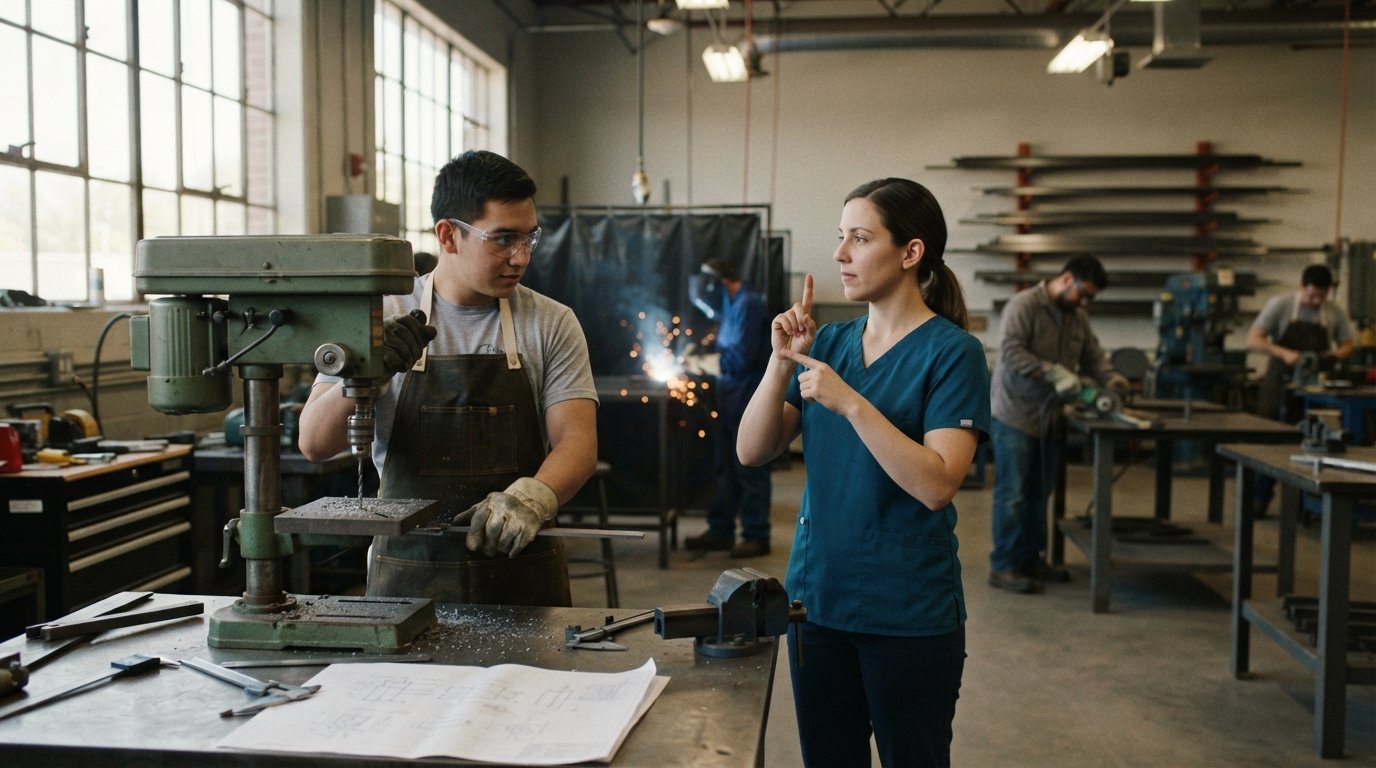
Scholarships for Deaf College Students in Trades and Technical Fields
Scholarships for deaf college students in trades and technical fields include VR funding, Sertoma awards, and trade association grants that can cover tuition and tools.

By Nathan Ellis
Finding money for trade school or a technical certificate is hard enough. When you are deaf or hard of hearing, the hunt gets more complicated because you need funding plus a program that will actually communicate with you. The good news is that scholarships for deaf college students in trades and technical fields do exist, and they often come from places students overlook: vocational rehabilitation agencies, deafness-focused foundations, tool-specific industry groups, and state programs that pay for short-term training. The trick is knowing where to look, how to frame your application when your school is a welding academy rather than a university, and which accessibility questions to ask before you ever pay a deposit.
This guide walks through the funding sources that actually fit certificate and associate-level training, what vocational rehabilitation will and will not cover, how the application process differs for trade schools, and the practical questions to ask so your program is a good fit for how you learn and communicate. You will also find guidance on how to compare costs across programs and how to stack multiple awards so your out-of-pocket bill stays low.
Who Qualifies as a Deaf College Student in a Trade Program
Eligibility rules vary by award, but most deafness-focused scholarships use a functional definition rather than a strict audiogram cutoff. You typically need to show that you have a hearing loss that affects communication and that you are enrolled or accepted into an accredited program. That can mean a certificate in HVAC, an associate degree in drafting, a welding diploma, a medical coding certificate, or a technical diploma in automotive technology. The key is that the program should be at the postsecondary level and accredited or approved by a recognized body, because most funders will not pay for unaccredited training.
Documentation is where many applicants get stuck. Scholarship committees often want an audiogram, a letter from an audiologist, or an IEP or 504 plan from high school, plus proof of enrollment. If you are an adult learner returning to school, you may not have a recent audiogram, so budget time to get one. Some foundations accept a letter from a vocational rehabilitation counselor confirming your hearing loss, which is often faster than scheduling a new audiology appointment.
It also helps to understand that trade and technical programs come in different shapes. Some are credit-bearing and run through community colleges, which means they qualify for federal student aid and many traditional scholarships. Others are non-credit certificate programs at private training academies, which may not qualify for federal aid but often qualify for workforce grants and vocational rehabilitation funding. Before you apply for any scholarship, confirm the program's accreditation and whether it is eligible for Title IV federal aid, because that single detail determines which funding streams you can access.
Scholarships and Awards Open to Certificate and Associate-Level Deaf Students
The largest and best-known source of deafness-specific scholarship money is the Sertoma Hard of Hearing or Deaf Scholarship, which awards funds to students pursuing undergraduate or vocational training. It is open to students in certificate and associate programs, not just four-year degrees, which makes it one of the most useful awards for trade-bound students. Applications typically require proof of hearing loss, transcripts, and a short essay, and the deadlines fall in the spring, so plan ahead.
Beyond Sertoma, several national and regional organizations offer awards that do not restrict funding to bachelor's degrees. The Alexander Graham Bell Association for the Deaf and Hard of Hearing runs a scholarship program for students with hearing loss, and while some awards favor four-year students, the organization also supports students in technical and vocational programs. State-level deaf and hard of hearing associations frequently run smaller awards, often in the $500 to $2,000 range, and these are dramatically under-applied because students do not know they exist. Check your state association's website and call the office if the scholarship page looks outdated.
Here are the award types worth prioritizing when you are headed into a trade or technical field:
- National deafness foundations, such as Sertoma and AG Bell, which offer awards open to vocational and certificate students.
- State associations for the deaf and hard of hearing, which often run small local scholarships with low applicant pools.
- Industry and trade associations, such as welding, automotive, or HVAC groups, which fund students training for their specific trade.
- Employer and union scholarships, including programs run by contractors, utilities, and manufacturing companies that need skilled workers.
- Community foundation awards, which are administered locally and frequently accept trade school applicants.
Industry association money is the most overlooked category. A welding student who applies to the American Welding Society's foundation scholarships competes against other welding students, not against every deaf student in the country, which can improve your odds. The same logic applies to automotive technology, electrical, plumbing, and machining associations. Pair one deafness-specific award with one trade-specific award, and you have a realistic funding strategy rather than a lottery ticket.
If you want a broader overview of how scholarship applications work across program types, our scholarships for college students complete guide covers timelines, essay basics, and how to organize deadlines so nothing slips.
What Vocational Rehabilitation Pays For in Technical Training
Vocational rehabilitation, usually called VR, is the single most powerful funding source for deaf students in trades, and it is the one most students underuse. Every state runs a VR agency funded largely by the federal government, and the program's purpose is to help people with disabilities get and keep employment. Because trade and technical training leads directly to jobs, VR counselors are often enthusiastic about funding it. The catch is that VR is an eligibility program, not a scholarship, so you have to apply, document your disability, and work with a counselor to build an approved plan.
What VR covers varies by state, but common approved expenses include tuition and fees for certificate programs, tools and equipment required for the trade, books and supplies, transportation to and from training, and sometimes room and board if training is far from home. VR can also pay for assistive technology, such as amplified stethoscopes for healthcare trades, visual alert systems for shop environments, and communication access services including interpreters and real-time captioning in the classroom. That last item matters enormously: if your program requires lecture-heavy coursework, VR may fund the accommodations that make it accessible.
The application sequence usually looks like this:
- Contact your state VR agency and request an intake appointment; ask specifically for a counselor familiar with deafness or hearing loss.
- Complete the eligibility determination, which requires documentation of your hearing loss and a conversation about how it affects employment.
- Work with your counselor to identify a specific training program and get it written into an approved Individualized Plan for Employment.
- Submit the program's accreditation details, cost sheet, and start date so VR can authorize payment before classes begin.
Timing is the biggest pitfall. VR authorization can take weeks or months, and many trade programs start on fixed schedules. Start the VR process at least one semester before your program begins, and ask your counselor for a written authorization letter you can show the school. If you are told you are not eligible, ask about appeal rights and about whether an order of selection is delaying services, which happens in some states when funding is tight.
How Trade School Applications Differ From University Applications
Scholarship and funding applications assume a traditional college structure, and trade programs often do not fit that mold. A university has a financial aid office that handles federal aid, state grants, and outside scholarships in one place. A private welding academy may have a single admissions representative who has never processed a scholarship check. That does not mean the money is unavailable, but it does mean you have to be more proactive and ask better questions.
Start by confirming the school's accreditation and its Title IV eligibility, because that determines whether you can use federal Pell Grants and federal student loans. Many certificate programs are eligible, but plenty are not. If the program is not Title IV eligible, your funding will come from VR, workforce grants, private scholarships, employer sponsorship, or payment plans. Ask the admissions office directly: "Is this program accredited, and is it eligible for federal student aid?" Get the answer in writing.
Next, ask how the school handles outside scholarship checks. Some schools will apply a scholarship to your balance immediately; others require the check to clear before crediting your account, which can create a cash-flow gap at registration. Ask whether the school has a process for third-party billing, which is how VR and workforce agencies typically pay. Schools that routinely work with VR agencies will already have this process in place, and that is a strong signal the program is deaf-friendly and adult-learner friendly.
Finally, understand that many trade programs have rolling admissions and short start cycles, so scholarship deadlines may not line up with enrollment dates. Build a personal calendar that lists every award deadline, every VR appointment, and every program start date in one place. If a deadline falls after your program begins, contact the scholarship provider and ask whether you can apply for the next cycle while already enrolled.
Accessibility Questions to Ask Before You Enroll
Funding is only half the equation. A program can be affordable and still be a poor fit if the shop floor is loud, the instructor lectures with their back turned, or the school has no plan for communication access. Asking the right questions before you enroll protects both your money and your time. These conversations are also easier when you frame them as standard questions any careful student would ask, not as special requests.
Ask how instruction is delivered in both classroom and hands-on settings. In a welding or automotive shop, much of the teaching happens through demonstration and verbal correction over ambient noise, which is a challenging listening environment even with hearing aids or cochlear implants. Ask whether the instructor uses visual aids, written step sheets, or demonstration-first teaching. Ask whether the school can provide a notetaker, interpreter, or captioning for classroom portions, and who pays for those services. Under the Americans with Disabilities Act, the school is generally responsible for providing effective communication access, but the practical arrangements vary widely.
Ask about safety communication specifically. Trade programs involve hazardous equipment, and safety instructions must be understood the first time. Ask how the school communicates emergency alerts, machine shutdown procedures, and safety briefings to students who are deaf or hard of hearing. A school that has thought about visual alarms, flashing lights, and written safety protocols is a school that has thought about you.
Here is a short list of questions to bring to every admissions conversation:
- What communication access services are available, and who arranges and pays for them?
- How are safety briefings and emergency alerts delivered to deaf and hard of hearing students?
- Has the school worked with vocational rehabilitation before, and can it handle third-party billing?
- What is the program's completion and job placement rate, and how is it measured?
- Can current or former deaf students be connected as references?
If a school cannot answer these questions, that is useful information. A program that has never enrolled a deaf student can still be a good choice if the staff is willing to learn and to arrange access, but you should get that commitment in writing before you pay tuition.
Stacking Awards and Comparing Costs Across Programs
Most students fund trade training through a combination of sources rather than a single big scholarship. A realistic stack might include a Pell Grant if the program is Title IV eligible, a VR authorization covering tuition and tools, a state deaf association award for books, and an industry association scholarship for fees. Stacking works because most private scholarships do not reduce your federal aid dollar for dollar until you exceed your cost of attendance, and VR funding is typically coordinated rather than duplicated.
Comparing costs across programs takes more than looking at tuition. Add up tools, uniforms, certification exam fees, transportation, and the cost of any retakes. A program with lower tuition but mandatory tool purchases can cost more than a community college program that includes tools in its fees. Ask each school for a total program cost sheet, and compare those sheets side by side. For a broader look at how to plan and compare college costs, including aid and affordability tools, the resources at CollegeAndTuition can help you build a realistic budget.
Keep your documentation organized in one folder: audiogram, VR authorization letters, scholarship award letters, program cost sheets, and enrollment verification. You will reuse these documents repeatedly, and having them ready shortens every application and every payment conversation.
Where to Search Next and How to Move Forward
Start with three searches this week: your state VR agency, your state association for the deaf and hard of hearing, and the national industry association for your specific trade. Then add one national deafness foundation award and one local community foundation award. That five-source list is enough to build a real funding plan without drowning in applications.
As you compare programs, use Scholarship.Education's online programs by field to explore trades and technical training options, and check the colleges by state directory to find schools near you. Note that Scholarship.Education receives compensation from listed schools through advertising, links, and search placement, which may influence how schools appear and rank; the site does not include every school in the country and does not guarantee enrollment or job placement. Use the listings as a starting point, verify accreditation and accessibility directly with each school, and treat all information as general reference rather than legal, academic, or career advice.
The funding is out there, but it rewards students who ask precise questions and apply early. Build your document folder, contact VR before you need it, and pair a deafness-specific award with a trade-specific one. That combination is how deaf students in trades and technical fields pay for training without taking on unnecessary debt.