
Anthropology General Bachelor's Degree at Colgate: 4-Year Guide
Explore the Anthropology, General Bachelor's degree, usually 4 years In-person at Colgate University, plus financial aid steps that lower your net cost.

By Hannah Reed
What does it mean to study humanity itself? At Colgate University, the Anthropology, General Bachelor's degree, usually 4 years In-person at Colgate University offers students a rigorous, immersive path into the study of human cultures, societies, and biological evolution. For prospective students weighing their college options, understanding the structure, cost, and outcomes of this program is essential before committing four years and significant tuition dollars. This guide breaks down everything you need to know about the program, from coursework and fieldwork to financial aid strategies that can reduce your out-of-pocket costs.
Inside Colgate's Anthropology General Bachelor's Degree
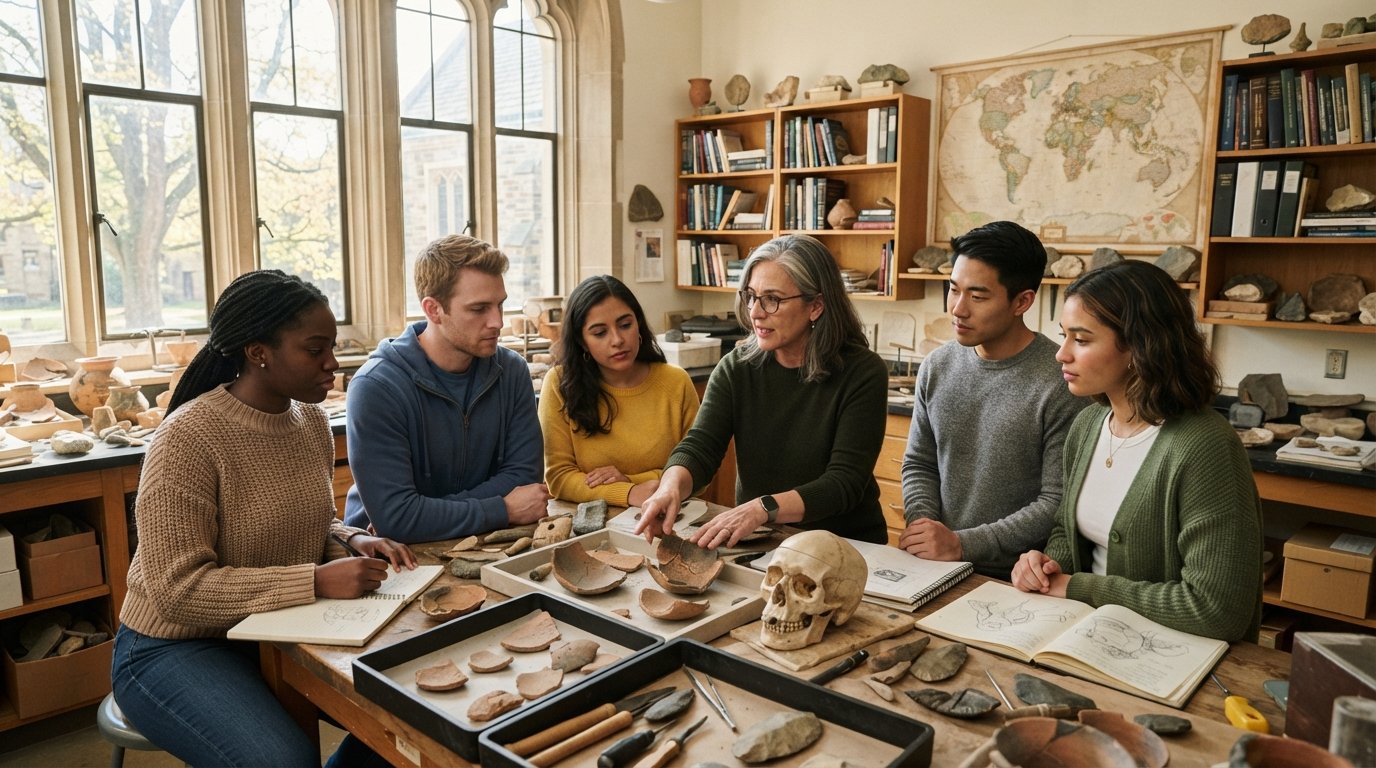
Colgate University, located in Hamilton, New York, is a private liberal arts institution known for its strong emphasis on faculty mentorship and undergraduate research. The Anthropology, General Bachelor's degree, usually 4 years In-person at Colgate University is housed within the Department of Sociology and Anthropology, and it reflects the university's broader commitment to interdisciplinary inquiry. Students in this program explore the four traditional subfields of anthropology: cultural anthropology, biological anthropology, archaeology, and linguistic anthropology.
The program is designed for students who want a broad foundation rather than a narrow specialization. That flexibility is a strength. Graduates leave with strong critical thinking, research, and cross-cultural communication skills that translate into careers in education, public health, nonprofit management, museum work, and graduate study. The in-person format matters here: anthropology is a discipline built on observation, interviews, and fieldwork, and Colgate's residential model supports close collaboration with faculty on research projects.
Because the degree is a general anthropology track, students are not locked into a single subfield early on. Instead, they sample across the discipline and then deepen their focus through electives and a senior research project. This structure appeals to students who are intellectually curious but not yet certain which direction within anthropology they want to pursue.
Curriculum and Coursework: What Four Years Looks Like
The Anthropology, General Bachelor's degree, usually 4 years In-person at Colgate University follows a typical liberal arts progression. First-year students usually complete introductory courses that introduce the four subfields, along with core liberal arts requirements in writing, quantitative reasoning, and foreign language. By sophomore year, students begin taking mid-level anthropology courses and may declare the major. Junior year is often when students pursue methods courses, study abroad, or fieldwork opportunities. Senior year culminates in a capstone seminar or research thesis.
Here is a representative sequence of milestones students can expect:
- Year 1: Introduction to Cultural Anthropology, Introduction to Biological Anthropology, and foundational liberal arts courses.
- Year 2: Archaeology and Linguistic Anthropology electives; major declaration; begin language study if not already completed.
- Year 3: Research methods coursework, possible study abroad or summer fieldwork, and upper-level electives.
- Year 4: Senior seminar or thesis, comprehensive exams in some cases, and career or graduate school preparation.
Colgate operates on a 4-1-4 academic calendar, meaning students take four courses in the fall, one intensive course in January, and four in the spring. That January term is a hidden advantage for anthropology majors, because it allows for focused fieldwork, travel courses, or intensive research projects that would be difficult to fit into a standard semester. Students should plan their four-year schedule with an academic advisor to ensure they meet both major requirements and Colgate's liberal arts distribution requirements.
It is worth noting that the general anthropology track differs from specialized programs at other institutions. For students comparing options, a resource like this guide to a History General Bachelor's Degree at Allegheny College can help clarify how liberal arts majors with similar structures differ across campuses in cost, curriculum, and outcomes. Comparing programs side by side is one of the smartest ways to make an informed enrollment decision.
Admissions, Costs, and Financial Aid Strategy
Colgate is a selective institution, and admission to the anthropology program is handled through the university's general admissions process rather than a separate departmental application. Prospective students should focus on a strong high school record, demonstrated interest in the social sciences, and compelling essays. Once admitted, students can declare anthropology as their major, typically by the end of sophomore year.
The bigger challenge for many families is cost. Colgate's total cost of attendance, including tuition, fees, room, and board, runs well above $80,000 per year as of recent cycles, which means a four-year degree can exceed $320,000 before financial aid. That number is daunting, but it is not the number most families actually pay. Colgate meets 100 percent of demonstrated financial need for admitted students, and the university offers merit scholarships, need-based grants, and federal aid options.
Students and families should approach funding strategically. The following steps can reduce the net cost of the Anthropology, General Bachelor's degree, usually 4 years In-person at Colgate University:
- File the FAFSA early. The Free Application for Federal Student Aid determines eligibility for Pell Grants, federal work-study, and subsidized loans. Filing as soon as the window opens each year maximizes aid consideration.
- Complete the CSS Profile. Colgate requires this institutional form for need-based aid, and it captures financial details the FAFSA does not.
- Apply for outside scholarships. Private scholarships for liberal arts students, first-generation students, and New York residents can stack with institutional aid in many cases.
- Negotiate and appeal. If your financial circumstances change, Colgate's financial aid office allows appeals that can adjust your package.
Students who want to explore accredited colleges and degree programs more broadly, including online options that may reduce total cost, can use matching services such as CollegeDegree.Education to compare programs and request information without obligation. For families weighing a residential liberal arts experience against lower-cost alternatives, that comparison is a valuable first step.
Careers, Skills, and Graduate Outcomes
Anthropology graduates are often asked, sometimes skeptically, what they plan to do with the degree. The honest answer is that anthropology is a launchpad rather than a vocational certificate. The skills students build, including qualitative research, cross-cultural competence, writing, and data interpretation, are in demand across sectors. Colgate's career services office reports that anthropology alumni pursue roles in public health, education, international development, user experience research, museum curation, and social services, among others.
Many graduates continue to graduate school in anthropology, public health, law, or education. The senior thesis requirement, which the general track includes, is excellent preparation for graduate-level research. Students who want to strengthen their career readiness should pursue internships during summers, use Colgate's alumni network, and consider adding a minor or coursework in a complementary field such as biology, environmental studies, or computer science.
Salary outcomes vary widely by path, so students should think in terms of trajectory rather than first-job pay. Anthropology majors who move into user research, public health, or data-oriented roles often see strong earnings growth over time, while those entering nonprofit or museum work may earn less but find deep satisfaction. The key is intentional planning: use the four years to build a portfolio of research, fieldwork, and internship experiences that tell a coherent story to employers or graduate committees.
Is the Colgate Anthropology Program Right for You?
The Anthropology, General Bachelor's degree, usually 4 years In-person at Colgate University suits students who want a small, residential liberal arts environment with strong faculty relationships, access to fieldwork, and a flexible curriculum. It is less suited to students seeking a pre-professional anthropology credential, a fully online format, or a large research university with dozens of subfield specializations. Applicants should visit campus, sit in on a class, and speak with current majors before deciding.
Funding the degree requires planning, but resources exist. Scholarship.Education receives compensation from listed schools via advertising, links, and search placement, which may influence their appearance, position, and ranking. This information is for general reference only and is not legal, academic, or career advice. Students should verify program details and costs directly with Colgate University and consult financial aid counselors before making enrollment decisions.
For students drawn to cultural understanding, fieldwork, and a broad intellectual foundation, Colgate's anthropology program remains a compelling choice. The four-year in-person format builds the observational and analytical skills that employers and graduate schools value, and with careful financial planning, the degree can be within reach for families across a wide range of incomes.