
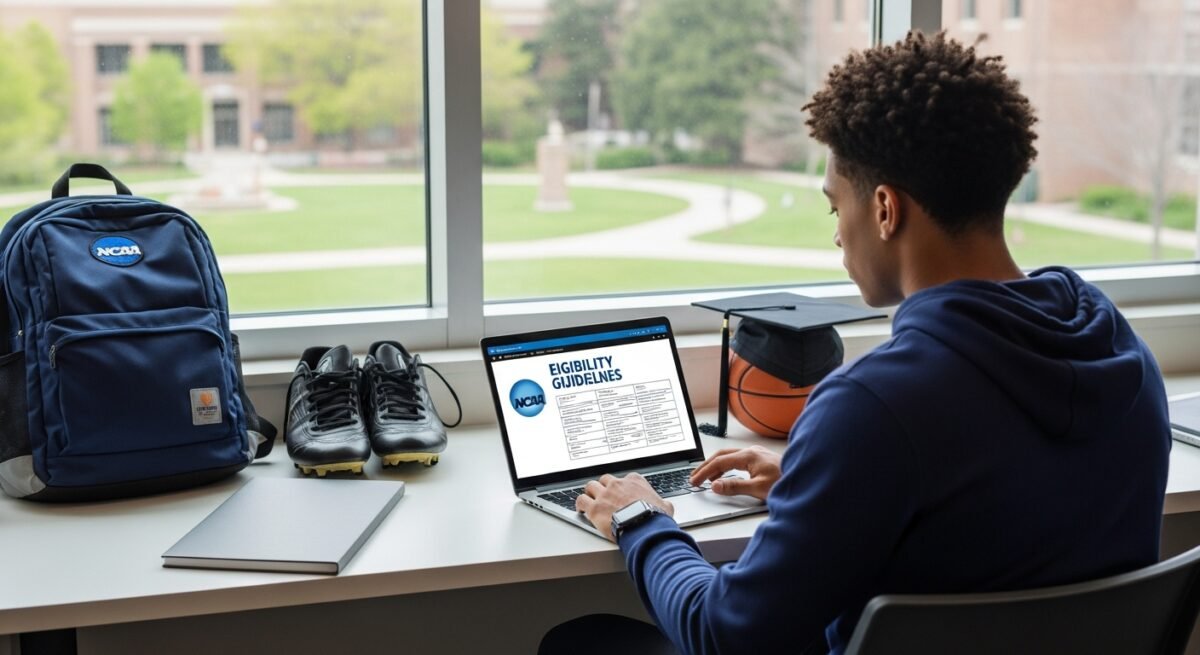
Your NCAA Athletic Scholarship Guide: Eligibility and Application Steps
This guide breaks down the NCAA athletic scholarship process, providing clear steps for eligibility, recruitment, and securing financial aid for college sports.

By James Miller
For thousands of student-athletes, the dream of competing in college sports is intertwined with the goal of securing an athletic scholarship. These awards can dramatically reduce the financial burden of higher education, but the path to obtaining one is often shrouded in complexity and misconception. Navigating the NCAA’s rules, understanding the recruitment timeline, and presenting yourself as a viable candidate requires a strategic and informed approach. This comprehensive NCAA athletic scholarships eligibility and application guide demystifies the process, providing you with the actionable steps and critical knowledge needed to position yourself for success in the competitive arena of sports scholarships USA.
Understanding the NCAA Framework and Scholarship Types
The National Collegiate Athletic Association (NCAA) governs most college sports in the United States and is divided into three divisions: I, II, and III. A fundamental aspect of your athletic scholarship requirements is knowing which division aligns with your athletic and academic goals. NCAA Division I schools offer the highest level of competition and the most athletic scholarships, but they also have the most stringent eligibility standards. Division II also offers athletic scholarships, though often in smaller numbers and amounts, with a balance between athletics and academics. Division III schools do not offer athletic scholarships based on athletic ability, though they may provide need-based or merit-based financial aid. It is crucial to research schools in all divisions, as a partial scholarship at a Division I school may be comparable to a full scholarship at a Division II institution when considering total cost of attendance.
Furthermore, not all sports scholarships are created equal. The NCAA designates sports as either “head count” or “equivalency” sports. Head count sports, like Football Bowl Subdivision (FBS) football and Division I basketball, offer only full scholarships. Coaches cannot divide these scholarships; they are all-or-nothing awards. Equivalency sports, which include most other NCAA sports like baseball, soccer, and track and field, allow coaches to divide a set number of scholarship funds among multiple athletes. This means you might receive a 25%, 50%, or 75% scholarship. Understanding this distinction is vital for setting realistic expectations and for crafting a compelling case for why you deserve a portion of the team’s limited scholarship pool.
Core Eligibility Requirements: The Academic and Athletic Hurdles
Eligibility for an NCAA athletic scholarship is a two-pronged test: you must meet both academic standards set by the NCAA Eligibility Center and demonstrate a high level of athletic prowess that makes you recruitable by college coaches. The academic requirements are non-negotiable and must be completed during your high school career. For Division I, you must complete 16 core courses, earn a minimum core-course GPA that corresponds with your SAT/ACT score on the NCAA Sliding Scale, and graduate from high school. Division II requires completion of 16 core courses with a minimum 2.2 GPA in those courses and a combined SAT score of 900 or ACT sum score of 75. These academic benchmarks are the first and most critical filter in the process; failing to meet them can render even the most talented athlete ineligible.
On the athletic side, there is no single standardized test. Your eligibility is determined by your skill level, game film, statistics, and coach evaluations. The recruitment process is essentially a prolonged audition. Coaches assess your physical attributes, technical skills, tactical understanding, and coachability. They look for athletes who can not only contribute to the team’s success but also fit into the team’s culture and system. This is where creating a comprehensive athletic resume and highlight reel becomes essential. Your goal is to provide clear, concise evidence of your abilities and potential for growth at the collegiate level. For a deeper dive into sport-specific recruitment strategies, our resource on volleyball scholarships and athletic funding outlines effective approaches.
The Step-by-Step Application and Recruitment Process
The journey to securing an athletic scholarship is a marathon, not a sprint. It requires proactive effort starting as early as your freshman or sophomore year of high school. A passive approach, waiting for coaches to discover you, significantly reduces your chances. A successful strategy involves a clear, organized process where you take ownership of your recruitment.
First, register with the NCAA Eligibility Center at the beginning of your junior year. This is your official academic certification portal. Concurrently, conduct thorough research to create a target list of 20-30 schools that match your athletic level, academic interests, and personal preferences (size, location, campus culture). Once you have your list, the real work begins: marketing yourself to college coaches. This involves crafting a professional email with your athletic resume, a link to your online highlight video, and your upcoming game schedule. Follow up consistently, but respectfully. Attend camps and showcases where you can perform in front of college coaches directly. Remember, recruitment is a two-way street; you are also evaluating if the school and program are the right fit for you.
To streamline this complex process, follow this sequential action plan:
- Research and Target List Creation (Sophomore/Junior Year): Identify schools across divisions that offer your sport and major. Consider athletic competitiveness, academic quality, and social fit.
- Academic Certification (Junior Year): Register with the NCAA Eligibility Center. Work with your high school counselor to ensure you are on track to complete all required core courses with the necessary GPA.
- Athletic Profile Development (Ongoing): Create a dynamic highlight video (3-5 minutes max), an organized athletic resume, and a professional email template.
- Proactive Outreach (Junior Year/Senior Year): Initiate contact with coaches on your target list via email and phone. Attend ID camps and summer showcases.
- Official/Unofficial Visits (Senior Year): Schedule campus visits. Official visits are paid for by the school and are a strong indicator of serious recruiting interest.
- Verbal Commitment and NLI Signing: After receiving a scholarship offer, you may give a verbal commitment. The binding agreement is the National Letter of Intent (NLI), signed during designated signing periods.
Maximizing Your Opportunities and Avoiding Common Pitfalls
Securing any portion of an athletic scholarship is an achievement, but you can maximize your potential award by being a complete student-athlete. Coaches value athletes who are leaders on and off the field. Excelling in the classroom not only ensures eligibility but also makes you more attractive, as it reflects discipline and reduces the academic risk for the program. Strong character references from teachers, counselors, and club coaches can further bolster your application. Furthermore, explore all avenues of financial aid. Even with an athletic scholarship, you should complete the FAFSA (Free Application for Federal Student Aid) to qualify for federal grants, work-study, and loans. Many schools also offer academic merit scholarships that can be stacked with an athletic award to cover the full cost of attendance.
A critical mistake many families make is overlooking the importance of a strong academic record or assuming athletic talent alone will secure a scholarship. Another common pitfall is focusing solely on Division I schools, potentially missing better athletic, academic, or financial fits in Division II or the NAIA. Be wary of any service that guarantees a scholarship for a fee. The recruitment process should be free. Also, understand that a verbal commitment is not binding for you or the school; only the signed NLI is official. Maintain professionalism in all communications, as coaches heavily weigh character and fit. Remember, an athletic scholarship is an agreement to play a sport, and maintaining it requires you to stay eligible, follow team rules, and remain on the roster, which underscores the importance of choosing a school where you can thrive as a student, not just an athlete. For students considering flexible academic pathways to complement their athletic pursuits, exploring financial aid & scholarship options for online degrees can provide valuable backup plans.
Frequently Asked Questions
Q: Can I get an athletic scholarship as a walk-on?
A: Yes. Many athletes begin their college careers as walk-ons (non-scholarship players) and earn a scholarship after proving their value to the team in their first or second year. This path requires clear communication with the coach about the possibility of future aid.
Q: How many athletic scholarships are actually available?
A: Far fewer than most people realize. Each NCAA sport has a strict limit on the total number of scholarships a team can award. With millions of high school athletes and only a few hundred thousand NCAA roster spots, the competition is extremely fierce.
Q: Do athletic scholarships cover all expenses?
A: A “full ride” typically covers tuition, fees, room, board, and course-related books. However, many scholarships are partial and may only cover a percentage of tuition. Additional costs like travel, personal expenses, and summer school are usually the student’s responsibility.
Q: What is the role of a recruiting service?
A> Legitimate services can help with profile creation, video editing, and providing lists of schools, but they cannot guarantee a scholarship. The most effective recruitment is still driven by the athlete’s proactive communication and performance.
Q: When is the best time to start the recruitment process?
A: For most sports, the ideal time to start serious outreach is the summer after your sophomore year or the fall of your junior year. This gives you time to build relationships with coaches before the major signing period in your senior year.
The pursuit of an NCAA athletic scholarship is a demanding endeavor that tests your dedication, organization, and resilience. By thoroughly understanding the eligibility requirements, engaging in a strategic and proactive recruitment campaign, and presenting yourself as a scholar-athlete of high character, you dramatically increase your odds of turning your collegiate sports dream into a funded reality. Use this guide as your roadmap, stay persistent, and remember that finding the right fit, both academically and athletically, is the ultimate goal of this journey.