
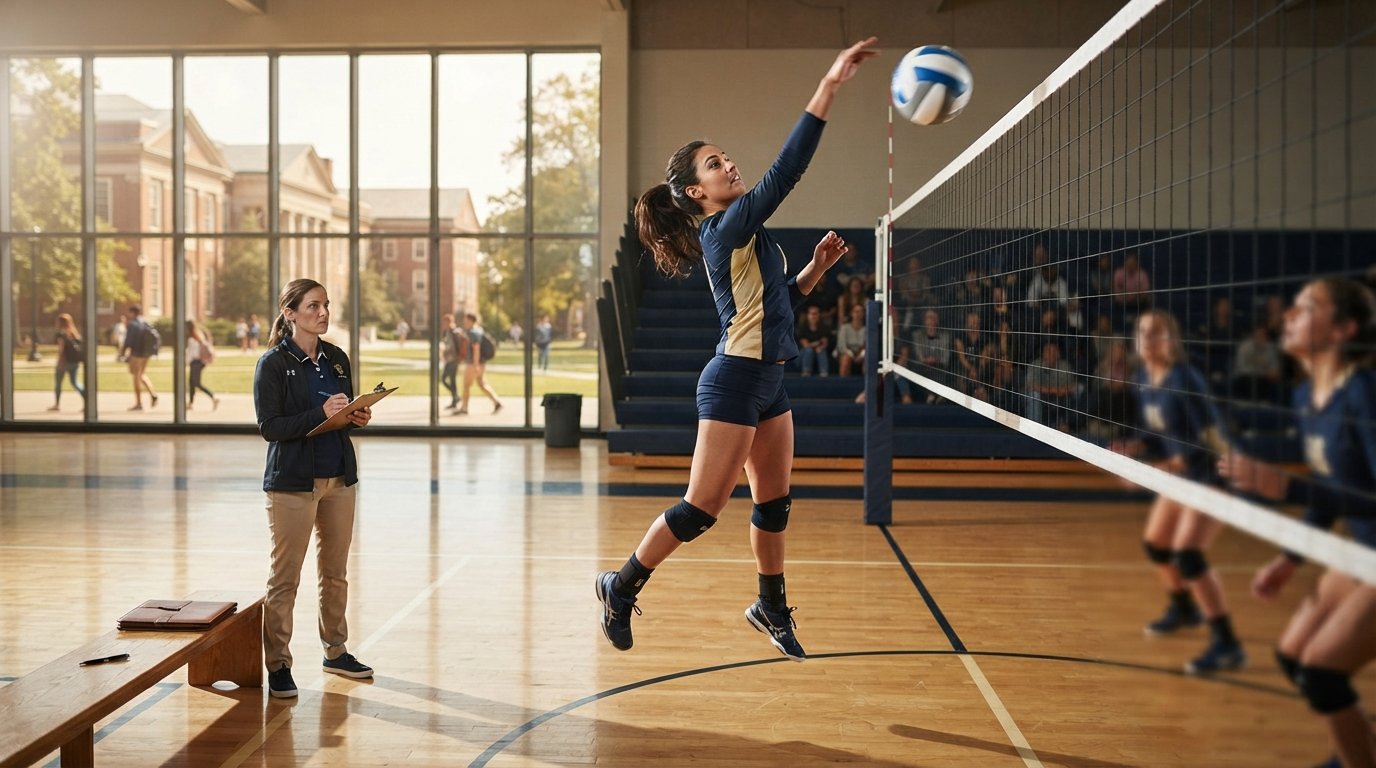
Volleyball Scholarships USA: Can They Cover Education for Beginners?
Volleyball scholarships USA may cover education for beginners, from tuition to books. Learn how to start and secure funding.

By Julian Walsh
College volleyball is more than a sport; it is a potential gateway to a debt-free education. For beginners and families just starting to explore athletic recruiting, the idea that a volleyball scholarship could cover tuition, fees, books, and even housing sounds almost too good to be true. The reality is that volleyball scholarships in the USA do exist, and they can cover a significant portion of education costs, but the path to securing one requires early planning, realistic expectations, and a clear understanding of how the recruiting landscape works. Whether you are a high school freshman just learning the game or a parent researching options for a talented club player, this guide will walk you through the types of scholarships available, what they actually pay for, and how beginners can position themselves to take advantage of these opportunities.
Understanding Volleyball Scholarships in the USA
Volleyball scholarships in the USA are athletic awards offered by colleges and universities to student-athletes who demonstrate exceptional skill and potential in the sport. These scholarships are governed by the National Collegiate Athletic Association (NCAA), the National Association of Intercollegiate Athletics (NAIA), and the National Junior College Athletic Association (NJCAA), each with its own rules and regulations. The NCAA, for instance, divides its member schools into Division I, Division II, and Division III. Division I and II schools can offer athletic scholarships, while Division III schools cannot offer athletic aid but may provide academic or need-based financial assistance.
For beginners, it is important to understand that volleyball scholarships are not limited to the most elite players. While Division I programs are highly competitive and often recruit nationally ranked athletes, Division II, NAIA, and NJCAA schools offer more accessible opportunities for developing players. These programs may offer partial scholarships that cover a portion of tuition or a combination of athletic and academic aid. The key is to research each division's rules and identify programs that align with your current skill level and future potential. Many beginners start by exploring scholarship databases and college athletic websites to understand what coaches at different levels are looking for.
It is also worth noting that volleyball scholarships are available for both indoor and beach volleyball. Beach volleyball has grown rapidly as an NCAA sport, and some schools offer separate scholarships for each discipline. Beginners who enjoy the sand game may find additional pathways to funding. Regardless of the version of the sport, the fundamental principle remains: coaches want athletes who can contribute to their program's success, and they are willing to offer financial assistance to secure that talent.
What Do Volleyball Scholarships Actually Cover?
One of the most common questions from beginners is whether a volleyball scholarship can cover the entire cost of education. The answer is yes, but with caveats. Athletic scholarships can be full or partial. A full scholarship typically covers tuition, mandatory fees, room and board, books, and sometimes a stipend for incidental expenses. However, full scholarships are rare and usually reserved for top-tier recruits at Division I programs. Partial scholarships cover a percentage of these costs and can be combined with other forms of financial aid, such as academic scholarships, grants, and federal student aid, to bridge the gap.
It is crucial to understand that athletic scholarships are awarded on a year-to-year basis and must be renewed annually. Coaches have the discretion to renew, reduce, or not renew a scholarship based on performance, injury, or other factors. Therefore, student-athletes should not rely solely on athletic aid and should also pursue academic scholarships and need-based aid to ensure financial stability throughout their college career. For beginners, this means maintaining strong grades and standardized test scores, as academic merit can significantly enhance the total financial aid package.
Additionally, the cost of attendance varies widely among institutions. A full scholarship at a lower-cost state school may cover less in absolute dollars than a partial scholarship at a private university with high tuition. Families should compare the net cost of attendance after all aid is applied, rather than just the scholarship amount. Tools like college net price calculators can help estimate out-of-pocket expenses. For a broader overview of athletic funding and how it fits into the financial aid picture, you can read more about volleyball scholarships USA may cover education for beginners in our comprehensive guide on athletic funding.
Eligibility Requirements for Beginner Athletes
To be eligible for a volleyball scholarship at an NCAA school, student-athletes must meet certain academic and amateurism requirements. The NCAA Eligibility Center evaluates high school courses, grades, and test scores to determine initial eligibility. Beginners should start planning their course load early to ensure they meet the core course requirements, which include a certain number of English, math, science, and social science credits. Additionally, student-athletes must maintain a minimum grade-point average and, for Division I, a sliding scale of test scores and GPAs.
Beyond academics, athletes must adhere to amateurism rules, meaning they cannot accept payment for playing volleyball or sign a professional contract. For beginners, it is important to avoid actions that could jeopardize eligibility, such as accepting prize money beyond actual expenses in certain competitions. The NAIA and NJCAA have their own eligibility centers and requirements, which are often more flexible than the NCAA's. For example, the NAIA allows athletes to play in professional leagues during the offseason without losing eligibility, provided they do not receive compensation beyond expenses.
From a skill perspective, beginners should focus on developing fundamental techniques, volleyball IQ, and athleticism. Coaches at the college level look for players with potential, not just current ability. Attending camps, playing club volleyball, and competing in high school matches are all ways to gain exposure. Creating a highlight video and maintaining a recruiting profile on platforms like the NCAA Eligibility Center or specialized recruiting websites can help beginners get on coaches' radar. It is never too early to start, but it is also never too late; some athletes begin their recruiting journey in their junior year and still find opportunities at smaller schools.
Types of Volleyball Scholarships and Where to Find Them
Volleyball scholarships come in various forms, and beginners should explore all avenues to maximize their chances. Here is a breakdown of the main types:
- NCAA Division I and II Athletic Scholarships: These are the most well-known and competitive. Division I programs have the largest scholarship budgets, while Division II schools offer a mix of full and partial awards. Coaches actively recruit through club tournaments and high school showcases.
- NAIA Scholarships: The NAIA offers athletic scholarships at smaller colleges and universities. These programs often provide more personalized attention and opportunities for developing players.
- NJCAA Scholarships: Junior colleges offer athletic scholarships, often covering tuition and fees. These can be a stepping stone to a four-year school, allowing athletes to develop and improve their recruiting profile.
- Academic and Merit Scholarships: Many colleges offer academic scholarships that can be combined with athletic aid. Beginners should apply for these separately to increase their total funding.
- Beach Volleyball Scholarships: As beach volleyball gains NCAA championship status, more schools are offering scholarships specifically for sand players.
To find these scholarships, beginners can use the NCAA's list of member schools, the NAIA's member directory, and the NJCAA's website. Additionally, scholarship databases like Scholarship.Education provide searchable listings of athletic and academic awards. College coaches can be contacted directly via email with a highlight video and athletic resume. It is also helpful to attend college ID camps, where coaches evaluate prospects in person. For a deeper dive into the recruiting process and funding options, consider exploring our guide on volleyball scholarships and athletic funding.
How Beginners Can Improve Their Chances
Securing a volleyball scholarship as a beginner requires dedication and strategic planning. The first step is to assess your current skill level and identify areas for improvement. Work with a coach to develop a training plan that focuses on fundamentals, strength, and conditioning. Participate in as many competitive opportunities as possible, such as club teams, summer camps, and open gyms. Coaches value game experience and the ability to perform under pressure.
Academics play a critical role in scholarship eligibility and can also open doors to additional funding. Beginners should prioritize their studies and maintain a strong GPA. Preparing for standardized tests like the SAT or ACT early can also help meet NCAA eligibility requirements and qualify for academic scholarships. It is important to create a balanced schedule that allows for both athletic and academic success.
Finally, beginners should be proactive in the recruiting process. This means building a highlight reel, creating a recruiting profile, and reaching out to coaches at schools that match their academic and athletic goals. It is essential to research each program thoroughly and understand the coach's recruiting timeline. Many coaches begin evaluating prospects as early as freshman year, so starting early is advantageous. However, even late starters can find opportunities at programs that are still looking to fill roster spots. Being persistent and open to different divisions and locations can increase the likelihood of receiving an offer.
Financial Aid Beyond Athletics: Supplementing Your Scholarship
Even with a volleyball scholarship, there may be remaining costs that families need to cover. Beginners should explore federal student aid by completing the Free Application for Federal Student Aid (FAFSA). The FAFSA determines eligibility for Pell Grants, work-study, and federal student loans. Many states and colleges also use FAFSA data to award their own need-based aid. Additionally, private scholarships from local organizations, community groups, and national foundations can help fill the gap.
It is important to note that athletic scholarships are often considered part of a student's financial aid package, and receiving outside scholarships may affect the total amount of need-based aid a student receives. Families should communicate with the financial aid office to understand how outside awards are treated. For general guidance on college planning and financial aid, resources like CollegeAndTuition provide helpful tools and articles to navigate the process.
Beginners should also consider the total cost of attendance, including travel, equipment, and other incidental expenses. Some athletic scholarships cover only tuition and fees, leaving room and board and books to be paid out of pocket. Creating a budget and exploring all funding sources can reduce financial stress and allow student-athletes to focus on their sport and studies.
Key Takeaways for Beginners Pursuing Volleyball Scholarships
Volleyball scholarships in the USA can indeed cover education costs for beginners, but the journey requires early preparation, realistic goal-setting, and a proactive approach. Here are the most important points to remember:
- Start early: Research divisions, create a recruiting profile, and reach out to coaches as soon as possible.
- Maintain strong academics: Grades and test scores are essential for eligibility and can unlock additional scholarships.
- Be open to all divisions: NAIA and NJCAA schools offer valuable opportunities for developing players.
- Combine funding sources: Athletic scholarships can be supplemented with academic, need-based, and private awards.
- Stay persistent: The recruiting process can be challenging, but with dedication, beginners can find the right fit.
By following these steps, beginners can navigate the complex world of volleyball scholarships and take a significant step toward funding their education. Remember that athletic scholarships are just one piece of the puzzle; a well-rounded approach that includes academic achievement and financial planning will yield the best results.
In closing, the opportunity to use volleyball as a vehicle for education is real, but it demands effort and informed decision-making. Whether you are just starting to learn the game or are already competing at a high level, understanding the landscape of volleyball scholarships in the USA is the first step toward making your college dreams a reality. With the right strategy and resources, beginners can find pathways to cover their education and enjoy the many benefits of being a student-athlete.