
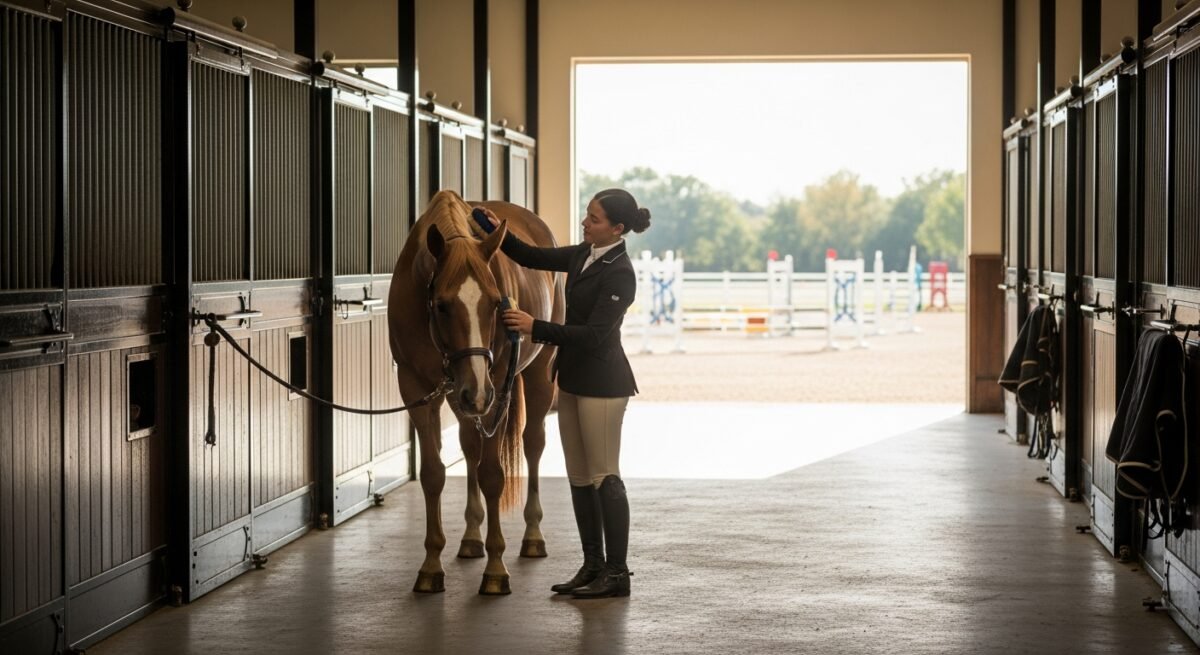
Top Colleges With Equestrian Scholarships for Students
Discover how to secure financial aid for college through riding talent. This guide details top colleges with equestrian scholarships for students and the recruitment process.

By James Miller
For students whose passion lies in the saddle, the dream of combining higher education with competitive riding is more attainable than many realize. A significant number of colleges and universities across the United States offer dedicated equestrian scholarships, providing substantial financial aid to talented riders. These programs recognize equestrian skill as a varsity sport, opening doors to both academic excellence and athletic achievement. Navigating this niche requires understanding the different types of programs, the levels of competition, and the specific pathways to securing this unique form of financial support.
Understanding the Landscape of Equestrian Scholarships
Equestrian scholarships are not monolithic, they vary greatly depending on the institution, the governing body of the sport, and the level of competition. The primary distinction lies between NCAA programs and those governed by the Intercollegiate Horse Shows Association (IHSA) or the National Collegiate Equestrian Association (NCEA). NCAA Division I and II schools offer scholarships as part of their varsity athletics programs, often with more substantial funding and rigorous recruitment processes similar to football or basketball. The NCEA is the governing body specifically for NCAA equestrian teams. Conversely, IHSA programs, which are incredibly widespread, focus on hunt seat equitation and often involve drawing horses at random, emphasizing the rider’s skill over the horse’s quality. Many IHSA teams are club sports but still offer significant scholarship opportunities through their athletic departments or specific donor-funded awards.
Beyond athletic scholarships, many colleges with strong agricultural, animal science, or pre-veterinary programs offer merit-based or need-based scholarships specifically for students pursuing equine-related degrees. These awards are separate from riding talent and are based on academic achievement, leadership, or career goals within the equine industry. A comprehensive financial plan often involves layering these academic scholarships with athletic awards. For a broader understanding of how to combine different funding sources, our guide on Financial Aid Scholarships: How Students Get Free College Money provides a foundational strategy.
Key Colleges and Universities Offering Equestrian Scholarships
Several institutions are renowned for their robust equestrian programs and scholarship offerings. It’s crucial to research each school’s specific focus, whether it’s Western, Hunter/Jumper, or Dressage, to ensure alignment with your discipline.
Auburn University, Baylor University, and the University of Georgia are powerhouse examples of NCAA Division I programs with highly competitive teams and significant scholarship budgets. These schools recruit top talent nationally and compete at the highest level within the NCEA framework. For students seeking a classic liberal arts experience combined with elite riding, schools like Sweet Briar College in Virginia and Skidmore College in New York offer exceptional NCAA Division III or IHSA programs with generous scholarship packages, though Division III schools do not offer athletic scholarships, they provide substantial need-based and equestrian-specific merit aid.
Land-grant universities with premier animal science departments are also major players. Schools like Texas A&M University, the University of Kentucky, and Colorado State University offer a blend of IHSA team participation and deep academic resources in equine science. Their scholarships can come from the athletics department for riding and the academic college for scholastic merit. Prospective students should create a target list that includes a mix of reach, match, and safety schools across these categories.
The Recruitment Process for Equestrian Athletes
The recruitment timeline for NCAA equestrian scholarships often mirrors that of other varsity sports, beginning as early as the sophomore year of high school. Student-athletes must proactively create a riding resume and competition video reel to send to college coaches. Attending summer camps hosted by target colleges is one of the most effective ways to get noticed. It’s imperative to register with the NCAA Eligibility Center to ensure academic requirements are met. For IHSA programs, the process can be less formalized but still requires direct outreach to the team coach during the application period. Demonstrating a strong academic record is equally critical, as coaches seek athletes who will also succeed in the classroom.
How to Secure an Equestrian Scholarship, Step by Step
Securing an equestrian scholarship is a strategic process that requires early planning and organization. Follow these steps to maximize your opportunities.
- Start Early and Self-Evaluate: Begin research by your sophomore year of high school. Honestly assess your riding level, competition record, and academic standing. Identify your preferred discipline and college environment (large university vs. small college).
- Build a Comprehensive Portfolio: Create a professional riding resume detailing your training, competitive achievements, and horsemanship experience. Produce a high-quality video that showcases your skills in flatwork, jumping (if applicable), and pattern work. Include contact information for your current trainer and references.
- Research and Target Programs: Develop a list of 10-15 schools that offer your major, fit your academic profile, and have an equestrian program at your level. Categorize them by NCAA Division, IHSA zone, and scholarship potential.
- Initiate Contact with Coaches: Send personalized emails to the head coaches of your target programs. Attach your resume and a link to your video. Express genuine interest in their specific program and ask informed questions. Follow up appropriately.
- Navigate the Official Visits and Offers: If invited for an official visit, prepare to tour the facilities, meet the team, and often, take a lesson. Understand that an athletic scholarship offer is typically a written agreement from the athletic department. Review all terms carefully before committing.
Throughout this process, maintaining a strong GPA and test scores is non-negotiable. Coaches have limited scholarship funds and will prioritize athletes who are also strong academic admits for the university. Balancing your athletic pursuits with academic excellence is the surest path to securing the best possible financial package.
Maximizing Your Financial Aid Package
An equestrian scholarship is often just one component of a complete financial aid package. Students should always complete the Free Application for Federal Student Aid (FAFSA) to qualify for federal grants, work-study, and loans. Many states and colleges also use the FAFSA for their own need-based aid programs. Furthermore, students should aggressively pursue private scholarships, especially those related to equine studies, agriculture, or their intended major. Combining an equestrian scholarship with academic merit awards, federal aid, and private scholarships can dramatically reduce the net cost of attendance. It’s also wise to explore financial aid & scholarship options related to your chosen degree path, as many academic departments have their own dedicated funding.
When reviewing an offer, understand what is covered. Some scholarships are “full-ride,” covering tuition, room, board, and books, while others may be partial awards applied only to tuition. Always clarify whether the scholarship is guaranteed for four years or if it must be renewed annually based on performance and academic standing. Have a frank conversation with the coach about what is expected for renewal.
Frequently Asked Questions
Do I need to own my own horse to get an equestrian scholarship?
No, in fact, most collegiate equestrian programs, especially NCAA and IHSA, provide the horses for competition and practice. This levels the playing field and is a major benefit of collegiate riding.
Can I get a scholarship for Western disciplines, or is it only for English riding?
Absolutely. Many schools, particularly in the western and southern United States, offer strong Western teams (Reining, Horsemanship) through the NCEA and IHSA. Schools like Texas A&M and Oklahoma State University are known for their Western programs.
What academic majors are common for equestrian scholarship recipients?
While many students pursue equine science, animal science, or agriculture, recipients major in everything from business and engineering to liberal arts. Your major generally does not affect your athletic scholarship, but you must maintain eligibility through satisfactory academic progress.
Is it too late to start the process in my senior year?
While early recruitment is advantageous, opportunities still exist, especially with IHSA programs at smaller colleges. Coaches may have last-minute spots open due to other recruits changing plans. Proactive outreach is key.
What are the ongoing commitments if I accept a scholarship?
Expect a significant time commitment similar to any varsity sport. This includes daily practices, strength training, weekend competitions, team meetings, and mandatory study halls. It is a rewarding but demanding balance.
Pursuing an equestrian scholarship is a journey that rewards dedication, organization, and passion. By thoroughly researching colleges with equestrian scholarships, building a compelling application portfolio, and engaging proactively with coaches, students can transform their equestrian talent into a powerful key for unlocking higher education. The result is a unique collegiate experience that fosters growth both in the arena and in the classroom, setting the stage for a successful future, whether within the equine industry or beyond.