
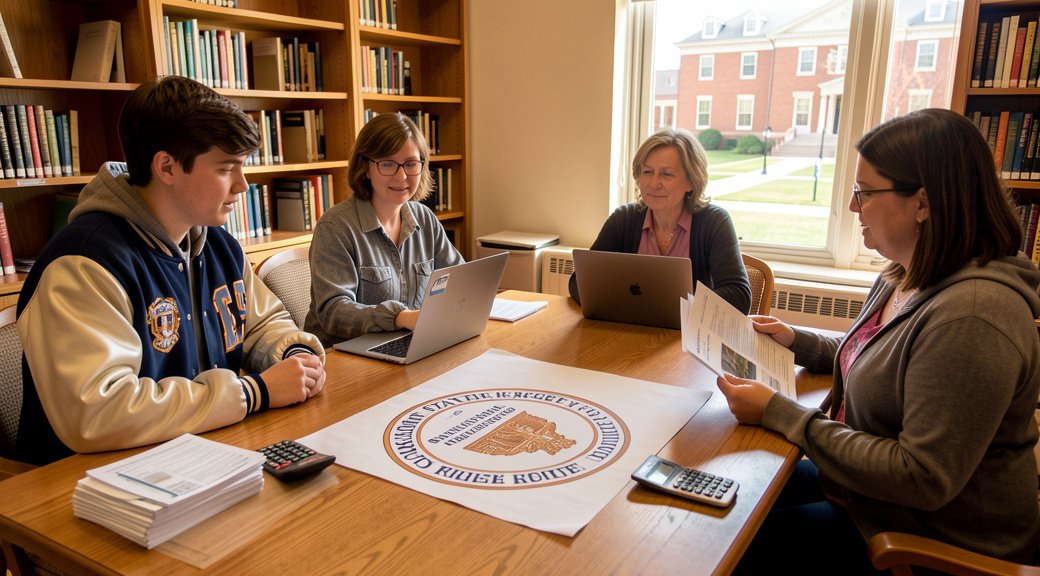
Oklahoma students have a powerful advantage when planning for college: a robust system of state-sponsored scholarships and educational grant awards designed to make higher education affordable. Unlike private loans or merit-based awards from individual institutions, these programs are funded by the state legislature and administered through the Oklahoma State Regents for Higher Education. They are built to serve residents across all income levels, academic backgrounds, and career paths. Whether you are a high school senior, an adult returning to school, or a parent helping a child navigate financial aid, understanding these opportunities can dramatically reduce out-of-pocket costs. This guide walks through the major programs, eligibility requirements, application strategies, and practical steps to secure funding.
How Oklahoma State-Sponsored Scholarships and Educational Grant Awards Work
Oklahoma state-sponsored scholarships and educational grant awards operate on a need-based and merit-based framework. The Oklahoma State Regents for Higher Education oversee the distribution of funds, which are allocated annually by the state budget. Most programs require students to be Oklahoma residents, enroll in an eligible Oklahoma institution (public or private), and maintain satisfactory academic progress. The application process typically begins with the Free Application for Federal Student Aid (FAFSA), which determines your Expected Family Contribution (EFC). State agencies use this data to calculate eligibility for grants like the Oklahoma Tuition Aid Grant (OTAG) and the Oklahoma Tuition Equalization Grant (OTEG).
For merit-based scholarships such as the Oklahoma Academic Scholars Program and the Oklahoma’s Promise scholarship, students must meet specific GPA and test score thresholds. These programs reward academic achievement while also addressing financial need. The key distinction is that state-sponsored awards are not loans; they do not require repayment, making them some of the most valuable resources for Oklahoma families. To maximize your chances, you must apply early, meet all deadlines, and submit accurate documentation. The state also offers specialized grants for students pursuing high-demand fields like teaching, nursing, and STEM careers.
Major Oklahoma State-Sponsored Scholarship and Grant Programs
Oklahoma’s Promise (Oklahoma Higher Learning Access Program)
Oklahoma’s Promise is the flagship state-sponsored scholarship program for Oklahoma residents. It covers full tuition at any public two-year or four-year college or university in Oklahoma. For students attending private institutions, the scholarship provides a comparable amount based on the average public tuition rate. Eligibility is determined by family income (currently capped at $60,000 adjusted gross income) and academic requirements. Students must enroll in the program during the 8th, 9th, or 10th grade, complete a rigorous high school curriculum, and maintain a minimum 2.5 GPA. Once admitted to an Oklahoma college, they must also complete the FAFSA each year to receive funding.
This program is particularly powerful because it is a contract between the student and the state. If you fulfill the academic and conduct requirements, the state guarantees the tuition coverage for up to five years of undergraduate study. Many families combine Oklahoma’s Promise with federal Pell Grants to attend college with little to no tuition cost. The program also covers the mandatory fees at public institutions, making it one of the most comprehensive state scholarships in the nation.
Oklahoma Tuition Aid Grant (OTAG)
OTAG is a need-based grant available to Oklahoma residents enrolled at least half-time in an eligible Oklahoma college or university. The award amount varies by year and depends on the student’s financial need as determined by the FAFSA. Unlike Oklahoma’s Promise, OTAG does not require early enrollment in a program; you simply apply by filing the FAFSA before the priority deadline (typically April 15 each year). Awards are disbursed directly to the institution and applied to tuition and fees. OTAG is often used to supplement other aid, including federal grants and institutional scholarships.
One common misconception is that OTAG is only for low-income students. While need is a factor, many middle-income families also qualify because the grant considers the cost of attendance relative to income. For example, a family earning $80,000 with two children in college may still receive partial OTAG funding. The grant is renewable each year as long as you continue to meet eligibility requirements and submit the FAFSA.
Oklahoma Tuition Equalization Grant (OTEG)
OTEG is a need-based grant specifically for Oklahoma residents attending private, non-profit colleges and universities within the state. Because private institutions have higher tuition, OTEG helps level the playing field for students who choose private education. The award amount is determined by the state legislature and distributed to eligible students through participating private colleges. Like OTAG, OTEG requires FAFSA submission and proof of Oklahoma residency. Students must also be enrolled at least half-time and maintain satisfactory academic progress.
For students considering private colleges like the University of Tulsa, Oklahoma City University, or Southern Nazarene University, OTEG can significantly reduce the net cost. Many private institutions also offer their own institutional grants, and OTEG can be stacked with those awards. Students should check with their college’s financial aid office to confirm whether OTEG funds are available and how they are disbursed.
Oklahoma Academic Scholars Program
The Oklahoma Academic Scholars Program is a merit-based scholarship for top-performing high school seniors. To qualify, students must score in the 99th percentile on the ACT or SAT, or be designated as a National Merit Scholar or National Achievement Scholar. The scholarship covers full tuition and mandatory fees at any Oklahoma public college or university for up to five years. It also provides a stipend for books and supplies. This program is highly competitive, with fewer than 100 students typically receiving the award each year.
Recipients must maintain a 3.25 GPA in college and complete at least 30 credit hours per academic year. The scholarship is renewable for a total of eight semesters or until the bachelor’s degree is earned, whichever comes first. Students who qualify should apply through their high school counselor, who will submit the nomination to the Oklahoma State Regents. Early planning is essential because the ACT or SAT scores used for qualification must be from a national test date during the student’s junior or senior year.
Future Teacher Scholarship Program
This program addresses the teacher shortage in Oklahoma by providing scholarships to students who commit to teaching in Oklahoma public schools after graduation. Awards range from $1,500 to $4,000 per year, depending on the student’s year in school and academic standing. Recipients must enroll in an approved teacher education program at an Oklahoma college or university and agree to teach in a critical shortage area (such as special education, math, or science) for at least three years. If the teaching obligation is not fulfilled, the scholarship converts to a loan that must be repaid with interest.
The program is ideal for education majors who are confident about their career path. It reduces the financial burden of college while providing a clear pathway to employment. Students should apply through their college’s education department, which will verify enrollment in a teacher preparation program.
How to Apply for Oklahoma State-Sponsored Scholarships and Educational Grant Awards
Applying for Oklahoma state-sponsored scholarships and educational grant awards requires careful attention to deadlines and documentation. The process is not a single application; rather, it involves multiple steps that vary by program. Below is a step-by-step framework for navigating the system.
Step 1: File the FAFSA Early. The FAFSA opens on October 1 each year. For Oklahoma programs like OTAG and OTEG, the priority deadline is typically April 15. Submitting earlier increases your chance of receiving funds because some grants are awarded on a first-come, first-served basis. Use accurate tax information from two years prior (the IRS Data Retrieval Tool helps avoid errors).
Step 2: Determine Program Eligibility. Review the specific requirements for each program. For Oklahoma’s Promise, you must have enrolled by the 10th grade. For the Academic Scholars Program, your ACT/SAT scores must be from a qualifying test date. For need-based grants, your FAFSA EFC must fall within the state’s threshold. Create a checklist of programs you qualify for and note their unique deadlines.
Step 3: Submit Program-Specific Applications. Some programs require separate applications. For example, Oklahoma’s Promise requires an online enrollment form during middle school. The Future Teacher Scholarship requires a separate application through your college. The Academic Scholars Program is nomination-based through your high school. Track each program’s requirements using a spreadsheet or calendar.
Step 4: Monitor Your College’s Financial Aid Portal. Once you are admitted to an Oklahoma college, the financial aid office will send you an award letter outlining your state and federal aid. Review this letter carefully and confirm that your state grants are included. If something is missing, contact the financial aid office immediately. You may need to provide additional documentation, such as proof of residency or enrollment verification.
Step 5: Renew Annually. Most state-sponsored scholarships and grants require annual renewal. This means filing the FAFSA each year, maintaining the required GPA, and completing the minimum credit hours. Set a reminder to check renewal requirements each spring. Failure to renew on time can result in losing your funding for the following academic year.
Combining State and Federal Aid for Maximum Coverage
Oklahoma state-sponsored scholarships and educational grant awards are designed to work alongside federal aid programs like Pell Grants, Federal Supplemental Educational Opportunity Grants (FSEOG), and federal student loans. The combination can cover a substantial portion of college costs. For example, a student receiving Oklahoma’s Promise (full tuition) and a full Pell Grant (currently up to $7,395 per year) may have zero tuition costs and additional funds for housing or books. Similarly, OTAG and OTEG can bridge the gap between federal aid and actual tuition at private or out-of-district institutions.
To optimize your aid package, always file the FAFSA by the priority deadline. Then, review your college’s cost of attendance and compare it with your total aid. If there is a gap, explore institutional scholarships, work-study programs, or private scholarships through resources like Scholarship Education. Many Oklahoma colleges also offer need-based and merit-based institutional grants that can stack with state aid. For example, the University of Oklahoma’s Oklahoma Scholars program provides additional support for National Merit finalists beyond the state’s Academic Scholars Program.
It is also important to understand the concept of “overaward.” If your total aid (including state grants, federal grants, and scholarships) exceeds your cost of attendance, the college may reduce some awards. This is less common with state-sponsored scholarships because they typically apply to tuition and fees only. However, if you receive multiple grants, check with your financial aid office to avoid surprises.
Frequently Asked Questions
Can I receive both Oklahoma’s Promise and OTAG? Yes. These programs are complementary. Oklahoma’s Promise covers tuition, while OTAG can help with fees and other costs. However, total aid cannot exceed the cost of attendance.
Do I need to be a full-time student to receive state grants? Most programs require at least half-time enrollment (usually 6 credit hours per semester). Full-time enrollment (12+ credits) is required for some scholarships like Oklahoma’s Promise.
What happens if I move out of Oklahoma during college? You generally must remain an Oklahoma resident to continue receiving state-sponsored aid. If you transfer to an out-of-state institution, you will lose eligibility. Some programs allow a grace period for military service or medical reasons.
Are there state scholarships for graduate students? Most Oklahoma state-sponsored scholarships and educational grant awards are for undergraduate students. Graduate students may qualify for specific programs like the Future Teacher Scholarship (if pursuing teaching certification) or the Oklahoma Graduate Scholarship Program. Check with your graduate school’s financial aid office for details.
What if my family income changes after I qualify for a program? For need-based programs like OTAG, your award is recalculated each year based on the most recent FAFSA. If your income drops, you may qualify for more aid. If it increases, you may receive less. Oklahoma’s Promise income eligibility is determined at the time of application and does not change, even if your family later earns more.
For more detailed guidance on navigating the application process, explore our guide on Wyoming State-Sponsored Scholarships: Funding Your Future for strategies that apply broadly to state aid programs. Additionally, if you are balancing school with work, our article on Employer-Sponsored Scholarships: A Strategic Guide for Students offers insights into combining employer tuition benefits with state funding.
Oklahoma state-sponsored scholarships and educational grant awards represent one of the most effective ways to reduce college debt while pursuing a degree in the Sooner State. By understanding the programs, meeting deadlines, and combining state aid with federal and institutional support, you can significantly lower your out-of-pocket expenses. The key is to start early, stay organized, and use every resource available. For additional tools and up-to-date information on financial aid, visit CollegeAndTuition.com for a comprehensive student funding and tuition guide. With careful planning, the dream of an affordable college education is well within reach for Oklahoma residents.