
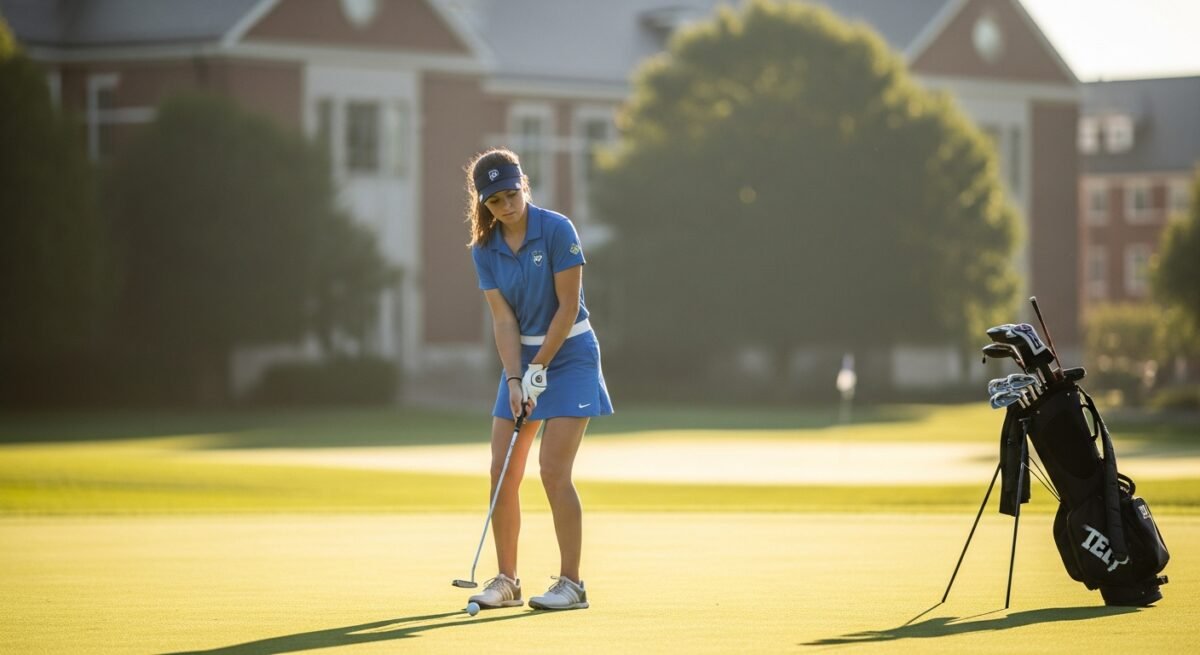
Navigating Golf Scholarships for Female Athletes in College
Female golfers can access full-ride scholarships covering tuition and expenses at NCAA colleges. This guide details the recruiting process for golf scholarships for female athletes.

By Harper Davis
For talented young women with a passion for golf, the fairway to a college education is paved with significant financial opportunities. Unlike many other sports, women’s golf offers a high number of full-ride scholarships at the NCAA Division I and II levels, providing a powerful combination of elite athletic competition and fully-funded academic degrees. This pathway not only covers tuition, room, and board but also opens doors to world-class coaching, premier facilities, and a lifelong network. Understanding how to secure these coveted awards requires a strategic approach, starting early in a player’s high school career and navigating a complex recruiting landscape. This guide demystifies the process, offering a clear roadmap for aspiring student-athletes and their families to turn their dedication on the course into a transformative college experience.
The Landscape of Women’s Collegiate Golf Scholarships
Women’s golf is uniquely positioned within the NCAA framework as an “equivalency” sport for scholarship purposes. This means that a coach has a total sum of financial aid to distribute among the team members, which can be divided into full or partial scholarships. At the NCAA Division I level, each women’s golf program is allotted up to 6.0 full scholarships. At Division II, the maximum is 5.4. This structure creates numerous opportunities, as coaches often split these scholarships to build deeper rosters, meaning many players receive substantial partial awards. The National Association of Intercollegiate Athletics (NAIA) and the National Junior College Athletic Association (NJCAA) also offer significant scholarship opportunities, with NAIA programs allowed up to 5.0 equivalencies and NJCAA often providing full scholarships for top recruits. It’s crucial to understand that “full-ride” scholarships at these levels typically cover tuition, fees, room, board, and required course-related books.
The competition for these spots is intense, but the sheer number of programs (over 250 at the NCAA DI level alone) means there is a fit for a wide range of skill levels. The key is realistic self-assessment and targeted outreach. A player who may not be a top-50 national recruit can still earn a significant scholarship at a strong academic university with a competitive golf program. This ecosystem is supported by a vast network of tournaments, ranking systems (like the Junior Golf Scoreboard and AJGA rankings), and a formal recruiting calendar regulated by the NCAA. Navigating this landscape successfully requires more than just a low handicap, it demands academic preparedness, proactive communication, and a clear understanding of how coaches evaluate talent and character.
The Recruiting Timeline and Key Steps for Success
The journey to securing a golf scholarship begins much earlier than many families realize. The most proactive student-athletes start the process as early as their freshman or sophomore year of high school. This early start allows time to build a competitive tournament resume, achieve strong academic grades, and initiate contact with college coaches. The NCAA has specific rules governing when coaches can contact players, but prospective athletes can always reach out to coaches via email to express interest and share their playing profiles. Creating a compelling athletic and academic resume is the first critical step. This should include tournament scoring averages, handicap index, highlights of top finishes, academic GPA, standardized test scores, and a swing video.
Following a structured timeline is essential. By the end of sophomore year, players should have a target list of 15-20 schools that match their athletic and academic goals. Junior year is the most active period for recruitment. This is when players should be competing in national-level tournaments to improve their visibility, taking official campus visits (allowed starting August 1 before junior year), and having serious conversations with coaches. By the summer before senior year, many top players will have received verbal offers. The National Letter of Intent (NLI) early signing period for Division I and II typically occurs in November of the senior year, which is when the scholarship offer becomes formalized. Missing these windows can significantly limit opportunities.
To streamline this complex process, focus on these sequential steps:
- Self-Evaluation and Research (Freshman/Sophomore Year): Honestly assess your golf game and academic standing. Research college programs that align with both. Consider division level, team competitiveness, academic majors, geographic location, and campus culture.
- Profile Creation and Initial Outreach (Sophomore Year): Develop a professional recruiting profile with swing video, stats, and academic information. Begin sending introductory emails to coaches at your target schools.
- Tournament Competition and Visibility (Junior Year): Schedule a season of competitive tournaments, including at least a few multi-day, national-level events. Update coaches consistently with your results.
- Campus Visits and Communication (Junior Year/Senior Year): Take unofficial and official visits. Engage in substantive conversations with coaches about your potential role on the team and the scholarship offer.
- Verbal Commitment and Signing (Senior Year): After receiving an offer you accept, provide a verbal commitment. Formalize it by signing the National Letter of Intent during the appropriate signing period.
Academic Eligibility and NCAA Requirements
A powerful golf game alone is not enough to secure a scholarship. Academic eligibility is the non-negotiable foundation. The NCAA Eligibility Center certifies all prospective Division I and II student-athletes. To qualify, you must meet specific core-course requirements in high school, achieve a minimum GPA in those core courses, and earn a corresponding SAT or ACT score. The standards are presented on a sliding scale: a higher SAT/ACT score can compensate for a slightly lower core GPA, and vice versa. For Division I, the requirements are more stringent than for Division II. It is imperative to start planning your high school course schedule with these requirements in mind as early as possible. Taking easy classes to boost your overall GPA can backfire if it means you don’t complete the required number of core classes in English, math, science, and social studies.
Beyond just eligibility, your academic record is a major part of your value to a coach. Programs at academically rigorous institutions need to know you can handle the coursework. A strong GPA and test scores make you a more attractive recruit and can also unlock additional academic scholarship money, which coaches can sometimes combine with athletic aid to create a more comprehensive financial package. This is where thorough education scholarship guidance becomes invaluable, as it can help you identify non-athletic funding sources to supplement an offer. Furthermore, the NCAA requires student-athletes to make consistent progress toward a degree once enrolled, maintaining a minimum GPA to remain eligible to compete. Understanding these rules from the outset prevents stressful setbacks later in your college career.
Maximizing Your Opportunities Beyond Division I
While NCAA Division I programs often get the most attention, some of the best overall opportunities for female golfers exist at other levels. NCAA Division II offers a fantastic balance of high-level competition and a often more flexible schedule. NAIA schools provide excellent golf and frequently offer a more personalized campus environment, with their own national championship. Junior colleges (NJCAA) are a phenomenal option for players who need more development time or who wish to reassess their options after two years; many top players transfer to Division I programs after a successful NJCAA career. Additionally, the NCAA Division III model, while not offering athletic scholarships, does provide need-based and merit-based financial aid, and many DIII schools have exceptional golf programs.
When evaluating programs, consider these factors beyond the division label:
- Team Dynamic and Coaching Style: Will you thrive under this coach’s philosophy? Do the current players seem like a good fit for you?
- Practice and Competition Schedule: How often does the team practice? What is the tournament schedule, and does it involve extensive travel?
- Academic Support Services: What tutoring, advising, and scheduling assistance is specifically available for student-athletes?
- Facilities and Resources: Access to quality practice areas, training facilities, and equipment.
- Post-Graduate Outcomes: What do alumni of the program do after graduation? This includes both professional golf and career pathways.
Broadening your search to include these levels dramatically increases your chances of finding a school where you can excel both on the course and in the classroom, with significant financial support. The goal is to find the right fit, not just the highest division.
Frequently Asked Questions
What is a typical golf scholarship amount for female athletes?
There is no “typical” amount, as scholarships range from full rides covering all expenses to small partial awards. In NCAA Division I and II, coaches divide a set number of equivalencies (6.0 and 5.4, respectively). Many players receive between 25% and 75% of a full scholarship. The final amount depends on your skill level, the team’s needs, and your academic merits.
How important are tournament rankings and scores?
They are critically important. Coaches rely heavily on objective data from platforms like the Junior Golf Scoreboard (JGS) and American Junior Golf Association (AJGA) rankings. Your scoring average in multi-day, competitive tournaments is the primary metric. Consistently shooting in the 70s in national events is typically necessary for top Division I consideration, while scores in the low-to-mid 80s can attract attention from other competitive programs.
Can I get a scholarship if I start the process late in high school?
While starting late is a disadvantage, it is not impossible. Your options may be more limited to programs with roster spots still open. Immediate and aggressive action is required: create a profile, compile video, and contact a wide range of programs, focusing on levels that may align with your current skill set. Junior college can also be an excellent pathway to develop and re-enter the recruiting market.
What should be included in my initial email to a coach?
Keep it professional and concise. Introduce yourself, state your graduation year, and express genuine interest in their program. Attach your resume (with scoring average, handicap, academic GPA) and a link to a swing video. Mention any upcoming tournaments where they might see you play. Always personalize the email, do not send a generic blast.
Are there scholarships for women golfers outside of the NCAA/NAIA?
Yes. Many private organizations, golf associations (like the WSGA or state golf associations), foundations, and community groups offer scholarships based on merit, financial need, or community involvement. These awards can be stacked with athletic scholarships to further reduce college costs. A dedicated scholarship search platform is essential for finding these opportunities.
The pursuit of golf scholarships for female athletes is a marathon, not a sprint. It demands dedication on the course, discipline in the classroom, and diligence in the recruiting process. By starting early, understanding the rules, presenting yourself professionally, and casting a wide net across multiple collegiate levels, you can find a program that values your talent and invests in your future. The result is more than just financial aid, it is an unparalleled opportunity to grow as an athlete, a student, and a person within a supportive team environment. Take the first step today by evaluating your game, planning your academic schedule, and reaching out to the programs that inspire you.