
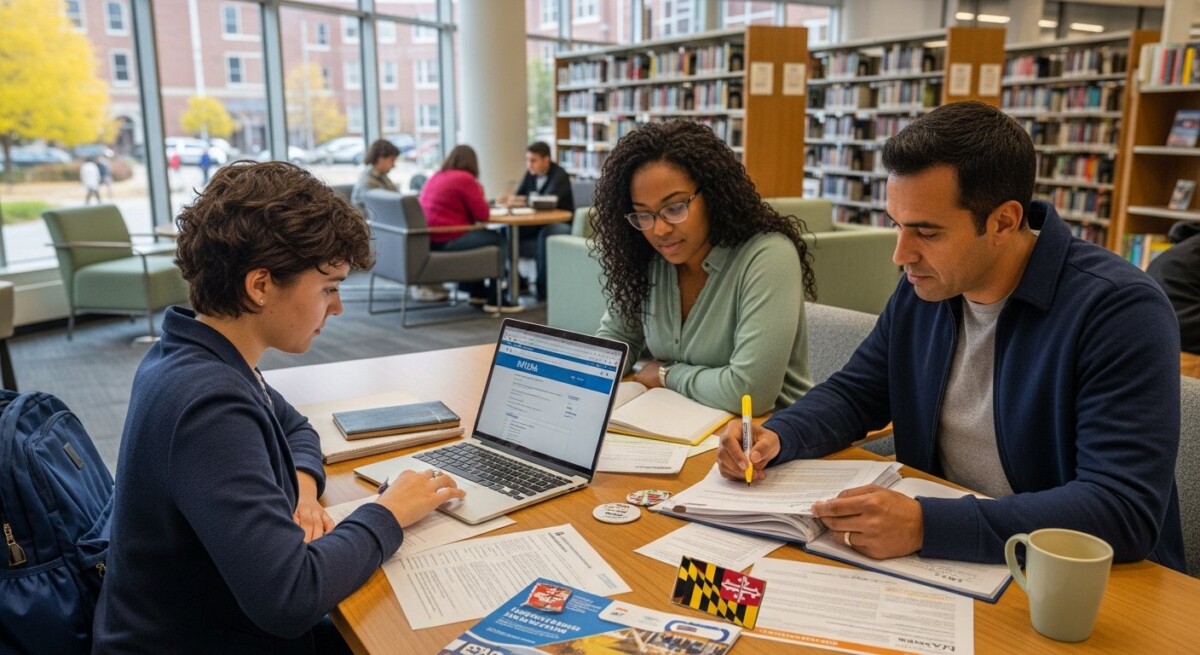
Paying for college in Maryland can feel overwhelming, but the state offers a powerful suite of grant and scholarship programs designed to make higher education accessible for residents. Whether you are a high school senior, a returning adult learner, or a student pursuing a career in a high-demand field, Maryland state-sponsored grants and scholarships for college can significantly reduce your out-of-pocket costs. These programs are funded by the Maryland Higher Education Commission (MHEC) and range from need-based awards to merit-based incentives. Understanding how each program works, who qualifies, and how to apply is the first step toward securing thousands of dollars in financial aid that does not need to be repaid.
Understanding the Maryland Higher Education Commission (MHEC) Aid Landscape
The Maryland Higher Education Commission administers the majority of state-funded financial aid programs. Unlike federal aid, which relies heavily on the FAFSA alone, Maryland combines FAFSA data with specific state applications and eligibility criteria. The result is a layered system that rewards academic achievement, addresses financial need, and targets workforce shortages. For many families, these awards bridge the gap between federal loans and the actual cost of attendance, making a Maryland degree far more attainable.
One of the most important things to know is that most Maryland state grants require you to complete the Free Application for Federal Student Aid (FAFSA) by March 1 each year. This deadline is strict, and late applicants are often excluded from consideration. Additionally, some programs require a separate application through MHEC’s online portal. If you miss the FAFSA cutoff, you could forfeit access to thousands of dollars in state aid. Planning ahead and setting calendar reminders for this date is a simple but critical step.
Beyond the FAFSA, Maryland also considers your residency status, enrollment intensity (full-time vs. part-time), and the type of institution you attend. Public four-year universities, community colleges, and certain private institutions all participate in state aid programs, but award amounts may vary. To get a full picture of what you might qualify for, it helps to explore the major programs individually. Below is a breakdown of the most impactful Maryland state-sponsored grants and scholarships for college students.
The Howard P. Rawlings Guaranteed Access Grant: Need-Based Support
The Guaranteed Access (GA) Grant is one of Maryland’s most generous need-based programs. It is designed for students with exceptional financial need, specifically those whose families contribute very little toward college costs based on the FAFSA. If you qualify, the GA Grant can cover up to 100% of your demonstrated financial need, including tuition, fees, and living expenses at a Maryland college or university. This award is renewable for up to four years, provided you maintain satisfactory academic progress and continue to meet income thresholds.
Eligibility for the GA Grant is determined by your Expected Family Contribution (EFC). For the current award cycle, students with an EFC of $0 are given priority, though some awards extend to those with a slightly higher EFC. You must also be a Maryland resident, enrolled at least half-time in an undergraduate degree program, and have graduated from a Maryland high school or earned a GED in the state. The application process is straightforward: file your FAFSA by March 1, and MHEC will automatically consider you for this grant if you meet the initial criteria.
One common misconception is that the GA Grant only covers tuition. In reality, it can also help with room and board, books, and transportation, depending on your cost of attendance and other aid received. This makes it one of the most comprehensive awards available. For students from low-income households, the GA Grant can mean the difference between attending college and putting plans on hold. As you evaluate your options, remember that this grant stacks with federal Pell Grants, potentially covering nearly all college expenses.
The Howard P. Rawlings Educational Assistance Grant: Flexible Funding
The Educational Assistance (EA) Grant is another need-based program, but it serves a broader audience than the GA Grant. While the GA Grant targets the highest-need students, the EA Grant is available to Maryland residents with moderate financial need. Award amounts vary each year based on state funding and the number of applicants, but typical awards range from $400 to $3,000 per year. This grant can be used at any eligible Maryland institution, including community colleges, four-year universities, and private colleges.
Unlike some merit-based scholarships, the EA Grant does not require a minimum GPA or test score. Your eligibility is determined primarily by your FAFSA data, residency, and enrollment status. However, priority is given to students who file their FAFSA early, so the March 1 deadline is just as important here. The EA Grant is renewable, but you must reapply each year by submitting a new FAFSA and maintaining at least half-time enrollment.
For students who do not qualify for the GA Grant but still face financial barriers, the EA Grant provides a reliable safety net. It is often used alongside federal work-study or institutional scholarships to round out a financial aid package. Because the award is not tied to a specific major or career path, it offers maximum flexibility. Whether you are studying engineering, liberal arts, or nursing, the EA Grant can help reduce your reliance on student loans. This flexibility is one reason why it remains a cornerstone of Maryland state-sponsored grants and scholarships for college.
Maryland Community College Scholarships and Transfer Incentives
Maryland recognizes that community colleges are a vital entry point for many students, especially those seeking affordable pathways to a bachelor’s degree. The state offers several programs specifically for community college attendees. The Community College Scholarship is a need-based award for students enrolled at least half-time in a Maryland community college. Award amounts are modest, typically between $500 and $2,000 per year, but they can cover a significant portion of tuition at these low-cost institutions.
In addition to direct scholarships, Maryland has transfer incentive programs like the Guaranteed Transfer Program and the Transfer Scholarship. These are designed for students who complete an associate degree at a Maryland community college and then transfer to a four-year public institution. The Transfer Scholarship provides up to $3,000 per year for two years, helping to offset the higher costs of a university. To qualify, you must earn an associate degree with a minimum GPA (usually 3.0 or higher) and enroll full-time at a participating four-year school.
These programs are especially valuable for students who want to save money on the first two years of college. By starting at a community college and transferring, you can earn a bachelor’s degree for a fraction of the cost. Maryland’s state-sponsored grants and scholarships for college actively encourage this pathway, making it a smart financial strategy. If you are considering this route, check with your community college’s transfer office for specific articulation agreements and scholarship deadlines.
Merit-Based and Career-Specific Scholarships
Maryland also invests in talent through merit-based programs. The Senator John A. Cade Scholarship rewards academic excellence, leadership, and community service. This award is available to high school seniors who demonstrate outstanding achievement, with amounts varying based on funding and institutional match. Similarly, the Distinguished Scholar Award recognizes top-performing students, though funding for this program has been reduced in recent years. Check with your high school guidance counselor or college financial aid office for current availability.
For students pursuing specific career paths, Maryland offers targeted scholarships. The Workforce Development Scholarship supports students enrolled in programs that lead to high-demand occupations, such as healthcare, information technology, and skilled trades. Award amounts can reach up to $4,000 per year, and the program is open to both recent high school graduates and adult learners. Another option is the Teaching Fellows for Maryland Scholarship, which provides up to $10,000 per year for students who commit to teaching in a Maryland public school after graduation.
These career-specific scholarships often come with service obligations. For example, the Teaching Fellows program requires recipients to teach in a Maryland public school for at least one year for each year of funding received. If you are committed to a particular field, these programs can be a powerful way to finance your education while building a career. They also address critical workforce shortages, making them a win for both students and the state. As you research, be sure to read the fine print on service requirements and repayment terms if you do not fulfill the obligation.
How to Apply and Maximize Your Chances
Applying for Maryland state aid involves more than just submitting the FAFSA. While the FAFSA is the starting point, some programs require additional steps. The MHEC online application, known as the MDCAPS portal, is used for several scholarships, including the Workforce Development Scholarship and the Teaching Fellows program. Create an account early, and upload any required documents, such as transcripts or letters of recommendation, well before the deadline.
To maximize your chances of receiving aid, follow these strategies:
- Submit your FAFSA by March 1 every year, even if you think you might not qualify. Many students miss out simply because they assume they earn too much.
- Apply for admission to your chosen Maryland college as early as possible. Some state grants require concurrent admission to a participating institution.
- Check each scholarship’s specific eligibility criteria. For example, the GA Grant prioritizes students with an EFC of $0, while the EA Grant serves a broader income range.
- Renew your FAFSA annually and maintain at least half-time enrollment to keep your awards active.
- Search for additional scholarships through Scholarship.Education to supplement your state aid. Combining multiple awards can significantly reduce your total college costs.
Following these steps will put you in a strong position. Remember that state aid is often awarded on a first-come, first-served basis. Filing early gives you an edge over other applicants. If you are unsure about any part of the process, reach out to your college’s financial aid office or consult resources like this guide to the different types of scholarships for college for a broader perspective on funding options.
Frequently Asked Questions
Do I need to be a full-time student to receive Maryland state grants?
Most programs require at least half-time enrollment (six credits per semester for undergraduates). Some scholarships, like the Guaranteed Access Grant, may require full-time enrollment for maximum funding. Check the specific program guidelines on the MHEC website.
Can undocumented students receive Maryland state-sponsored aid?
Maryland’s DREAM Act allows certain undocumented students who meet residency and other criteria to receive state financial aid, including the Howard P. Rawlings Educational Assistance Grant. You must have attended a Maryland high school for at least three years and graduated or earned a GED in the state.
What happens if I transfer to an out-of-state college?
Most Maryland state grants and scholarships are only valid at Maryland institutions. If you transfer out of state, you will likely lose your state aid. However, some programs, like the Transfer Scholarship, are designed specifically for students moving between Maryland schools.
Are Maryland state scholarships taxable?
Generally, scholarship funds used for tuition, fees, and required course materials are tax-free. Amounts used for room and board, travel, or other living expenses may be taxable. Consult a tax professional or IRS Publication 970 for detailed guidance.
Putting Your Financial Aid Package Together
Navigating Maryland’s financial aid system requires attention to detail, but the payoff is substantial. By combining state grants, federal Pell Grants, and institutional scholarships, many students graduate with little to no debt. Start by filing your FAFSA early, then explore the specific programs that match your background and career goals. Maryland state-sponsored grants and scholarships for college are designed to support a wide range of students, from high-achieving scholars to those overcoming financial hardship. Take advantage of every opportunity available to you.
For a deeper dive into finding and winning competitive awards, review this strategic guide to finding and winning scholarships for college. With the right approach, you can secure the funding you need to focus on what matters most: your education. For additional resources on tuition planning and comparing financial aid options, visit this student funding and tuition guide to help you make informed decisions about your college investment.