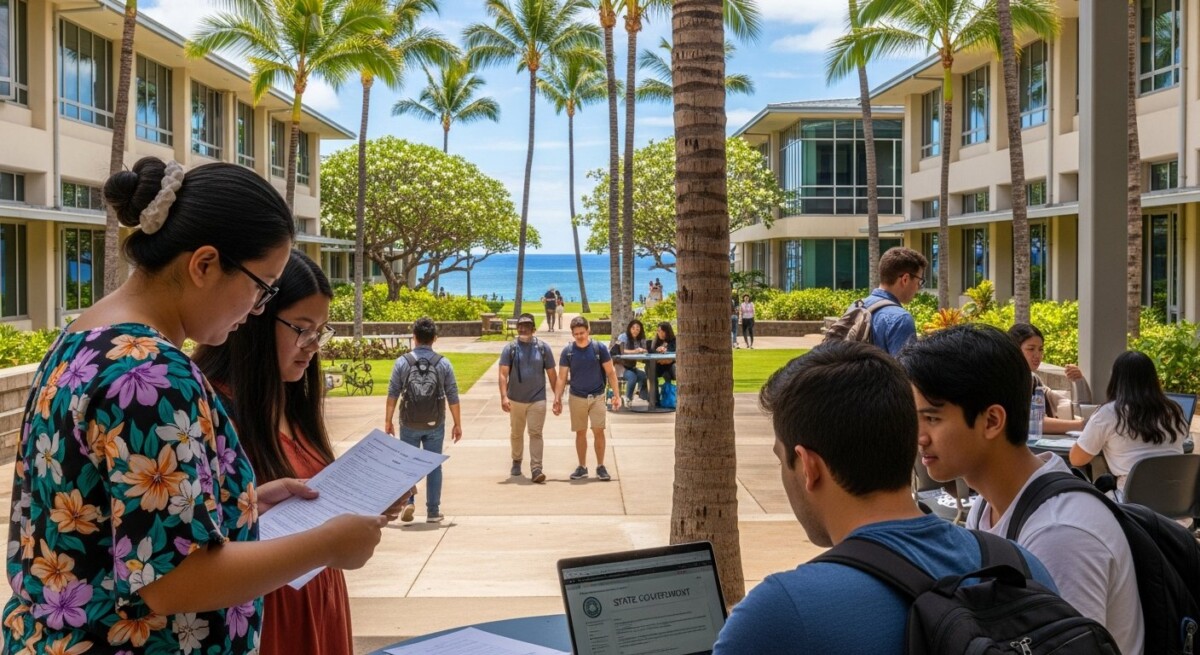
For students in the Aloha State, paying for college often feels like a daunting challenge. Yet Hawaii offers a range of state-funded scholarships and government educational awards designed to make higher education accessible for residents. Whether you are a high school senior planning your first semester or an adult learner returning to finish a degree, understanding these opportunities can significantly reduce your out-of-pocket costs. This guide breaks down the major Hawaii state scholarships and government-funded educational awards, explains eligibility requirements, and provides practical steps to help you secure funding.
Understanding Hawaii State Scholarships and Government-Funded Educational Awards
Hawaii’s state scholarship programs are administered primarily through the Hawaii State Department of Education, the University of Hawaii system, and the Hawaii Community Foundation. These programs aim to support residents who demonstrate financial need, academic merit, or commitment to specific fields such as teaching, nursing, or STEM. Unlike federal aid, which depends on your FAFSA submission alone, state awards often require separate applications and additional documentation. The key is to start early and treat each scholarship as a distinct opportunity with its own deadlines and criteria.
Government-funded educational awards in Hawaii include need-based grants, merit scholarships, and service-based forgiveness programs. For example, the Hawaii B Plus Scholarship rewards high-achieving students who graduate from a Hawaii public high school with a grade point average of 3.0 or higher. Another significant award is the Hawaii State Need-Based Grant, which assists students with substantial financial need who attend eligible Hawaii institutions. These programs collectively distribute millions of dollars each year, yet many eligible students miss out simply because they do not apply or fail to meet early deadlines.
Major Hawaii State Scholarship Programs
Hawaii B Plus Scholarship
The Hawaii B Plus Scholarship is one of the most accessible state awards. It is available to Hawaii residents who graduated from a Hawaii Department of Education public high school, a charter school, or a home-school program with a GPA of 3.0 or higher. Students must also complete the rigorous high school curriculum known as the Board of Education (BOE) Academic Subject Requirements. The award amount varies based on available funding and your chosen institution, but it can cover a significant portion of tuition at any University of Hawaii campus. To maintain eligibility, you must enroll full-time and maintain a 3.0 GPA in college.
Hawaii State Need-Based Grant
This grant targets students with the highest financial need as determined by the FAFSA. Unlike the B Plus Scholarship, the Need-Based Grant does not require a minimum GPA, making it an essential resource for students who may have faced academic challenges in high school but demonstrate strong financial need. The grant is renewable for up to eight semesters provided you continue to meet income thresholds and make satisfactory academic progress. Awards are typically applied directly to tuition and fees at participating Hawaii colleges and universities.
Hawaii Student Incentive Grant
This program is a partnership between the state of Hawaii and the federal government. It provides additional funds to students who already qualify for a Federal Pell Grant. The award supplements your existing aid package and helps cover remaining tuition costs. Because it is tied to Pell eligibility, you must file the FAFSA each year and demonstrate exceptional financial need. The grant is particularly valuable for low-income students attending community colleges or four-year institutions within the UH system.
Government-Funded Educational Awards for Specific Fields
Hawaii Teacher Loan Forgiveness Program
To address teacher shortages in rural and low-income schools, Hawaii offers a loan forgiveness program for educators who commit to teaching in high-need areas. Participants can receive up to $10,000 in loan forgiveness after completing three years of service. Eligible teachers must hold a valid Hawaii teaching license and work full-time in a public school designated as hard-to-staff. This program is an excellent way for education majors to reduce their debt burden while serving communities that need skilled teachers most.
Hawaii Nursing Scholarship Program
Hawaii faces a persistent shortage of registered nurses, especially in rural areas and specialized units. The Hawaii Nursing Scholarship Program provides financial assistance to students enrolled in accredited nursing programs at Hawaii institutions. Recipients must agree to work in a Hawaii healthcare facility for at least two years after graduation. The scholarship covers tuition, fees, and related educational expenses. For students pursuing an Associate Degree in Nursing (ADN) or a Bachelor of Science in Nursing (BSN), this award can dramatically lower the cost of training.
Hawaii STEM Scholarship
This state-funded award supports students pursuing degrees in science, technology, engineering, and mathematics. It is administered through the University of Hawaii system and targets undergraduates who demonstrate academic promise in STEM fields. Recipients receive up to $5,000 per year for four years. In exchange, they must participate in STEM outreach activities, such as mentoring high school students or volunteering at science fairs. The program aims to build Hawaii’s workforce in critical technical sectors and reduce the state’s reliance on imported talent.
How to Apply for Hawaii State Scholarships
Applying for Hawaii state scholarships and government-funded educational awards requires careful planning. The first step is always to complete the Free Application for Federal Student Aid (FAFSA). Hawaii uses the FAFSA to determine eligibility for most state grants. After submitting the FAFSA, you should visit the Hawaii State Department of Education’s scholarship portal or the University of Hawaii financial aid website to identify specific applications. Many state scholarships require an additional application form, an essay, or letters of recommendation.
Here are the essential steps to follow:
- Complete the FAFSA as early as possible after October 1 each year. Hawaii’s priority deadline is typically March 1.
- Gather your high school transcripts, test scores, and proof of Hawaii residency (such as a driver’s license or tax records).
- Visit the Hawaii Community Foundation’s scholarship portal to search for local awards beyond state programs.
- Write a personal statement that explains your educational goals, financial need, and connection to Hawaii.
- Request recommendation letters from teachers or mentors at least one month before deadlines.
After submitting applications, monitor your email and the scholarship portal regularly. Some programs require interviews or additional documentation after initial review. Missing a follow-up request can disqualify you even if you meet all eligibility criteria. Set calendar reminders for each program’s deadline and keep copies of all submitted materials for your records.
Tips for Maximizing Your Chances
Competition for Hawaii state scholarships and government-funded educational awards can be intense. To improve your odds, apply to multiple programs simultaneously. Do not limit yourself to just one or two awards. Even small scholarships can add up and reduce your reliance on student loans. Additionally, consider applying to local community foundations, Rotary clubs, and nonprofit organizations that offer smaller awards specifically for Hawaii residents.
Another effective strategy is to strengthen your application by highlighting community service and leadership. Many state scholarship committees value applicants who give back to their communities. If you have volunteered at a beach cleanup, tutored younger students, or participated in a cultural organization, include those experiences in your essay. Also, ensure your application is free of errors. A single typo or missing signature can lead to rejection. Ask a parent, teacher, or counselor to review your materials before you submit them.
Finally, understand that some scholarships are renewable. If you receive an award as a freshman, check whether you can reapply each year. Some programs require you to maintain a certain GPA or complete a minimum number of credits. Keeping your grades up and staying enrolled full-time will help you retain funding throughout your college career.
Frequently Asked Questions
Who is eligible for Hawaii state scholarships?
Eligibility varies by program. Most require Hawaii residency, U.S. citizenship or eligible non-citizen status, and enrollment at an approved Hawaii institution. Some awards target specific high schools, GPAs, or fields of study. Always read the full eligibility criteria for each scholarship.
Do I need to file the FAFSA to qualify for state awards?
Yes, the FAFSA is required for almost all Hawaii state grants and many scholarships. It determines your Expected Family Contribution (EFC) and eligibility for need-based aid. File it by the state priority deadline of March 1 for maximum consideration.
Can I use state scholarships at private colleges in Hawaii?
Some awards, such as the Hawaii State Need-Based Grant, are limited to public institutions like the University of Hawaii campuses. However, other programs, including those administered by the Hawaii Community Foundation, may be used at private or out-of-state colleges. Check each award’s terms carefully.
Are there scholarships for non-traditional or adult students?
Yes. Several Hawaii state scholarships and government-funded educational awards are open to adult learners, including the Hawaii State Need-Based Grant and the Hawaii Student Incentive Grant. Additionally, the Hawaii Community Foundation offers awards specifically for returning students and parents.
What happens if I lose my scholarship after the first year?
If your GPA drops below the required threshold or you fall below full-time enrollment, you may lose renewal eligibility. Some programs allow a probationary period or an appeal process. Contact the scholarship administrator immediately to discuss your options. For more guidance on maintaining your awards, refer to our guide on securing strong recommendation letters, which can also help with renewal applications.
If you are a veteran or military-affiliated student, Hawaii offers additional benefits through state-funded tuition waivers and federal programs. Our article on veteran scholarships provides detailed information on these opportunities.
Final Thoughts on Funding Your Education in Hawaii
Hawaii state scholarships and government-funded educational awards provide a powerful pathway to affordable college education for residents. By understanding the different programs, meeting deadlines, and submitting strong applications, you can significantly reduce your tuition burden. Start your search today by filing the FAFSA and exploring the Hawaii Community Foundation portal. For a broader perspective on tuition planning and financial decision-making, visit our student funding & tuition guide for additional resources. With persistence and careful planning, you can turn your college aspirations into reality without overwhelming debt.