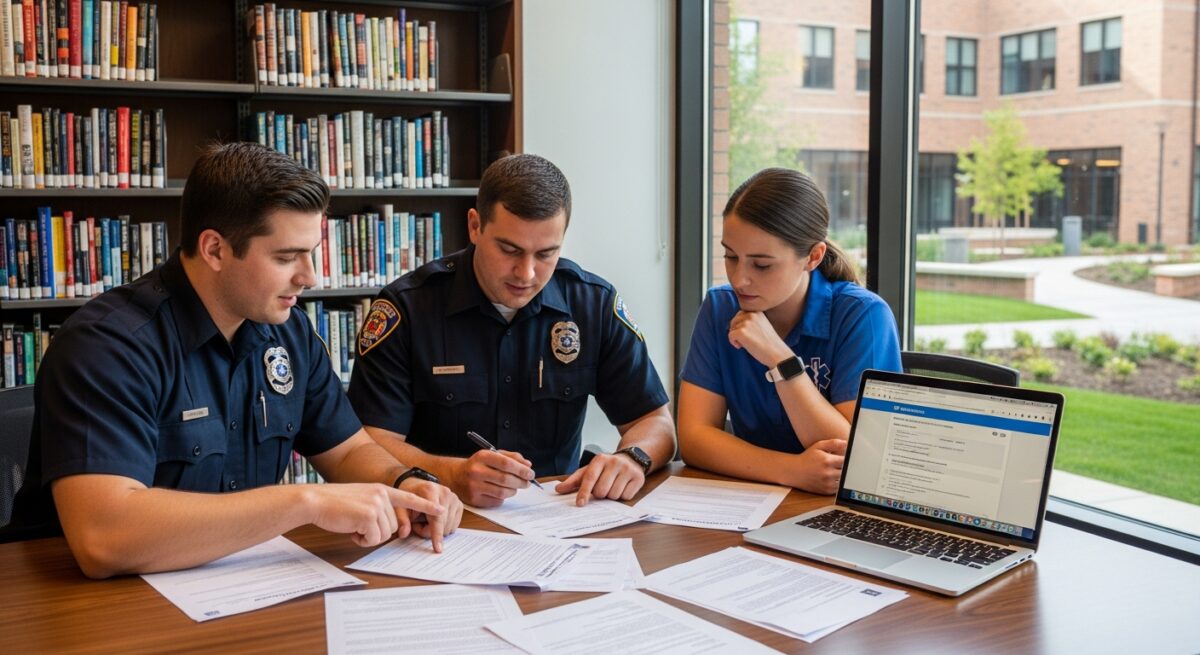
Every day, first responders put their lives on the line to protect their communities. Yet many aspiring firefighters, police officers, EMTs, and paramedics face a significant barrier: the cost of higher education. Whether you are pursuing a degree in criminal justice, fire science, or emergency medical services, tuition expenses can feel overwhelming. Fortunately, dedicated funding exists to support those who dedicate themselves to public safety. First responder scholarships for public service students are designed specifically to reduce financial burdens and help you complete your training without crippling debt. This guide walks through the best opportunities, application strategies, and how to maximize your chances of receiving aid.
Why First Responder Scholarships Matter
The demand for qualified first responders continues to grow as communities expand and emergency services become more complex. However, the cost of certification programs, associate degrees, and bachelor’s degrees in public safety fields can deter talented candidates. Scholarships targeting emergency service professionals address this gap by providing financial assistance to those who commit to serving the public. Unlike loans, scholarships do not require repayment, which means you can focus on your studies and field training rather than worrying about monthly payments.
These awards also recognize the unique sacrifices and responsibilities that come with public service work. Many scholarships are funded by government agencies, nonprofit organizations, and private foundations that want to strengthen the emergency response workforce. By investing in your education, these programs invest in the safety of entire communities. First responder scholarships for public service students often cover tuition, books, equipment, and even living expenses, making it possible for you to pursue a career that might otherwise be out of reach.
Types of First Responder Scholarships Available
Scholarship opportunities vary widely depending on your specific role, academic level, and geographic location. Below is a breakdown of the most common categories you will encounter when searching for funding.
Federal and State Government Programs
Government-sponsored scholarships are among the most reliable sources of funding for public service students. The federal government offers programs like the Public Safety Officers’ Educational Assistance Program, which provides financial aid to dependents of fallen or disabled officers. Many states also run their own scholarship initiatives. For example, the California Law Enforcement Personnel Dependents Grant Program offers tuition assistance to children and spouses of eligible law enforcement officers. You should check your state’s higher education agency or emergency services department for region-specific options.
Private and Nonprofit Scholarships
Numerous private organizations and nonprofits are dedicated to supporting first responders. The National Volunteer Fire Council Foundation offers scholarships for volunteer firefighters pursuing higher education. The International Association of Fire Chiefs Foundation provides awards for fire science and emergency management students. Similarly, the American Ambulance Association offers scholarships for EMTs and paramedics seeking advanced degrees. These organizations often prioritize applicants who demonstrate a commitment to community service and leadership.
College and University-Based Aid
Many colleges and universities that offer public safety programs provide their own scholarships for enrolled students. For instance, a university with a strong fire science department might award a scholarship specifically for students in that major. When researching schools, look for institutional aid that aligns with your field of study. You can also explore general emergency service scholarships offered through the school’s financial aid office. If you are considering online programs, many institutions now offer flexible learning options for working first responders. In our guide on Scholarships for Autistic Students and Support Programs, we explain how to find specialized funding for diverse student needs, which can be adapted to your search for public safety aid.
How to Find and Apply for These Scholarships
Finding the right scholarship requires a strategic approach. Start by identifying your specific field within public safety. Are you pursuing a degree in fire science, criminal justice, emergency management, or paramedicine? Each discipline has its own set of funding opportunities. Use scholarship databases, professional association websites, and government portals to compile a list of potential awards. Pay close attention to eligibility criteria, deadlines, and required documentation.
Once you have a list, prioritize scholarships that match your profile. Some awards are limited to active-duty first responders, while others are open to students who intend to enter the field after graduation. Many first responder scholarships for public service students also consider factors like community involvement, academic achievement, and financial need. Prepare a strong application package that includes a compelling personal statement, letters of recommendation, and transcripts. Tailor each application to the specific scholarship by highlighting how your goals align with the mission of the funding organization.
Key Requirements and Eligibility Criteria
While each scholarship has its own rules, most share common eligibility requirements. Understanding these upfront will save you time and help you focus on awards you are qualified to receive.
- Enrollment status: You must be enrolled or accepted into an accredited program related to public safety, emergency services, or a closely related field.
- Academic performance: Many scholarships require a minimum GPA, typically between 2.5 and 3.5, though some are based on need rather than grades.
- Service commitment: Some awards require you to be an active volunteer or paid first responder, or to commit to serving in a specific capacity after graduation.
- Residency or citizenship: Most U.S. scholarships require you to be a citizen, permanent resident, or legal resident of a specific state or region.
In addition to these basics, some scholarships require you to submit an essay describing your career goals or explaining how you plan to contribute to public safety. Others may ask for proof of volunteer hours or employment in emergency services. Always verify the exact requirements on the official scholarship page before applying. Missing a single document can disqualify your application.

Tips for Writing a Winning Application
A strong application can make the difference between receiving funding and being passed over. Start by reading the scholarship criteria carefully and addressing every point in your personal statement. Explain why you chose a career in public service and how the scholarship will help you achieve your goals. Use specific examples from your experience, such as a call that reinforced your dedication or a training exercise that taught you resilience.
Recommendation letters are equally important. Choose recommenders who know you well and can speak to your character, work ethic, and commitment to public safety. A letter from a fire chief, police captain, or EMS supervisor carries significant weight. Give your recommenders plenty of time to write and provide them with a summary of your goals and the scholarship requirements. Finally, proofread everything. Errors in grammar or spelling can undermine an otherwise excellent application.
Additional Financial Aid Options for Public Service Students
Beyond scholarships, you can explore other forms of financial assistance to cover your education costs. Federal student aid, including Pell Grants and work-study programs, is available to eligible students pursuing degrees in public safety fields. You should also complete the Free Application for Federal Student Aid (FAFSA) each year to determine your eligibility for need-based aid. Many states offer grants specifically for students enrolled in high-demand fields like nursing, law enforcement, and firefighting.
Employer tuition assistance is another valuable resource. Some fire departments, police agencies, and ambulance services offer reimbursement for courses that enhance job performance. If you are currently employed as a first responder, ask your human resources department about education benefits. Additionally, professional associations often maintain lists of private scholarships and grants. For a broader view of funding opportunities, visit collegeandtuition.com to compare tuition costs and financial aid options across institutions. Combining multiple sources of funding can significantly reduce your out-of-pocket expenses.
Frequently Asked Questions
Can I apply for multiple first responder scholarships at the same time?
Yes. In fact, applying for multiple scholarships is encouraged because it increases your overall chances of receiving funding. Just be sure to track deadlines and tailor each application to the specific award criteria.
Are first responder scholarships available for online degree programs?
Many scholarships apply to both on-campus and online programs, as long as the institution is accredited. Check the scholarship guidelines to confirm that online students are eligible. Some awards even prioritize distance learners who are balancing work and study.
Do I need to be a current first responder to qualify?
Not always. Some scholarships are open to students who are pursuing a degree with the intention of becoming a first responder after graduation. Others are reserved for active-duty personnel. Read the eligibility section carefully to determine which category applies to you.
What if I don’t meet the GPA requirement?
Some scholarships focus on financial need, community service, or leadership potential rather than academic performance. If your GPA is below the cutoff, look for awards that use holistic criteria. You can also strengthen your application by highlighting relevant experience and strong recommendation letters.
Your Path to a Funded Public Service Career
Securing a first responder scholarship requires effort, but the payoff is immense. With the right funding, you can complete your degree or certification without the weight of student loans. Start your search early, stay organized, and apply to as many relevant opportunities as possible. Every application you submit brings you one step closer to serving your community with the skills and knowledge you gain through higher education. The resources are available. Now it is time to take the next step toward your future in public service.