
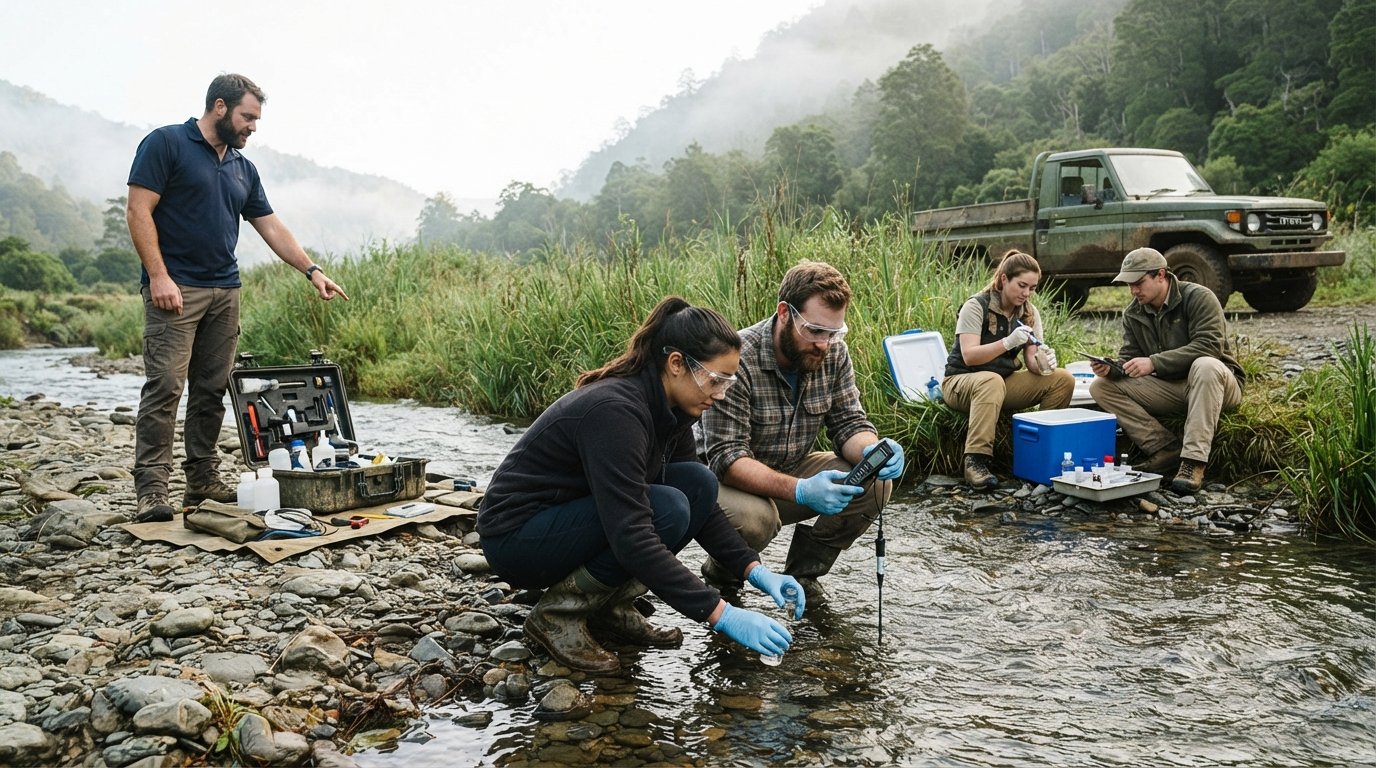
Environmental Studies Certificate in 12 Weeks at FILTERTECH
Earn an Environmental Studies Certificate in under 12 weeks with in-person training at FILTERTECH. Gain hands-on skills for a fast career start.

By Hannah Reed
Professionals who want to break into the environmental sector often face a frustrating paradox: employers demand hands-on experience, but traditional degree programs require years of study before you touch real equipment. A practical alternative is emerging through accelerated, in-person training. The Environmental Studies Certificate, less than 12 weeks In-person at FILTERTECH, is designed to close that gap fast. Instead of sitting through semesters of theory, you spend weeks immersed in labs, field sampling, and regulatory workshops that mirror the daily work of environmental technicians and compliance staff. For career changers, recent graduates, or working adults who need a credential quickly, this format offers a direct route to employable skills without the four-year commitment. In this guide, we break down what the program covers, who it suits, how to pay for it, and how to decide whether an accelerated certificate is the right investment for your future.
Why Accelerated Environmental Training Matters in 2026
The environmental sector is expanding faster than many traditional academic pipelines can supply workers. From water quality monitoring to hazardous waste management, employers need technicians who understand sampling protocols, chain-of-custody documentation, and environmental regulations. A four-year degree remains valuable for research and engineering roles, but a large share of entry-level and mid-level positions require specific technical competencies rather than a broad liberal arts foundation. That is where short, intensive certificates come in. They focus narrowly on the skills that hiring managers actually test for, and they do so in a compressed timeframe that limits opportunity cost.
Accelerated programs also solve a financial problem. Students who cannot afford to stop working for two years can often manage a 10 to 12 week commitment, especially when classes are scheduled in person during evenings or on weekends. The in-person format at FILTERTECH adds another layer of value: you learn on actual instruments, handle real samples, and practice field techniques under supervision. That tactile experience is difficult to replicate online, and it gives graduates a credible answer when interviewers ask, "What have you done hands-on?"
Another factor is the tightening of environmental regulations at the state and federal level. Compliance monitoring, wastewater testing, and air quality assessment all require documented training. A certificate from a recognized provider signals that you have met a baseline of practical instruction. While it does not replace a license or a degree, it can satisfy continuing education requirements or serve as a stepping stone toward more advanced credentials. For professionals already in adjacent fields, such as construction, manufacturing, or public health, this certificate can be the bridge to a more specialized and resilient career path.
What the Environmental Studies Certificate at FILTERTECH Covers
The curriculum for this certificate is built around the tasks that environmental technicians perform daily. Rather than surveying broad topics at a surface level, the program dives into applied skills. Students can expect a mix of classroom instruction and hands-on laboratory work, with field exercises that simulate real monitoring scenarios. The in-person requirement is not incidental: it ensures that every participant physically operates equipment, prepares samples, and troubleshoots common issues that arise in the field. Because the program is completed in under 12 weeks, the pace is brisk, but the focus stays on competency rather than busywork.
Core topics typically include environmental sampling techniques, water and soil analysis, air quality monitoring, waste handling procedures, and an introduction to environmental regulations. Students also learn how to record data accurately, maintain chain-of-custody logs, and write technical reports that meet regulatory standards. These are the exact deliverables that employers ask for during the hiring process. In many programs, the final weeks include a capstone project where students conduct a mini-audit or monitoring exercise from start to finish, demonstrating that they can integrate multiple skills under a deadline.
Because FILTERTECH emphasizes in-person training, the equipment you use matters. Look for programs that provide access to calibrated meters, spectrophotometers, sampling pumps, and safety gear. The certificate should also cover safety protocols, including hazard communication and personal protective equipment, since environmental work often involves exposure to contaminated materials. If you are comparing this certificate to a longer degree, consider that the certificate is not designed to make you a scientist or an engineer. It is designed to make you employable as a technician, compliance assistant, or field analyst, and to give you a foundation for further study if you choose that route.
One useful way to evaluate the depth of any accelerated program is to look at its assessment methods. Hands-on certificates should grade you on practical demonstrations, not just multiple-choice exams. At FILTERTECH, expect to be evaluated on your ability to collect a representative sample, calibrate an instrument, and interpret results within acceptable error margins. These assessments mirror the pressures of actual fieldwork, where a mistake can invalidate a sample or trigger a regulatory violation. Graduates leave with a portfolio of completed exercises that they can describe in interviews.
Who Should Enroll and Who Should Wait
This certificate is an excellent fit for career changers who want to enter the environmental field without committing to a multi-year degree. If you have worked in construction, manufacturing, logistics, or facilities management, you already understand compliance and safety culture. Adding environmental sampling and monitoring skills can position you for roles in environmental health and safety, wastewater operations, or consulting. Recent high school graduates who are not ready for a four-year college also benefit, especially if they want to earn a credential and start working quickly. The in-person format suits learners who thrive with structure, supervision, and immediate feedback.
Working adults often ask whether they can balance the program with a full-time job. Because the certificate is completed in less than 12 weeks, the schedule is intense, but many programs offer evening or weekend cohorts to accommodate employed students. You should confirm the specific meeting times with FILTERTECH before enrolling, and plan for additional study and lab time outside of class. The compressed timeline means that missing a session can set you back significantly, so consistent attendance is essential.
Who should wait? If your goal is to become an environmental engineer, a research scientist, or a policy analyst, you will likely need a bachelor's degree or higher. This certificate is not a substitute for that path. Similarly, if you are unsure whether you enjoy field or laboratory work, consider shadowing a technician or taking a single introductory course before committing to the full program. The certificate is most valuable when you have a clear target role in mind, such as environmental technician, compliance aide, or sampling assistant. For students who later decide to pursue a degree, the certificate credits may or may not transfer, so check with the receiving institution in advance.
- Ideal candidates: career changers, recent graduates seeking quick employability, and professionals in adjacent fields who need environmental skills.
- Schedule considerations: expect a full-time workload for the duration of the program, even if classes meet part-time.
- Not a fit for: those seeking engineering, research, or advanced policy roles that require a degree.
- Prerequisites: typically a high school diploma or equivalent; some programs may require basic math or science familiarity.
Before you enroll, ask FILTERTECH about the specific admission requirements, including any math or science prerequisites. Some accelerated programs assume comfort with unit conversions, basic chemistry, and spreadsheet software. If you feel rusty in those areas, a short refresher course or self-study can make the program much smoother. It is also worth asking about class size and instructor credentials, since small cohorts with experienced trainers tend to produce better outcomes in hands-on settings.
Paying for Your Certificate: Financial Aid and Funding Options
Accelerated certificates are often more affordable than full degree programs, but they still represent a financial investment. The good news is that multiple funding pathways exist. Federal student aid may be available if the program is eligible and you complete the FAFSA, though not all short certificate programs qualify. Private scholarships, employer tuition assistance, and workforce development grants are other common sources. Because the program is under 12 weeks, some students can cash-flow the cost by saving beforehand or using a payment plan offered by the institution.
Employer sponsorship is particularly worth exploring if you already work in an adjacent industry. Many companies value environmental compliance training and may reimburse all or part of the tuition if the certificate aligns with your current role or a planned promotion. Prepare a short proposal that explains how the skills will benefit your employer, and include specific examples such as improved monitoring accuracy or reduced regulatory risk. Even if your employer does not have a formal program, a direct conversation with your manager can sometimes unlock support.
Scholarships for career training are another avenue. Unlike traditional academic scholarships, these awards often focus on workforce readiness and may be offered by industry associations, local workforce boards, or nonprofit organizations. The Scholarship.Education platform provides a searchable database where you can filter opportunities by field and level of study, which can save hours of manual searching. For a parallel example of how accelerated environmental programs are structured and funded, see this guide on the Environmental Studies Certificate in 12 Weeks at ACCUCOAT. The comparison can help you understand what to look for in terms of schedule, cost, and outcomes.
If you are comparing costs across programs, remember to factor in travel, materials, and any exam fees. In-person programs may require you to purchase safety equipment or a lab manual, so request a full cost breakdown before you commit. For broader guidance on managing higher education expenses and comparing financial aid offers, resources like CollegeAndTuition offer practical tools and articles that can help you plan. While that site covers college costs generally, the same principles of budgeting and aid comparison apply to certificate programs.
How to Choose the Right In-Person Certificate Program
Not all accelerated certificates are created equal. The FILTERTECH program is specific in its delivery format and duration, but you should still evaluate it against your own goals. Start by confirming the total number of instructional hours and the proportion of time spent in labs versus lectures. A program that promises hands-on training but delivers mostly slideshows will not give you the experience employers want. Ask for a sample schedule and a list of equipment you will personally operate. If possible, visit the facility and observe a class in session.
Next, look at outcomes. Ask the provider for graduation rates, job placement rates, and the types of roles recent graduates have secured. Be cautious of vague claims; specific data is more trustworthy. You can also search for alumni on professional networks and ask about their experience. Accreditation matters as well, though the landscape for short certificates varies. Regional or national accreditors may not oversee non-degree programs, but industry recognition and employer partnerships can be strong indicators of quality.
- Verify the total instructional hours and the hands-on percentage.
- Request outcome data, including job placement and typical roles.
- Confirm the schedule and attendance policy, especially for working adults.
- Ask about instructor qualifications and class size.
- Review the full cost, including materials and fees, and compare with funding options.
After you have that information, map it against your career target. If you want to work as an environmental technician for a municipality or consulting firm, prioritize programs with strong sampling and reporting components. If your interest is in hazardous materials handling, look for specific modules on waste characterization and safety. The best program is the one that aligns with the job postings you actually see in your area. Take time to read local job descriptions and note the skills and certifications they request; this will tell you whether the FILTERTECH certificate covers the right ground.
Building a Career After the Certificate
Completing the certificate is a beginning, not an end. The most successful graduates use the credential as a launchpad and continue building their skills on the job. Entry-level roles in environmental monitoring often involve fieldwork, data entry, and equipment maintenance. From there, you can specialize in water quality, air quality, soil remediation, or compliance auditing. Additional certifications, such as hazardous waste operations and emergency response training or wastewater operator licenses, can increase your earning potential and open doors to supervisory roles.
Networking matters in this field, just as it does in any other. During your in-person program at FILTERTECH, you will meet instructors who may have industry connections and classmates who will become colleagues. Take advantage of those relationships. Ask instructors about local employers, attend any job fairs or site visits, and stay in touch with your cohort. Many environmental jobs are filled through referrals, so a strong professional network can shorten your job search significantly.
Finally, consider how this certificate fits into a longer-term educational plan. If you later decide to pursue an associate or bachelor's degree, the hands-on experience you gain now will make your coursework more meaningful and may even qualify for credit through prior learning assessment. Some institutions accept industry credentials toward degree requirements. Keep your syllabus, lab notebooks, and certificate documentation in a safe place, as you may need them for verification. Whether you stop at the certificate or continue your education, the key is to keep learning and to document your competencies as you go.
An accelerated, in-person environmental studies certificate is a practical tool for anyone who wants to enter or advance in the environmental field without a lengthy degree commitment. The Environmental Studies Certificate, less than 12 weeks In-person at FILTERTECH, offers a structured, hands-on pathway to employable skills, and with careful planning for funding and scheduling, it can be a smart investment in your future. As you weigh your options, focus on the specific job outcomes you want, verify the program's hands-on content, and connect with people who have walked the path before you. That combination of research and action will help you make a confident decision.