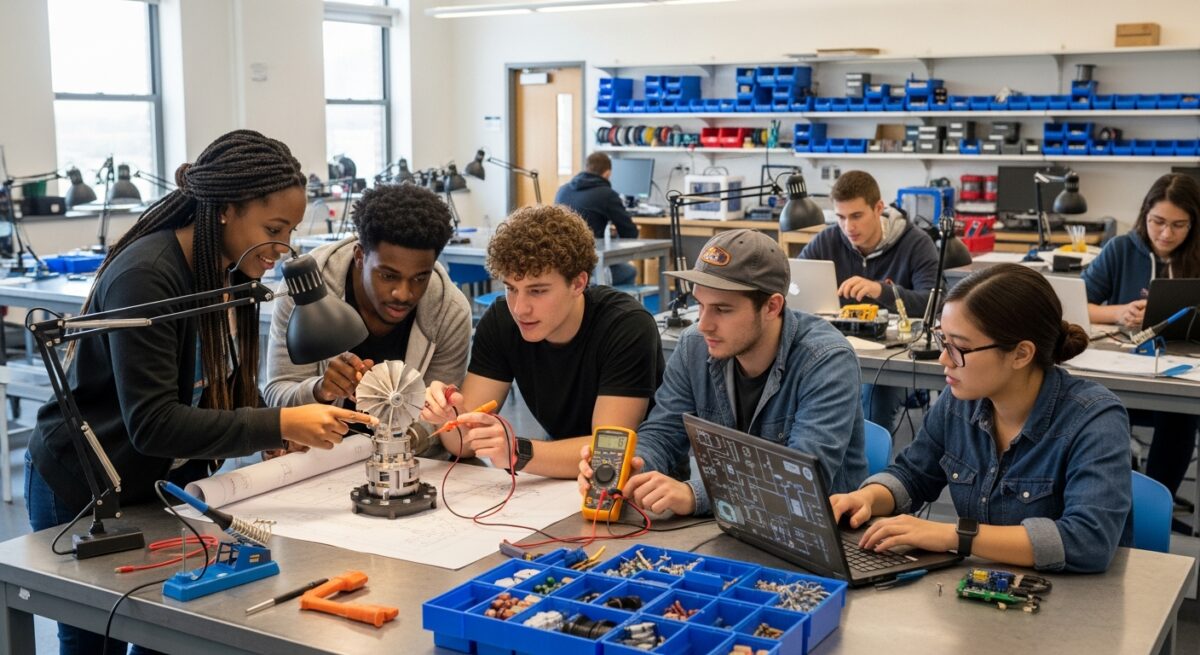
Engineering is one of the most rewarding and in-demand fields of study, but the cost of tuition, lab fees, and materials can be daunting. Many students assume that financial aid is out of reach, yet thousands of dollars in engineering scholarships go unclaimed each year. Understanding where to look and how to qualify can make the difference between taking on massive debt and graduating with minimal financial burden. This comprehensive guide walks you through the types of scholarships for engineering students, the eligibility requirements you must meet, and the step-by-step process to secure funding for your engineering education.
Why Engineering Scholarships Matter More Than Ever
The demand for skilled engineers continues to grow across industries like renewable energy, artificial intelligence, biomedical devices, and infrastructure development. At the same time, the average cost of an engineering degree has risen sharply. According to recent data, engineering students often pay higher tuition than their peers in the humanities because of specialized lab equipment and software access. Scholarships for engineering students help bridge this gap, allowing talented individuals to focus on their studies rather than worrying about how to pay for next semester.
Beyond financial relief, winning a scholarship signals to future employers and graduate schools that you have been recognized for your academic merit, leadership potential, or unique background. This competitive edge can open doors to internships and job offers before you even graduate. Moreover, many engineering scholarships are renewable, meaning a single application can fund multiple years of study. For students committed to a career in engineering, investing time in scholarship research is one of the smartest financial decisions you can make.
Types of Engineering Scholarships for Students
Engineering scholarships come in many forms, each with its own focus and eligibility criteria. Understanding the categories helps you target the opportunities that match your profile. Below are the most common types of engineering scholarships for students.
Merit-Based Engineering Scholarships
Merit-based awards are the most prestigious and competitive. They reward high academic achievement, strong standardized test scores, and a record of extracurricular involvement. Many universities offer automatic merit scholarships to students who meet certain GPA and SAT/ACT thresholds. For example, a student with a 3.8 GPA and a 1400 SAT score might qualify for a half-tuition scholarship at a state engineering school. National organizations like the National Society of Professional Engineers also offer merit-based awards that require a separate application, essays, and letters of recommendation.
Need-Based Engineering Student Aid
Need-based scholarships consider your family’s financial situation rather than your grades alone. To apply, you must complete the Free Application for Federal Student Aid (FAFSA) or the CSS Profile. Many colleges and private foundations use this information to determine your expected family contribution. If your family’s income falls below a certain threshold, you may qualify for substantial aid. Some need-based scholarships are specifically reserved for engineering students, such as the Society of Women Engineers (SWE) scholarships for women with demonstrated financial need.
Mechanical Engineering Scholarships and Discipline-Specific Awards
Many scholarships target specific branches of engineering. For instance, mechanical engineering scholarships are offered by the American Society of Mechanical Engineers (ASME) and the Society of Automotive Engineers (SAE). Civil engineering students can apply through the American Society of Civil Engineers (ASCE), while electrical and computer engineering students have opportunities through the Institute of Electrical and Electronics Engineers (IEEE). These discipline-specific awards often require membership in the professional society but provide networking benefits as well as funding.
Demographic and Diversity Scholarships
To increase representation in engineering, many organizations offer scholarships for women, underrepresented minorities, first-generation college students, and students with disabilities. The National Action Council for Minorities in Engineering (NACME) provides scholarships for African American, Hispanic, and Native American students. The Society of Women Engineers awards millions annually to women pursuing engineering degrees. Veterans and active-duty military personnel can also find dedicated scholarships through organizations like the Air & Space Forces Association.
Key Eligibility Requirements for Engineering Scholarships
Eligibility criteria vary widely, but most engineering scholarships share common requirements. Knowing these upfront saves time and helps you focus on applications where you stand the best chance.
- Enrollment in an accredited engineering program: Most scholarships require you to be accepted or currently enrolled in an ABET-accredited engineering program. ABET accreditation ensures the program meets quality standards recognized by employers and licensing boards.
- Minimum GPA: A 3.0 GPA is the baseline for many awards, but competitive scholarships may require a 3.5 or higher. Some scholarships use a sliding scale that considers GPA alongside other factors like leadership or financial need.
- US citizenship or permanent residency: Many federal and state-funded scholarships are restricted to US citizens or permanent residents. However, international students can find scholarships through private foundations, their home countries, or the universities themselves.
- Full-time enrollment: Most scholarships require you to be enrolled full-time (usually 12 credits or more per semester). Part-time students may have fewer options, though some community college transfer scholarships allow part-time study.
- Essay and recommendation letters: A strong personal statement explaining why you chose engineering and how the scholarship will help you achieve your goals is almost always required. Letters from teachers, professors, or employers who can speak to your technical aptitude and character are also common.
Beyond these basics, some scholarships have unique requirements such as participation in community service, a specific research interest, or demonstrated leadership in a student organization. Always read the full eligibility criteria before applying, and don’t hesitate to contact the scholarship provider with questions.
How to Find Engineering Scholarships for Students
Finding the right scholarships requires a systematic approach. Start with your university’s financial aid office and engineering department. Many schools maintain a list of internal scholarships that are only available to their students. These institutional awards often have less competition than national scholarships because the applicant pool is smaller.
Next, explore professional engineering societies. Organizations like the American Society of Civil Engineers, the American Society of Mechanical Engineers, and the Institute of Electrical and Electronics Engineers offer scholarships exclusively for their student members. Membership is often free or discounted for students, and it provides access to mentorship and internship listings as well. You can also search large scholarship databases like Fastweb, Scholarships.com, and the College Board’s Scholarship Search. Filter by engineering to see relevant results. For students interested in online degrees, Scholarship.Education offers a curated list of opportunities and application tips.
Finally, consider local scholarships from community foundations, engineering firms in your area, and Rotary or Kiwanis clubs. Local awards often have fewer applicants, increasing your odds. For example, a small engineering firm might offer a $1,000 scholarship to a student from the same county. These opportunities are easy to overlook but can add up quickly.
Step-by-Step Application Process
Applying for engineering scholarships is a process that requires planning and attention to detail. Follow these steps to maximize your chances of success.
Step 1: Create a master list of scholarships. Use a spreadsheet to track scholarship names, deadlines, amounts, and required materials. Sort by deadline to avoid missing early opportunities. Include both national and local awards.
Step 2: Gather your documents early. Request transcripts, standardized test scores, and letters of recommendation at least four weeks before the first deadline. Give your recommenders a packet that includes your resume, a list of your achievements, and a brief description of each scholarship so they can tailor their letters.
Step 3: Write a strong personal statement. Your essay should tell a compelling story about why you want to be an engineer. Focus on a specific experience or challenge that sparked your interest. Avoid generic statements like “I want to help people.” Instead, describe a real problem you observed and how engineering can solve it. Revise your essay multiple times and ask a teacher or mentor to proofread it.
Step 4: Complete the FAFSA. Even if you are applying for merit-based scholarships, many schools and private foundations require FAFSA information to verify eligibility. Submit the FAFSA as early as possible after October 1 each year. For more detailed guidance on completing the FAFSA, especially if you are an undocumented student, read our guide on FAFSA for Undocumented Students: Eligibility and State Aid.
Step 5: Submit applications on time. Late applications are almost never accepted. Set reminders on your phone or calendar for each deadline. Aim to submit at least two days early to avoid technical glitches.
Step 6: Follow up. After submitting, confirm receipt with the scholarship provider if possible. Send a thank-you note to your recommenders and update them on your results. If you win a scholarship, notify your financial aid office so the funds can be applied to your account.
Common Mistakes to Avoid
Many qualified students miss out on scholarships because of avoidable errors. One of the most common mistakes is applying only for a single large scholarship instead of spreading applications across multiple awards. The odds of winning a $10,000 national scholarship are low, but applying for ten $1,000 local scholarships gives you a much better chance of receiving something.
Another frequent error is ignoring the essay prompt. If the scholarship asks how you plan to use your engineering degree to address climate change, do not submit a general essay about your love of robotics. Tailor each essay to the specific scholarship. Similarly, failing to proofread can sink an otherwise strong application. Typos and grammatical errors suggest carelessness. Read your application aloud or ask a friend to review it before you hit submit.
Finally, do not overlook scholarships that seem small. A $500 scholarship may not cover a semester of tuition, but combined with other awards, it can pay for textbooks or lab fees. Apply for every scholarship for which you qualify, regardless of the amount.
Frequently Asked Questions
Can international students get engineering scholarships in the US?
Yes, but options are more limited. Many federal scholarships require US citizenship, but private foundations, universities, and some professional societies offer awards for international students. Check with the international student office at your university for school-specific scholarships.
Do I need to be a top student to win scholarships?
Not always. While many scholarships are merit-based, there are also awards for leadership, community service, first-generation college students, and students pursuing specific engineering fields like environmental or biomedical engineering. A strong GPA helps, but it is not the only factor.
Can I apply for scholarships if I am already in college?
Absolutely. Many scholarships are available for current undergraduate and graduate students, not just incoming freshmen. Sophomores, juniors, and seniors should continue applying each year, especially for renewable awards.
How many scholarships should I apply for?
Aim for at least 10 to 15 applications per academic year. Quality matters more than quantity, so focus on scholarships where you meet the eligibility criteria and can write a tailored essay.
For further resources, including scholarship databases and application guides, visit CollegeDegree.school for additional tools and information on funding your education.
Engineering is a challenging but deeply rewarding field. With the right approach to finding and applying for scholarships, you can reduce your financial burden and focus on what matters most: becoming the engineer you aspire to be. Start your search today, gather your materials, and submit applications with confidence. Every scholarship you win is a step closer to a debt-free degree and a successful career.