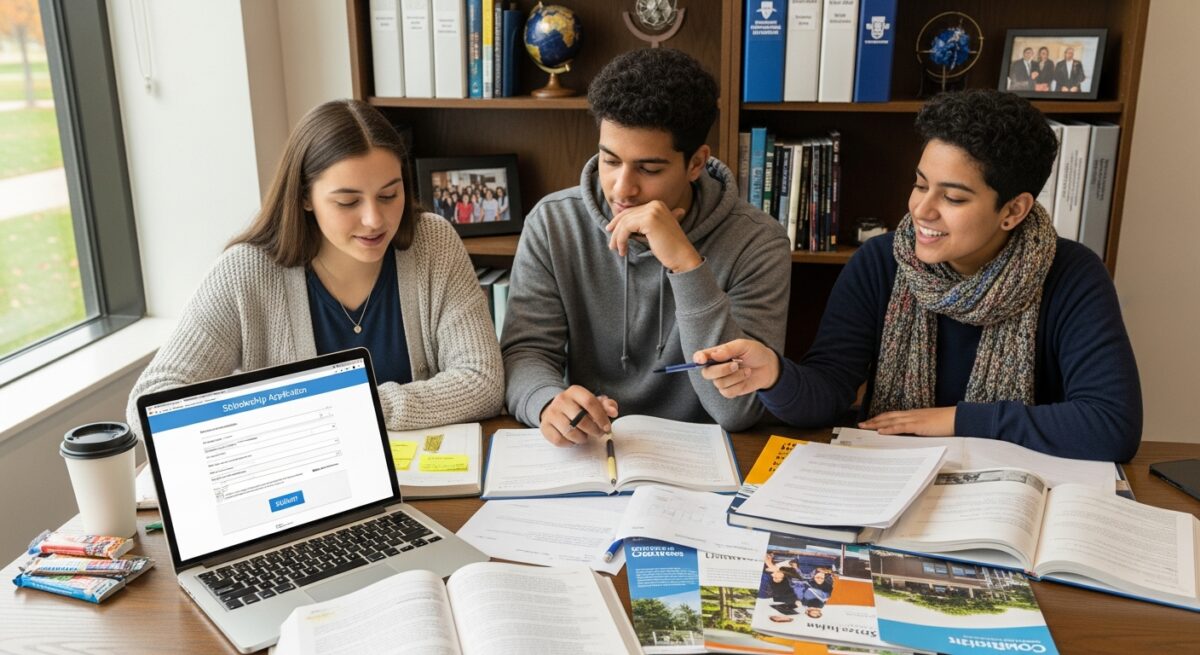
Starting college is a major transition. Many students arrive on campus feeling academically unprepared. They struggle with rigorous coursework, heavy reading loads, and fast-paced lectures. The difference between struggling and thriving often comes down to the courses students take before they enroll. Choosing the right college preparatory courses in high school is one of the most effective ways to build the skills needed for higher education. These classes do more than just fill transcript requirements. They teach students how to think critically, write clearly, manage time, and solve complex problems. For parents and students looking to maximize financial aid and scholarship opportunities, strong academic preparation also improves eligibility for merit-based awards. In our guide on your essential college grant guide for finding financial aid, we explain how academic readiness connects to funding opportunities. This article explores the essential college prep courses for academic readiness and why each subject area matters for long-term success.
Why Academic Readiness Matters for College Success
Academic readiness is more than a buzzword. It refers to the knowledge and skills a student needs to succeed in credit-bearing college courses without needing remediation. According to the National Center for Education Statistics, nearly one in three first-year college students requires remedial coursework. These courses do not count toward a degree. They cost money and delay graduation. Students who take a rigorous high school curriculum are far less likely to need remediation. They are also more likely to graduate on time. Academic readiness also impacts scholarship eligibility. Many competitive scholarships require a strong high school GPA and completion of advanced coursework. Students who demonstrate readiness through their transcript and test scores stand out in the applicant pool. The goal is not just to get into college, but to be prepared to succeed once you arrive.
The Core Academic Subjects for College Readiness
Colleges expect incoming students to have a solid foundation in five core areas: English, mathematics, science, social studies, and foreign language. Each subject develops distinct skills that are essential for college-level work. Below is a breakdown of the most important college prep courses in each area.
English and Writing Courses
College involves a significant amount of reading and writing. Whether a student majors in engineering or history, they will be required to write essays, research papers, and reports. Strong writing skills are critical for communicating ideas clearly. High school English courses should go beyond basic grammar and literature analysis. Students need courses that emphasize persuasive writing, research methods, and critical analysis of complex texts. Advanced Placement (AP) English Language and AP English Literature are excellent choices. They teach students how to construct arguments, use evidence, and write under time constraints. International Baccalaureate (IB) English courses offer similar benefits. Dual enrollment composition courses taken at a local community college can also provide a realistic preview of college writing expectations. Students who master these skills early avoid the frustration of remedial writing classes in college.
Mathematics Courses
Mathematics is often the subject that determines college readiness more than any other. Colleges expect students to complete at least Algebra I, Geometry, and Algebra II. However, students aiming for selective colleges need to go further. Precalculus and Calculus are strongly recommended for students pursuing STEM majors. Even for non-STEM fields, advanced math courses develop logical reasoning and problem-solving skills. Statistics is another highly valuable course. It teaches students how to analyze data, understand probability, and make evidence-based decisions. These skills apply to majors in business, social sciences, health sciences, and many other fields. AP Statistics and AP Calculus are widely recognized by colleges as indicators of academic readiness. Students who take four years of math in high school are significantly more likely to persist in college.
Science Courses
College science courses require both theoretical knowledge and practical lab skills. High school students should take at least three years of laboratory science. Biology, Chemistry, and Physics form the traditional core. These courses teach the scientific method, data collection, and analytical thinking. For students interested in health or engineering fields, taking AP Biology, AP Chemistry, or AP Physics is highly beneficial. These courses cover material at a college level and prepare students for the rigor of introductory science classes. Environmental Science is another excellent option. It combines elements of biology, chemistry, and earth science while addressing real-world issues. Lab experience is especially important. Many college science courses include a lab component that requires students to write reports, use equipment, and collaborate with peers. High school lab courses build these foundational skills.
Social Studies and History Courses
Social studies courses develop critical thinking, research, and writing skills. They also build cultural awareness and an understanding of civic systems. Most colleges expect at least two or three years of social studies. U.S. History, World History, and Government or Civics are standard requirements. Advanced courses such as AP U.S. History, AP World History, AP Government, and AP Economics are highly recommended. These courses require students to analyze primary sources, evaluate different perspectives, and construct evidence-based arguments. They also prepare students for college-level discussion and debate. For students considering majors in political science, history, law, or education, these courses are especially valuable. Additionally, social studies courses help students develop the ability to synthesize information from multiple sources. This skill is essential for research papers and exams in nearly every college major.
Foreign Language Courses
Many competitive colleges require two to three years of the same foreign language for admission. Studying a foreign language improves cognitive flexibility, memory, and problem-solving skills. It also demonstrates a willingness to engage with other cultures. Spanish, French, German, Mandarin, and Latin are common choices. Students who take four years of a foreign language often achieve fluency or near-fluency. This can open doors to study abroad programs, internships, and scholarships. AP or IB language courses can also satisfy college language requirements, allowing students to place into higher-level courses. For students planning to major in international relations, global business, or linguistics, strong language preparation is essential. Even for other majors, language study signals academic discipline and intellectual curiosity.
Advanced Placement, International Baccalaureate, and Dual Enrollment
Beyond standard courses, students have three main options for pursuing college-level work in high school. Each has distinct advantages.
- Advanced Placement (AP): AP courses follow a standardized curriculum developed by the College Board. Students take a final exam in May. Scores of 3, 4, or 5 often qualify for college credit or placement. AP courses are widely recognized and accepted by colleges across the United States and internationally.
- International Baccalaureate (IB): The IB program is a comprehensive, two-year curriculum for students aged 16 to 19. It emphasizes critical thinking, research, and community service. IB courses are rigorous and often considered equivalent to AP courses. The full IB diploma is highly respected by selective colleges.
- Dual Enrollment: Dual enrollment allows high school students to take college courses at a local community college or university. These courses count for both high school and college credit. Dual enrollment provides a realistic college experience and can save money on tuition later. Credits earned are often transferable to other institutions.
Each option has different costs, time commitments, and transfer policies. Students should research how their target colleges treat AP, IB, and dual enrollment credits. Some colleges cap the number of credits they accept. Others require a minimum exam score for AP credit. Planning ahead ensures that students maximize the benefits of these programs. For students seeking to strengthen their college applications and reduce future tuition costs, these advanced courses are a smart investment.
How to Choose the Right Courses for Your Goals
Selecting courses requires balancing college requirements, personal interests, and academic strengths. Students should start by reviewing the admission requirements for their target colleges. Most colleges publish a list of recommended high school courses. Students should aim to exceed these minimums when possible. Next, students should consider their intended major. STEM majors benefit from additional math and science courses. Humanities majors benefit from advanced English, history, and language courses. Undecided students should take a broad range of rigorous courses to keep their options open. It is also important to consider workload. Taking too many AP or IB courses in one semester can lead to burnout. Students should aim for a challenging but manageable schedule. Finally, students should use elective courses to explore interests. Courses in computer science, psychology, economics, art, or music can provide valuable skills and make a student’s transcript stand out. A well-rounded course load demonstrates intellectual curiosity and readiness for college-level work.
Frequently Asked Questions
What are the most important college prep courses?
The most important courses are those that build strong foundations in English, math, science, social studies, and foreign language. AP, IB, and dual enrollment courses are highly valued by colleges because they demonstrate a student’s ability to handle college-level work.
How many years of math do I need for college?
Most colleges require at least three years of math, including Algebra I, Geometry, and Algebra II. Selective colleges often expect four years, with courses such as Precalculus, Calculus, or Statistics.
Do colleges prefer AP or dual enrollment courses?
Both are viewed favorably. AP courses are standardized and widely recognized. Dual enrollment courses provide actual college credit and a realistic college experience. The best choice depends on the student’s goals and the policies of their target colleges.
Can college prep courses help me get scholarships?
Yes. Many merit-based scholarships consider the rigor of a student’s high school curriculum. Strong grades in advanced courses can improve eligibility for scholarships and grants. Taking these courses also reduces the likelihood of needing remedial classes, which can save money and time.
What if my high school does not offer AP or IB courses?
Students can explore dual enrollment options at local community colleges or online. Some high schools also offer honors courses that provide a similar level of rigor. Students can also pursue independent study or summer programs at colleges. Admissions officers consider the courses available at each school when evaluating transcripts.
Building a Strong Foundation for College Success
Choosing the right college prep courses is one of the most important decisions a student can make. These courses build the academic skills needed to succeed in college. They also improve scholarship eligibility, reduce the need for remediation, and increase the likelihood of graduating on time. Students who invest in rigorous coursework during high school arrive on campus with confidence and a clear advantage. By focusing on the essential college prep courses for academic readiness, students set themselves up for a smoother transition and a stronger start to their higher education journey. For additional resources on finding affordable degree programs and financial aid, explore the programs and featured colleges available through CollegeDegree.Education. The effort put into high school academics pays dividends for years to come.