
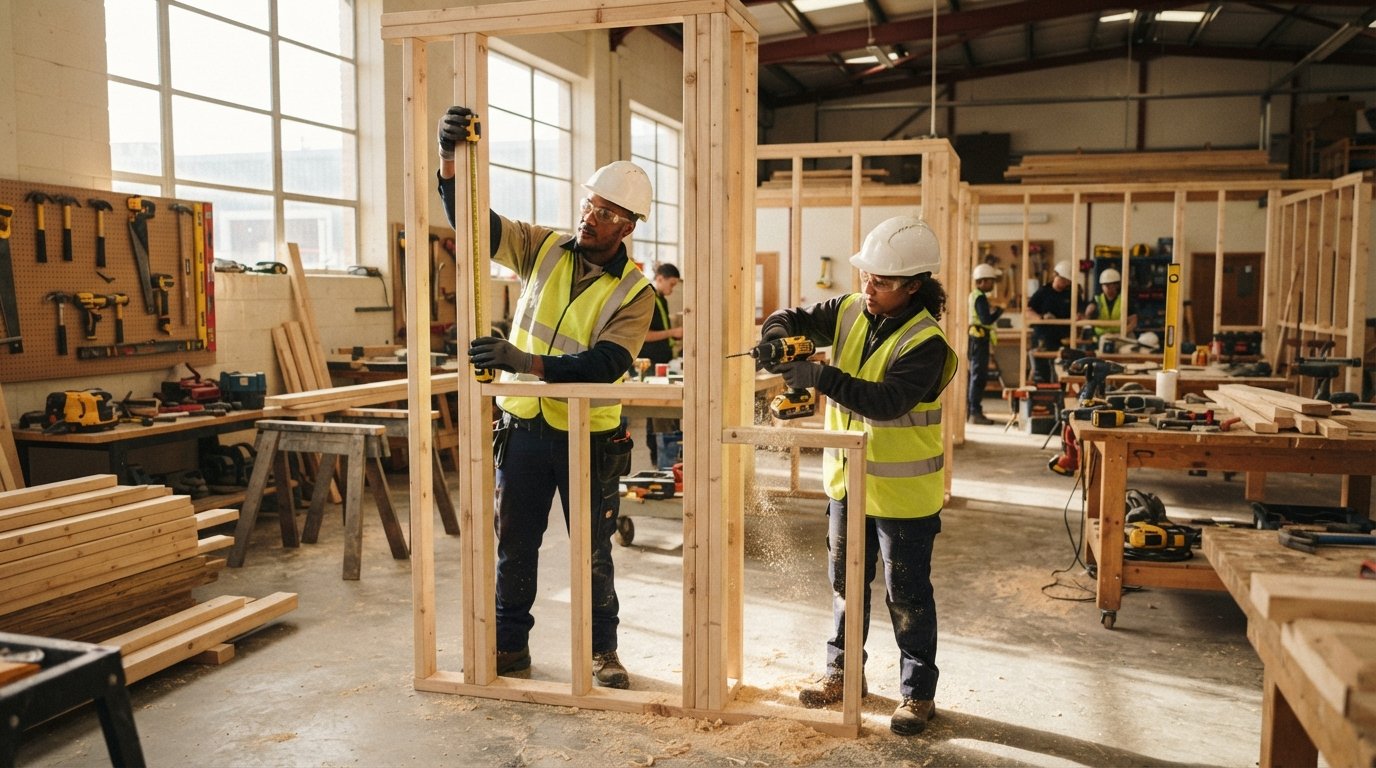
Building Construction Certificate at Fayetteville Tech
Earn a Building Construction Technology/Technician Certificate, 12 weeks to less than 1 year In-person at FAYETTEVILLE TECHNICAL COMMUNITY COLLEGE and gain hands-on skills fast.

Skilled trades professionals are in high demand across North Carolina, and few credentials open doors as quickly as a focused construction certificate. The Building Construction Technology/Technician Certificate, 12 weeks to less than 1 year In-person at FAYETTEVILLE TECHNICAL COMMUNITY COLLEGE gives you a fast, hands-on pathway into residential and commercial construction without committing to a multi-year degree. If you want to trade classroom theory for job-site competence in a single semester or two, this program deserves a close look.
Fayetteville Technical Community College (FTCC) has built a reputation for workforce-ready training in Cumberland County and the surrounding region. This certificate is designed for career changers, recent high school graduates, and working adults who need practical skills they can apply immediately. You will learn framing, site layout, materials handling, safety protocols, and basic estimating under instructors who have spent years in the field.
What the Building Construction Certificate Covers
The curriculum balances technical knowledge with supervised shop and site practice. Most certificate tracks combine core construction courses with a few electives so you can tailor training toward carpentry, general contracting, or construction management support roles. Because the program is in person, you get direct access to tools, lab spaces, and instructors who can correct technique in real time.
Typical course content includes construction safety, blueprint reading, framing and rough carpentry, interior and exterior finish work, and an introduction to construction estimating. You should expect a mix of lecture and lab hours, with assessments based on both written tests and hands-on projects. Many students build a portfolio of work samples before they graduate, which helps during job interviews.
Here is a practical breakdown of what you will likely encounter:
- Safety and tool operation, including OSHA-aligned practices and personal protective equipment.
- Blueprint reading and site layout, so you can translate drawings into accurate measurements.
- Framing and structural basics for walls, floors, and roofs.
- Finish carpentry and interior installation, including trim and cabinetry basics.
- Estimating and materials takeoff to support bidding and purchasing decisions.
Because the certificate can be completed in as little as 12 weeks or up to less than one year depending on your schedule, it suits learners who need to enter the workforce quickly. Part-time students often spread courses across two semesters, while full-time students may finish in a single term if they can attend daytime labs.
Admission Steps and Enrollment Timeline
FTCC follows a standard community college admission process, but construction programs may have additional requirements such as placement testing or a program orientation. You should apply early because lab seats are limited and popular sections fill quickly. The college generally recommends applying at least one semester before your intended start date so financial aid and scheduling can be finalized.
Follow this sequence to keep your enrollment on track:
- Complete the FTCC admissions application and submit official transcripts.
- Take any required placement tests or submit qualifying scores.
- Meet with an academic advisor to confirm the certificate pathway and course sequence.
- File the FAFSA and review financial aid options, including grants and work-study.
- Register for classes and attend the program orientation before labs begin.
After registration, confirm your lab schedule and tool requirements with the department. Some courses require basic hand tools, while others provide shared equipment. Knowing these details early prevents last-minute purchases and schedule conflicts.
Cost, Financial Aid, and Return on Investment
Community college certificates are among the most affordable credentials in higher education. Tuition for a construction certificate at a North Carolina community college is typically a fraction of a four-year degree, and many students qualify for federal Pell Grants, state grants, or workforce development funding. Because the program is short, you can enter the job market faster and begin earning while you continue to build skills on the job.
To estimate your net cost, subtract grant aid and scholarships from tuition, fees, books, and tool costs. Students in construction programs should also budget for safety gear and basic hand tools. Many employers reimburse tool purchases after hiring, so ask about that benefit during interviews. For a broader look at managing college costs, CollegeAndTuition offers planning resources that help families compare expenses and aid options.
Return on investment depends on your local job market and specialization. Entry-level carpentry and construction helper roles in the Fayetteville area often provide steady hours and overtime opportunities. With experience and additional certifications, graduates can move into lead carpenter, crew supervisor, or estimator roles. If you are considering other trade certificates as a comparison, our guide to the Machine Shop Technology Certificate at Blue Ridge CC explains how short-term technical training can lead to manufacturing careers.
Career Outcomes and Local Demand
Construction employment in North Carolina has remained strong due to population growth, infrastructure projects, and residential development. Fayetteville and Cumberland County see consistent demand for carpenters, construction laborers, and remodeling specialists. A certificate does not guarantee a job, but it signals to employers that you have verified safety training and foundational skills, which reduces onboarding time.
Graduates commonly pursue roles such as:
- Carpenter or carpenter apprentice on residential and commercial crews.
- Construction helper or laborer with pathways to equipment operation.
- Remodeling and renovation technician for home improvement contractors.
- Estimating assistant or materials coordinator for small builders.
- Maintenance technician for facilities and property management firms.
Wages vary by employer and specialization, but skilled trades workers often see rapid pay increases once they demonstrate reliability and productivity. Many students use the certificate as a stepping stone toward an associate degree in construction management or a related field. Stacking credentials this way can improve long-term earning potential without delaying your first construction job.
How to Succeed in an In-Person Construction Program
Hands-on programs reward attendance, preparation, and safe work habits. Instructors notice students who arrive on time with the right gear and a willingness to ask questions. Because labs simulate real job sites, treat them like professional environments: wear required safety equipment, keep your work area organized, and communicate clearly with teammates.
Build relationships with instructors and classmates because construction hiring often happens through referrals. Join student organizations or attend campus career fairs if available. Keep a simple portfolio of projects, including photos and short descriptions of tasks you completed. When you interview, you can point to specific skills such as framing a wall, reading a floor plan, or completing a takeoff.
Finally, plan for continuous learning. The construction industry evolves with new materials, energy codes, and building techniques. Short courses in green building, equipment operation, or project management can expand your opportunities after you complete the certificate. The 12-week to less than 1 year format gives you a fast start, and ongoing training keeps your skills current.
If you are ready to trade uncertainty for a practical credential, the Building Construction Technology/Technician Certificate, 12 weeks to less than 1 year In-person at FAYETTEVILLE TECHNICAL COMMUNITY COLLEGE offers a focused route into a resilient industry. Check the FTCC website for upcoming start dates, speak with an advisor about financial aid, and take the first step toward a hands-on career in construction.