
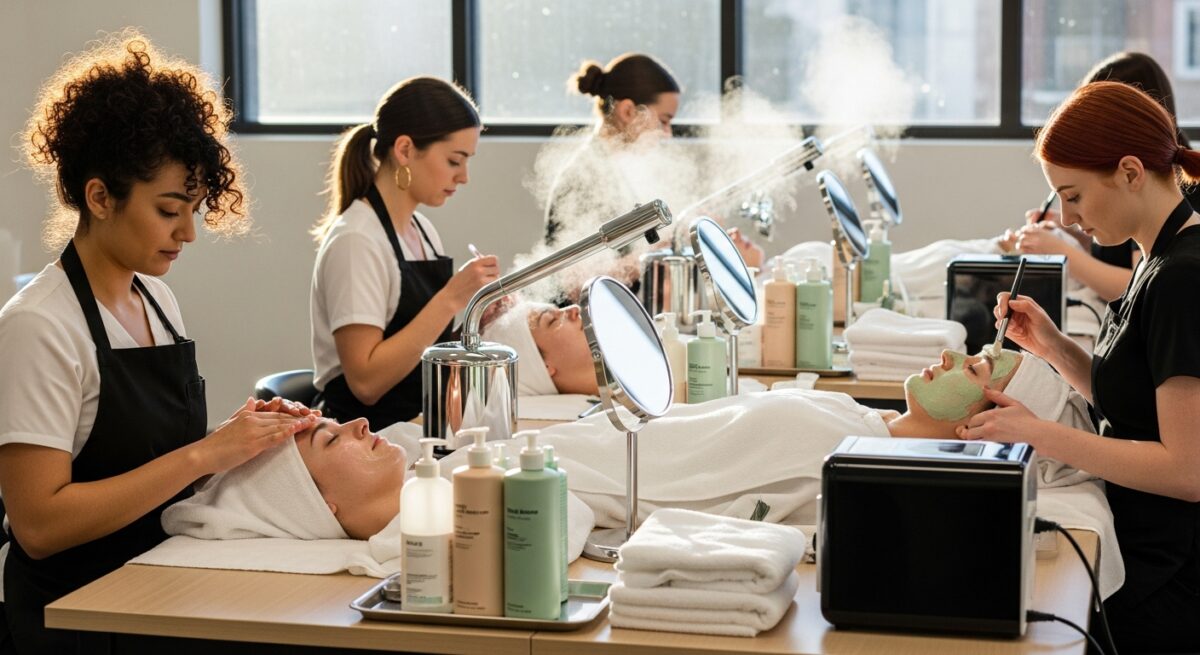
Becoming a licensed esthetician is an exciting path, but the cost of tuition, kits, and state licensing fees can feel overwhelming. The good news is that you do not have to fund your education with credit cards or high-interest private loans alone. Grants for esthetician school are real, accessible, and can significantly reduce what you pay out of pocket. Unlike student loans, grants are gift aid, meaning you never have to repay them as long as you meet the eligibility requirements. Whether you are a recent high school graduate or an adult changing careers, there are numerous funding opportunities designed specifically for students in cosmetology and skincare programs.
This guide will walk you through the best grants for estheticians, how to apply for them, and how to combine multiple funding sources to cover your full tuition. You will also learn about federal and state programs, private scholarships, and strategies to make your application stand out. With the right approach, you can start your esthetician training with minimal financial stress and focus on building the skills you need for a thriving career in skincare.
Understanding Grants for Esthetician School
Grants for esthetician school are financial awards that do not require repayment. They are typically need-based, though some are merit-based or targeted at specific groups such as women, minorities, or students in certain geographic areas. The most well-known source of grant funding is the federal government through the Free Application for Federal Student Aid (FAFSA). When you submit the FAFSA, your eligibility for federal grants, including the Pell Grant, is determined based on your family’s income, the cost of attendance, and your enrollment status.
For esthetician programs, which are often offered at private beauty colleges or community colleges, the Pell Grant is a primary source of support. In the 2025-2026 award year, the maximum Pell Grant award is $7,395, but the actual amount you receive depends on your Expected Family Contribution (EFC). Even if you qualify for a partial Pell Grant, it can cover a large portion of your tuition. Many esthetician programs cost between $5,000 and $15,000, so a Pell Grant alone can make a significant dent. Additionally, some states offer their own grants for students attending vocational or trade schools, and these can be stacked with federal aid.
It is important to understand that grants for estheticians are not limited to need-based aid. Professional organizations, beauty industry brands, and private foundations also offer grants and scholarships to support the next generation of skincare professionals. These awards often require an essay, letters of recommendation, or proof of community involvement. While the application process may be more competitive, the payoff is worth the effort, especially if you can secure multiple grants to cover your entire program cost.
Federal Grants for Esthetician School
The first step for any student seeking grants for esthetician school is to complete the FAFSA. This free application is the gateway to federal grants, work-study programs, and federal student loans. For esthetician students, the most relevant federal grant is the Pell Grant, but there are others worth exploring. The Federal Supplemental Educational Opportunity Grant (FSEOG) is another option for students with exceptional financial need. This grant is awarded directly by the school, and funds are limited, so early application is critical.
Here is a quick breakdown of the main federal grants you should research:
- Pell Grant: The largest federal grant, available to undergraduate students with significant financial need. You must be enrolled at least half-time to qualify.
- FSEOG: For students with the lowest EFC scores. Awards range from $100 to $4,000 per year, depending on your school’s funding.
- Iraq and Afghanistan Service Grant: For students whose parent or guardian died as a result of military service in Iraq or Afghanistan after 9/11.
Each of these grants has its own eligibility criteria, but all require a completed FAFSA. Once you submit your FAFSA, your school’s financial aid office will send you a financial aid award letter outlining the grants and loans you qualify for. Be sure to accept only the grants and scholarships, not the loans, unless you absolutely need them. This simple step can save you thousands of dollars in debt after graduation.
If you are unsure about how to complete the FAFSA or want to learn more about community college funding options, our practical guide on community college grants and financial aid provides a step-by-step breakdown that applies to many esthetician programs offered at community colleges.
State and Institutional Grants for Estheticians
Beyond federal aid, many states offer grants specifically for students pursuing vocational or technical training. These state grants are often need-based and can be used at any eligible institution within the state. For example, California’s Cal Grant program provides funding for students attending private career colleges, including esthetician schools. Texas offers the Tuition Equalization Grant for students at private institutions. To find out what is available in your state, contact your state’s higher education agency or visit their website. A quick search for “esthetician school grants [your state]” can reveal opportunities you might not have found otherwise.
Institutional grants are another valuable resource. Many esthetician schools set aside their own scholarship and grant funds for incoming students. These are often based on merit, artistic talent, or financial need, and they can be used to cover tuition, supplies, or even living expenses. When you apply to esthetician programs, ask the admissions office about internal grants. Some schools offer automatic grants for students who enroll early or who qualify based on their high school GPA. Others require a separate application, so be proactive and ask for details.
One often-overlooked option is the Workforce Innovation and Opportunity Act (WIOA), which provides funding for job training programs, including esthetician school. If you are unemployed or underemployed, you may qualify for WIOA funds through your local American Job Center. This grant can cover full tuition, books, and supplies, and it is designed to help individuals gain in-demand skills. Eligibility varies by state, but it is definitely worth exploring, especially if you are changing careers or have been out of work for a while.
Private Grants and Scholarships for Esthetician Students
Private organizations and beauty industry brands are excellent sources of grants for estheticians. These awards are often less competitive than federal grants, and they can be combined with other aid. For example, the American Beauty Association offers scholarships to students enrolled in cosmetology or esthetics programs. The Professional Beauty Association (PBA) also has a scholarship program that awards thousands of dollars to students each year. Additionally, many local beauty schools and spas offer their own scholarships to attract talented students to their programs.

Here are some well-known private grants and scholarships to research:
- PBA Beauty and Wellness Scholarship: Open to students enrolled in accredited cosmetology or esthetics programs. Awards range from $1,000 to $5,000.
- Beauty Changes Scholarships: Offered twice a year, these scholarships support students in beauty and wellness programs.
- Joe Francis Scholarship: For students at Beauty Schools of America campuses, this award covers a portion of tuition.
- Cosmetology and Barbering Grants from the U.S. Department of Education: While not a specific grant, these funds are distributed through institutions that participate in federal student aid programs.
When applying for private grants, pay close attention to deadlines and requirements. Many require a personal essay, a portfolio of your work, or letters of recommendation. Start your applications early and tailor each one to the specific grant’s mission. A generic essay will not stand out, but a well-crafted story about your passion for skincare and your career goals can make a lasting impression on the selection committee.
To maximize your chances, create a spreadsheet to track deadlines, eligibility, and required documents. This organizational step can prevent you from missing out on opportunities. Remember, every dollar you receive in grant money is a dollar you do not have to repay, so the time you invest in applications is well worth it.
How to Apply for Esthetician School Grants
Applying for grants for esthetician school is a multi-step process that requires attention to detail. The first and most critical step is to complete the FAFSA. This form determines your eligibility for federal and state grants, and it is also used by many private schools to award their own institutional aid. You should submit the FAFSA as soon as it opens on October 1 for the following academic year. Many grants are awarded on a first-come, first-served basis, so early submission gives you a competitive edge.
Once your FAFSA is processed, you will receive a Student Aid Report (SAR) that summarizes your information. Review it carefully for errors and make corrections if needed. Then, contact the financial aid office at the esthetician school you plan to attend to confirm they have received your FAFSA and to ask about additional grant opportunities. Some schools require a separate scholarship application, while others automatically consider you for grants based on your FAFSA data.
For private grants, follow the application instructions exactly. This often means writing an essay, gathering references, and submitting your application by the deadline. To improve your chances, consider applying to multiple grants. A common mistake is to focus only on the largest awards, but smaller grants can quickly add up. For example, a $500 grant may not seem significant, but it could cover the cost of your textbooks and supplies. Stacking several small grants can effectively make your education nearly free.
Finally, do not forget to explore external resources like collegedegree.education, which offers guidance on funding and degree programs. While it focuses on degrees, the financial aid strategies it outlines apply equally to esthetician training. Being thorough in your research and applications is the best way to secure the grants you need.
Frequently Asked Questions
Do I have to repay grants for esthetician school?
No, grants are gift aid and do not require repayment, provided you meet all eligibility requirements and complete your program as agreed. If you withdraw from school early, you may be required to repay a portion of the grant, so it is important to stay enrolled and make satisfactory academic progress.
What is the difference between a grant and a scholarship?
Grants are typically need-based, awarded based on your financial situation. Scholarships are usually merit-based, awarded for academic achievement, talent, or other criteria. Both are free money, but they have different eligibility requirements. Many esthetician students qualify for both, and you can use them together to cover your costs.
Can I use a Pell Grant for esthetician school?
Yes, you can use a Pell Grant at any school that participates in the federal student aid program, which includes most esthetician and cosmetology schools. You must be enrolled at least half-time and maintain satisfactory academic progress. Check with your school’s financial aid office to confirm their participation.
Are there grants for esthetician school for adults changing careers?
Yes, many grants are available for adult learners, including WIOA funds and state-specific programs like the Massachusetts Workforce Training Fund. Additionally, many private scholarships are open to students of all ages, not just recent high school graduates.
In conclusion, grants for esthetician school are plentiful, but they require effort to find and apply for. Start with the FAFSA, explore state and institutional options, and do not overlook private grants from beauty industry organizations. With a strategic approach, you can significantly reduce the financial burden of your education and graduate with the skills and confidence to succeed in the skincare industry. Take the first step today by completing your FAFSA and reaching out to your chosen school’s financial aid office. Your future clients are waiting, and your dream career is closer than you think.