
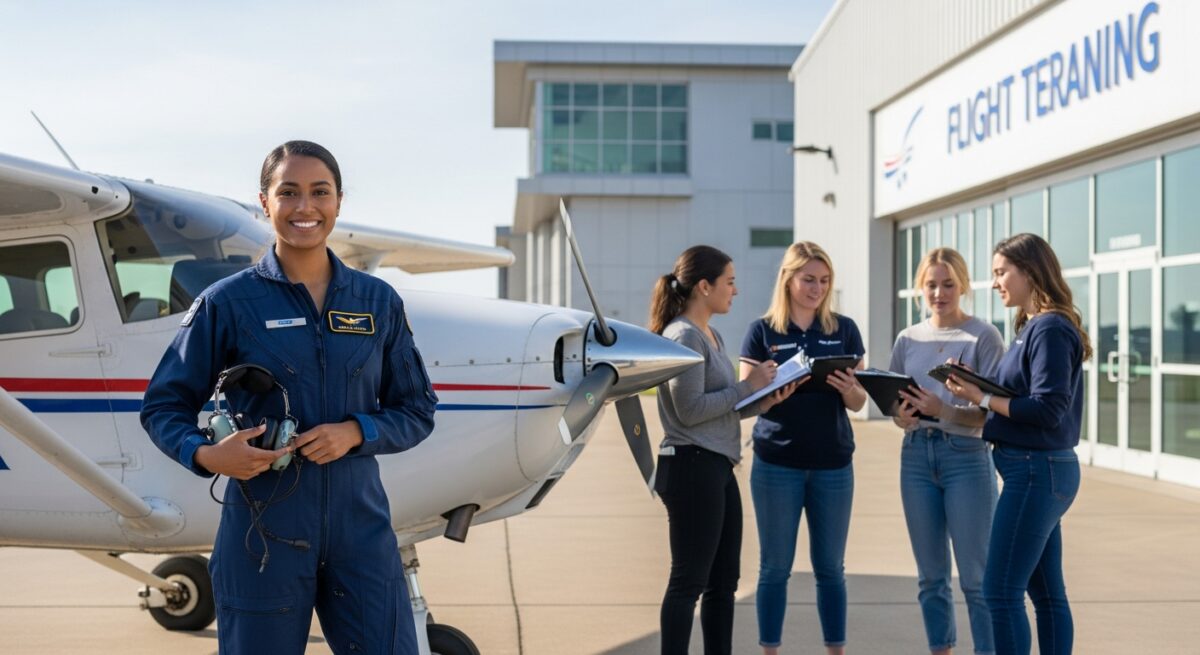
The dream of becoming a pilot is no longer out of reach for women. While aviation has historically been a male-dominated field, a growing number of organizations, universities, and private foundations are actively working to change that. They are doing so by offering targeted funding opportunities that make flight training more accessible. If you are a woman looking to break into this exciting industry, aviation scholarships for women are your key to unlocking a career in the skies. This guide will show you where to find them, how to apply, and how to make your application stand out.
Why Women-Focused Aviation Scholarships Matter
The financial barrier to entry in aviation is significant. Obtaining a private pilot license can cost anywhere from $10,000 to $20,000, and a commercial pilot certificate with additional ratings can easily exceed $70,000. For many women, this cost is prohibitive. Aviation scholarships for females are designed to bridge this gap, providing the financial support needed to complete training and start a career.
Beyond the financial aspect, these scholarships also serve as a powerful statement of encouragement. They signal to women that their presence in the cockpit is not only welcome but actively sought after. This is crucial in an industry where women hold only about 5% of pilot positions worldwide. By supporting women through education, these programs are helping to diversify the field, bring new perspectives to the profession, and inspire future generations.
Moreover, many of these scholarships are not just about money. They often come with mentorship opportunities, networking events, and access to a community of like-minded women in aviation. This support system can be invaluable as you navigate the challenges of flight training and early career development. Therefore, applying for these scholarships is not just a financial decision; it is an investment in your professional future.
Top National and International Scholarships
There is a robust ecosystem of organizations dedicated to helping women achieve their aviation goals. When you start your search, these are some of the most prestigious and well-funded women aviation scholarships to consider. It is important to research each one carefully, as deadlines and eligibility requirements vary.
Professional Organizations and Foundations
The Women in Aviation International (WAI) organization is one of the most prominent names in this space. They offer a vast array of scholarships each year, ranging from flight training to engineering and management. Their annual conference hosts the world’s largest scholarship program for women in aviation, making it a must for any aspiring aviator. Another key organization is the Ninety-Nines, an international organization of women pilots. They offer numerous scholarships for everything from initial flight training to advanced type ratings. Their “Amelia Earhart Memorial Scholarship” is one of the most well-known.
Additionally, the Airbus Group and Boeing both sponsor scholarships through various programs to encourage women in STEM and aviation. The Organization of Black Aerospace Professionals (OBAP) also provides scholarships specifically for minority women, ensuring that diversity within the industry is addressed on multiple levels. These organizations often require membership to apply, so factor that cost into your planning.
When considering these opportunities, it is beneficial to check if your specific career interest, such as becoming a corporate pilot, a flight instructor, or an airline captain, has a dedicated scholarship. For example, the National Business Aviation Association (NBAA) offers scholarships for women pursuing careers in business aviation. The Aircraft Owners and Pilots Association (AOPA) also provides scholarships that are not gender-specific but are excellent for any pilot, and women are strongly encouraged to apply.
University and University-Affiliated Scholarships
If you are planning to earn a degree through a university aviation program, your scholarship opportunities multiply. Many colleges and universities with strong aviation programs, such as Purdue University, Embry-Riddle Aeronautical University, and the University of North Dakota, have endowments and funds specifically designated for women in their flight programs. These awards can sometimes cover a significant portion of tuition and flight fees.
Furthermore, many of these universities partner with industry leaders to offer even more lucrative scholarships. For instance, some have partnerships with airlines that guarantee interviews or provide conditional job offers upon graduation, along with financial support during training. It is wise to check with the financial aid office of the aviation departments at these institutions to explore all available options. They often have a list of internal and external scholarships that are not widely advertised.
In addition to traditional four-year degrees, consider accelerated programs or flight training academies. Some of these institutions also offer scholarships, particularly to women and minorities, in an effort to quickly increase the number of diverse pilots in the workforce. A quick search on college and tuition resources can help you compare the costs and financial aid options of different programs.
How to Find Lesser-Known Opportunities
While the big names are a great starting point, you should also look for smaller, regional, or niche scholarships. These often have less competition and can be a fantastic source of funding. Here are a few strategies to uncover these hidden gems:
- Check with local aviation clubs and EAA chapters. The Experimental Aircraft Association (EAA) has chapters around the country, and many offer scholarships to local students.
- Look into your state’s aviation department. Some states have aviation education funds that offer scholarships to residents pursuing a pilot’s license.
- Network with female pilots. Attend events, webinars, or simply reach out to women in the industry. They often know about smaller, word-of-mouth scholarships that are not posted online.
- Contact your local airport authority. Some airports have foundations that support aviation education for youth and women in their community.
Additionally, use scholarship search engines effectively. By filtering for “women” and “aviation,” you can find many opportunities. However, be careful not to ignore scholarships that are not explicitly labeled for women. Many general aviation scholarships are open to all, and your unique application can still make you a strong candidate. A well-rounded approach is to apply to both targeted and general scholarships to maximize your chances.
Application Strategies for Success
Applying for scholarships can be competitive, but a well-prepared application can greatly increase your odds. The most common components are a personal essay, letters of recommendation, and a resume or logbook of your experience. Here is how to tackle each one.

Your personal essay is your chance to tell your story. Do not just list your achievements; instead, explain why you want to become a pilot and how this scholarship will help you achieve your goals. Be authentic and passionate. Discuss any challenges you have faced as a woman in a male-dominated field and how you have overcome them. Scholarship committees are looking for driven, resilient individuals, and your essay is the best way to demonstrate these qualities.
Letters of recommendation are another crucial element. Choose people who know you well, such as a flight instructor, a teacher, an employer, or a mentor. Ask them to write about your character, work ethic, and potential for success in aviation. Provide them with a copy of your resume and a brief summary of the scholarship so they can write a specific and compelling letter. A generic letter will not help you stand out.
Finally, ensure your resume is polished and professional. Highlight any ground school courses you have completed, any flying hours you have, and any other aviation-related activities you have participated in. Even if your experience is minimal, showing your dedication to the field is important. Also, be prepared to complete an interview if you are selected as a finalist. Practice answering common questions about your background, your goals, and why you have chosen this career path.
Beyond the Cockpit: Scholarships for Other Aviation Careers
While pilot scholarships are the most common, the aviation industry is vast. There are also many opportunities for women pursuing careers as aircraft mechanics, air traffic controllers, aviation managers, and aerospace engineers. The Aviation Maintenance Technician Association (AMTA) and the Federal Aviation Administration (FAA) both offer scholarships and paid training opportunities to encourage women in these technical fields.
For those interested in the business side of aviation, the Airports Council International (ACI) and various hospitality management programs offer scholarships. These roles are equally critical to the industry and often offer stable, high-paying careers. If you are not set on flying, do not limit your search. The skills you gain in these fields are in high demand, and you will be contributing to the safe and efficient operation of the global aviation system.
For those interested in the academic side of aviation, pursuing a degree in aviation management or aerospace engineering can open doors. Many of the scholarships mentioned in this article, especially those from WAI and the top scholarships for women in engineering and STEM fields, can be applied to these non-pilot careers. This approach allows you to lead the future of aviation from the ground up, in roles that are just as vital as piloting.
Frequently Asked Questions
Do I need to have a pilot’s license to apply?
Not necessarily. Many scholarships are designed for individuals at the very beginning of their journey and do not require any prior flight experience. They are often intended to cover the cost of your initial private pilot certificate. Others, however, are for advanced ratings and will require you to have a current license. Always check the specific eligibility criteria.
Are these scholarships only for citizens of a specific country?
Many are, but not all. Some international organizations, like the IAWA (International Aviation Women’s Association), offer scholarships to women from various countries. However, you will find that many local and national scholarships are restricted to residents or citizens. Be sure to read the fine print and only apply to those for which you are eligible.
Can I use the scholarship money for any flight school?
This depends on the scholarship. Some are awarded directly to you to be used at any FAA-approved flight school. Others are tied to a specific university or training institution. If you already have a school in mind, check if the scholarship is compatible. If not, you may need to choose a school that is approved by the scholarship provider.
What is the best way to prepare for a scholarship interview?
The best way to prepare is to practice. Conduct mock interviews with a friend or mentor. Be ready to discuss why you want to be in aviation, what your long-term goals are, and how you have shown leadership and commitment. Also, research the organization offering the scholarship. Knowing their mission and history will show that you are genuinely interested, not just looking for free money.
If I don’t win a scholarship, what are my other options?
Do not be discouraged if you do not win on your first attempt. The scholarship application process is highly competitive, and many factors are beyond your control. Use the experience to strengthen your next application. In the meantime, consider other funding options such as federal student loans, private loans, or financing plans through flight schools. Also, consider working as a ground instructor or in another aviation job to save up for your training hours.
Your Path to the Skies Starts Now
Aviation scholarships for women are a powerful tool for leveling the playing field in a dynamic and rewarding industry. They provide not just financial support, but also a community of encouragement and professional guidance. By researching the many opportunities available and crafting strong applications, you are taking the first concrete steps toward your dream of flight. The path may be challenging, but the view from the cockpit is worth every effort. So take that first step, apply, and let your journey begin.

