California faces a persistent shortage of registered nurses, creating strong demand for flexible, high-quality education pathways. For working professionals, career changers, and rural residents, accredited online nursing programs in California offer a practical route to licensure and career advancement without relocating. But with dozens of options available, understanding accreditation, clinical requirements, and financial aid is essential to making a smart investment in your future.
Why Accreditation Matters for Online Nursing Programs
Accreditation is the single most important factor when choosing any nursing program. It ensures the curriculum meets rigorous academic and professional standards, and it is a prerequisite for licensure, transfer credits, and federal financial aid. For online programs, accreditation also confirms that the distance education format delivers the same quality as on-campus instruction.
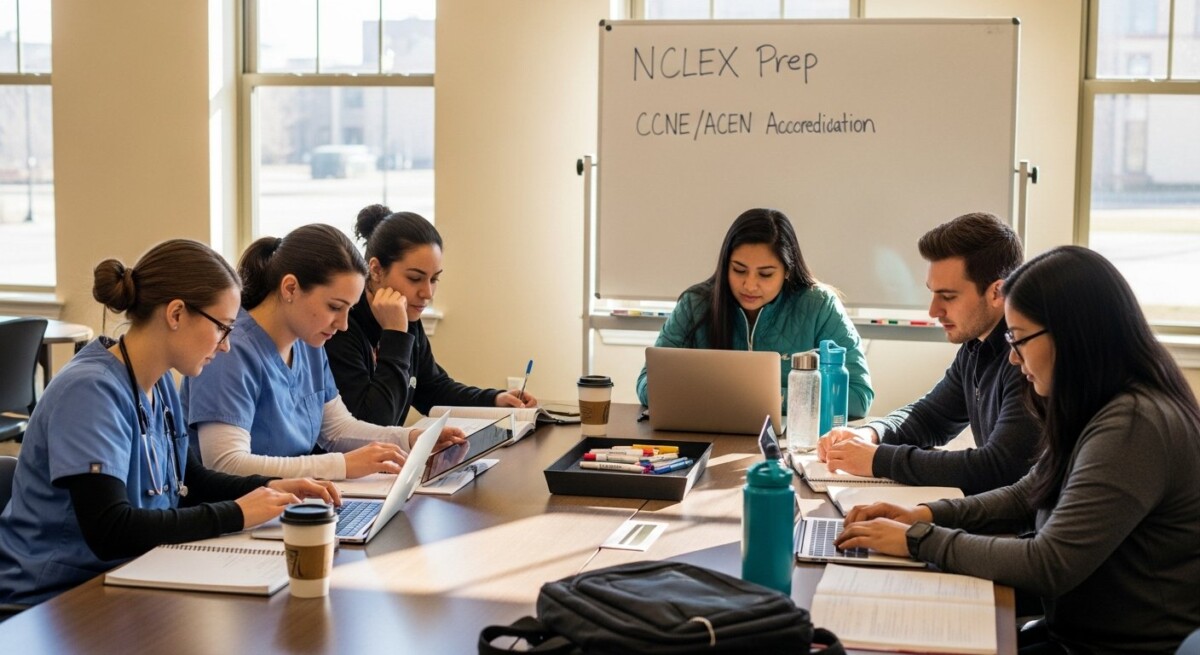
In California, two primary accrediting bodies oversee nursing education. The Commission on Collegiate Nursing Education (CCNE) accredits bachelor’s and master’s degree programs, while the Accreditation Commission for Education in Nursing (ACEN) covers diploma, associate, and practical nursing programs. Both are recognized by the U.S. Department of Education and the California Board of Registered Nursing. Without proper accreditation, graduates cannot sit for the NCLEX exam or obtain a California nursing license.
Beyond institutional accreditation, online students should verify that the program’s clinical placement model is approved by the California Board of Registered Nursing. Some programs require students to arrange their own clinical sites, while others provide placement assistance. Confirming this early prevents delays in completing degree requirements.
Types of Online Nursing Programs Available in California
California offers a range of online nursing degrees, from entry-level practical nursing to advanced practice roles. The most common options include:
- RN-to-BSN (Registered Nurse to Bachelor of Science in Nursing): Designed for licensed RNs with an associate degree or diploma. These programs typically take 12 to 24 months and are almost entirely online, with only capstone projects or community health clinicals requiring in-person hours.
- Accelerated BSN (Second Degree BSN): For individuals who already hold a bachelor’s degree in another field. These are intensive, often 12 to 18 months, and include both online coursework and in-person clinical rotations at partner healthcare facilities.
- Master of Science in Nursing (MSN): Prepares RNs for advanced roles such as nurse practitioner, nurse educator, or clinical nurse leader. Many MSN programs offer online didactic components with local clinical preceptorships.
- Doctor of Nursing Practice (DNP): The highest practice-focused degree for nursing leaders. Online DNP programs in California combine asynchronous coursework with on-campus intensives and clinical residencies.
- Licensed Vocational Nurse (LVN) to RN Bridge Programs: Allow LVNs to earn an associate or bachelor’s degree in nursing through a mix of online theory courses and supervised clinical hours.
Each program type serves a different career stage, so aligning your choice with your current license and long-term goals is critical. For example, an RN-to-BSN is ideal for associate-degree nurses seeking higher earning potential and leadership opportunities, while an accelerated BSN suits career changers who want to enter nursing quickly.
How to Evaluate Online Nursing Programs in California
Before enrolling, prospective students should assess several key factors beyond accreditation. The first is NCLEX pass rates. The California Board of Registered Nursing publishes annual pass rates for every program. A rate above 85% indicates strong curriculum and student support. Rates below 80% may signal weaknesses in instruction or student preparedness.
Second, review the program’s clinical placement model. Some online programs require students to find their own preceptors and clinical sites, which can be challenging in competitive regions like Los Angeles or the Bay Area. Others maintain partnerships with hospitals and clinics and assign placements based on the student’s location. If you live in a rural area, confirm that the program can accommodate distance placements or offers telehealth clinical hours.
Third, examine tuition and fees. Out-of-state online programs often charge non-resident tuition, but many California public universities offer in-state rates for online learners regardless of residency. Private nonprofit universities may have higher tuition but also provide more scholarship opportunities. Always request a full cost breakdown, including technology fees, simulation lab fees, and travel for on-campus residencies.
Fourth, check the program’s flexibility. Accredited online nursing programs in California vary in their use of synchronous versus asynchronous instruction. If you work full-time or have family obligations, asynchronous courses that let you complete lectures on your own schedule are often preferable. Some programs also offer part-time enrollment options, extending the degree timeline but reducing per-semester workload.
Financial Aid and Scholarships for California Nursing Students
Paying for nursing school is a major concern for most students. Fortunately, California offers multiple funding sources specifically for nursing education. The California Student Aid Commission administers the Cal Grant program, which provides need-based aid to eligible students attending participating institutions. Additionally, the California Nursing Education Scholarship Program (NESP) awards funds to students who commit to working in underserved areas after graduation.
Federal financial aid, including Pell Grants and Direct Loans, is available to students enrolled at accredited institutions. To apply, complete the Free Application for Federal Student Aid (FAFSA) each year. Many online nursing programs also participate in the Yellow Ribbon Program for military veterans and their dependents.
Beyond government aid, many hospitals and healthcare systems offer tuition reimbursement programs for current employees. If you work at a facility that partners with a specific university, you may receive discounted tuition or priority clinical placement. Professional organizations such as the California Nurses Association and the California Association of Colleges of Nursing also maintain scholarship lists for state residents.
For a broader look at funding your education, explore resources like Scholarship.Education, which connects students with scholarship databases, application guides, and financial aid information tailored to online degree seekers.

Accredited Online RN-to-BSN Programs in California
The RN-to-BSN is the most popular online nursing program in California, offered by both public and private institutions. These programs build on the clinical skills RNs already possess while adding coursework in community health, nursing research, leadership, and evidence-based practice. Most require 120 total credit hours, with 30 to 45 upper-division nursing credits completed online.
California State University campuses, including CSU Fullerton, CSU Sacramento, and CSU San Marcos, offer fully online RN-to-BSN programs that are CCNE-accredited and priced at in-state tuition rates. These programs typically accept 30 to 60 transfer credits from associate degree programs and can be completed in three to four semesters of full-time study. Part-time options extend completion to five or six semesters.
Private nonprofit universities like Azusa Pacific University, University of San Diego, and Western Governors University California also offer accredited online RN-to-BSN programs. Western Governors University uses a competency-based model, allowing students to progress faster by demonstrating mastery of material. This can reduce both time and cost for motivated learners. However, students should verify that the program’s clinical hours meet California Board of Registered Nursing requirements.
Online MSN and Graduate Nursing Programs in California
For RNs seeking advanced practice roles, California offers numerous online MSN and DNP programs. The University of California system, including UC Davis and UC Irvine, provides online MSN concentrations in nursing leadership, family nurse practitioner (FNP), and psychiatric mental health nurse practitioner (PMHNP). These programs require on-campus intensives for skills labs and simulation training, but the majority of coursework is delivered online.
Private institutions such as Loma Linda University and Samuel Merritt University offer online MSN programs with local clinical preceptorships. These programs often have higher tuition but include placement assistance and dedicated student support coordinators. The University of St. Augustine for Health Sciences also offers a fully online DNP program with flexible start dates.
Admission to graduate nursing programs typically requires a current RN license, a BSN from an accredited institution, a minimum GPA of 3.0, and professional experience (often one to two years). Some programs waive the GRE requirement, especially for applicants with strong clinical backgrounds. When applying, request official transcripts from all previous institutions and prepare a statement of purpose that aligns with the program’s mission.
Frequently Asked Questions
Can I become a registered nurse entirely online in California? No. All nursing programs include in-person clinical hours, skills labs, or simulations for the hands-on component. However, the didactic coursework can be completed online. Some programs offer hybrid models where theory is online and clinicals are arranged locally.
How do I verify a program is accredited for California licensure? Check the California Board of Registered Nursing’s list of approved programs. Also confirm that the program holds CCNE or ACEN accreditation. You can search these databases on the CCNE and ACEN websites.
Are online nursing programs in California cheaper than on-campus programs? They can be, especially if you avoid commuting and housing costs. Public university online programs often charge the same per-credit tuition as on-campus, while private programs may have higher rates. Always compare total cost including fees and clinical expenses.
How long does it take to complete an online nursing degree in California? An RN-to-BSN typically takes 12 to 24 months. Accelerated BSN programs take 12 to 18 months. MSN programs range from 18 to 36 months depending on specialization and enrollment status. DNP programs generally require three to four years of part-time study.
Can I work while enrolled in an online nursing program? Yes, many students work part-time or full-time while completing online coursework. However, clinical rotations require dedicated daytime hours. Plan your schedule carefully and communicate with your employer about flexible scheduling during clinical terms.
Taking the Next Step Toward Your Nursing Career
Choosing an accredited online nursing program in California is a significant decision that requires careful research into accreditation, clinical placement, cost, and career outcomes. By focusing on programs with high NCLEX pass rates, strong employer partnerships, and flexible delivery formats, you can earn a respected degree without putting your life on hold. Start by requesting information from three to five programs, comparing their clinical models and total costs, and then apply to those that best fit your professional goals and personal circumstances. Your future in nursing starts with a well-informed choice today. Learn more