
Sterile Processing Certificate at Eastern Gateway
The Sterile Processing Technology/Technician Certificate at Eastern Gateway Community College takes 1 year to less than 2 years in person and leads to steady healthcare work.

By Harper Davis
Hospitals cannot run without properly sterilized surgical instruments. Behind every safe operation stands a sterile processing technician who inspects, cleans, assembles, and sterilizes the tools surgeons depend on. If you want to enter healthcare quickly, without spending four years in college, the Sterile Processing Technology/Technician Certificate, 1 year to less than 2 years In-person at Eastern Gateway Community College offers a practical, affordable, and career-focused path into this essential role. This article explains what the program covers, who it is for, how to pay for it, and how to launch your career after graduation.
What Sterile Processing Technicians Do
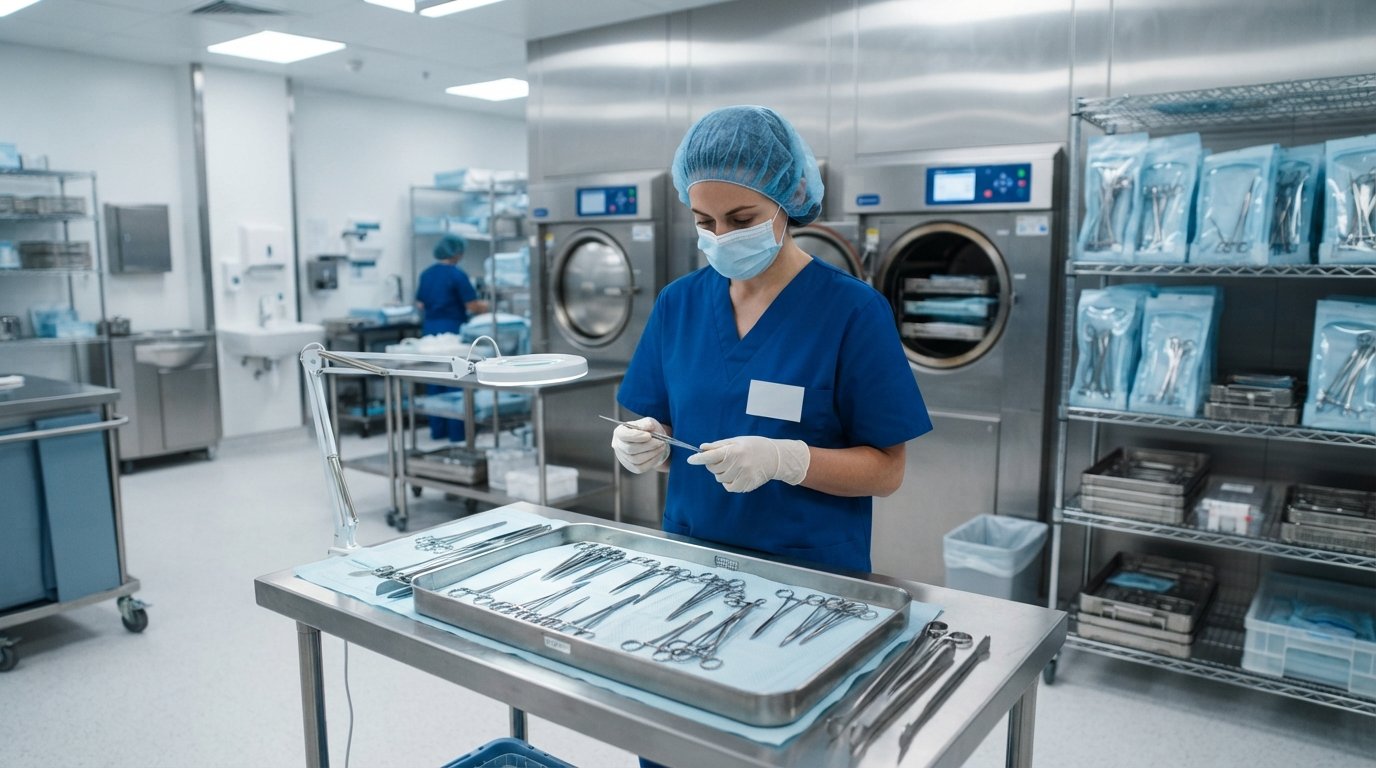
Sterile processing technicians, sometimes called central service technicians, work in the hidden engine room of healthcare facilities. They receive used surgical instruments from operating rooms, decontaminate them, inspect them for damage, assemble them into correct trays, and run them through sterilizers that kill bacteria, viruses, and other pathogens. Their accuracy protects patients from infections and keeps surgical schedules running on time.
The job involves more than washing tools. Technicians must understand microbiology, infection control, sterilization methods, and the specific instrument sets used for different procedures. They also track inventory, operate autoclaves and other equipment, and document every step so that trays can be traced if a problem arises. Attention to detail is not optional, because a single missed instrument or improperly sealed tray can delay surgery or endanger a patient.
Employment settings include hospitals, outpatient surgery centers, dental clinics, veterinary practices, and sterile processing departments within large health systems. Many technicians work evening or overnight shifts, since instruments must be reprocessed around the clock. The role suits people who prefer hands-on work, value precision, and want to contribute to patient care without providing direct clinical treatment.
Why Choose the Certificate at Eastern Gateway Community College
The Sterile Processing Technology/Technician Certificate, 1 year to less than 2 years In-person at Eastern Gateway Community College is designed as a short, intensive credential that prepares students for entry-level employment. Because the program takes one year to less than two years to complete, you can enter the workforce far sooner than students pursuing associate or bachelor degrees. That speed matters when you are balancing tuition costs, living expenses, and the desire to start earning.
The in-person format is a major advantage in this field. Sterile processing requires hands-on practice with real instruments, sterilizers, and decontamination equipment. Learning these skills through direct demonstration and supervised repetition builds the muscle memory and confidence that employers expect. In-person labs also allow instructors to correct technique immediately, which is difficult in a purely online environment.
Eastern Gateway Community College serves students who want affordable, accessible training close to home. The certificate stacks into broader healthcare pathways, so graduates who later decide to pursue surgical technology or nursing often find that their sterile processing coursework counts toward related programs. This flexibility makes the certificate a smart first step rather than a dead end.
What You Will Learn in the Program
Coursework in a sterile processing certificate blends classroom instruction with laboratory practice. Students study the science behind infection control, then apply that knowledge by handling instrument sets, operating sterilizers, and practicing the workflows used in real departments. The curriculum typically covers the following areas:
- Microbiology and infection prevention principles
- Decontamination, cleaning, and disinfection procedures
- Instrument identification, inspection, and assembly
- Sterilization methods, including steam, hydrogen peroxide, and ethylene oxide
- Sterile storage, distribution, and inventory management
- Professional standards, documentation, and quality assurance
Beyond technical skills, students develop the soft skills that employers value: communication, teamwork, time management, and composure under pressure. Sterile processing departments interact constantly with operating room staff, so clear communication and reliability matter as much as technical accuracy.
Many programs also include a clinical practicum or externship in a hospital or surgery center. This supervised experience gives you real department exposure before you graduate, and it often becomes a direct pipeline to your first job. If the certificate at Eastern Gateway includes a practicum, treat it as the most important part of your training.
Admission Requirements and How to Apply
Admission to a certificate program is generally less competitive than admission to selective health science degrees, but requirements still exist. Prospective students typically need a high school diploma or equivalent, and some programs ask for placement testing in math and reading. Because the program is in-person, you should also consider your commute, schedule, and ability to attend daytime labs.
The application process usually follows a predictable sequence. Confirm the specific requirements with Eastern Gateway Community College, since details can change, and complete each step before the priority deadline.
- Submit the college application and any required transcripts.
- Complete placement testing or submit qualifying test scores.
- Meet with an academic advisor to map your course sequence.
- Register for first-semester courses and arrange payment or financial aid.
- Attend orientation and complete health or safety requirements, such as immunizations.
Because cohort sizes are often limited, applying early improves your chances of securing a seat. Ask the program coordinator whether there is a waitlist and how clinical placements are assigned. Knowing these details upfront prevents surprises later.
Cost, Financial Aid, and Funding Options
One of the strongest arguments for a certificate over a degree is cost. A one-year to less than two-year certificate at a community college typically costs a fraction of a bachelor degree, and you begin earning sooner. Even so, tuition, fees, books, uniforms, and travel add up. Fortunately, several funding sources exist for career training programs like this one.
Start with the Free Application for Federal Student Aid, known as FAFSA. Certificate programs at eligible institutions can qualify for federal grants and loans, and many community college students receive Pell Grants that do not need to be repaid. If you are exploring how certificate programs fit into federal aid rules, our guide on the Pell Grant for certificate programs explains eligibility in detail.
Beyond federal aid, consider state workforce grants, employer tuition assistance, and scholarships from healthcare foundations. Hospitals facing staffing shortages sometimes sponsor training for future employees. You can also explore degree and career planning resources such as CollegeDegrees.School to compare pathways and understand how certificates fit into longer-term educational goals.
Practical money-saving steps include buying used textbooks, renting instruments if permitted, and asking about payment plans through the college bursar. Avoid private loans until you have exhausted grants, scholarships, and federal aid, since private loans usually carry higher interest rates and fewer borrower protections.
Certification and Career Outlook
After completing the certificate, many graduates pursue professional certification to strengthen their resumes. The two most recognized credentials are the Certified Registered Central Service Technician credential and the Certified Sterile Processing and Distribution Technician credential. Certification typically requires passing an exam and meeting eligibility criteria, which may include a combination of education and work experience.
Employers increasingly prefer or require certification, and certified technicians often earn higher starting wages and qualify for advancement. Career progression can lead to lead technician, educator, quality assurance specialist, or department supervisor roles. Some technicians move into surgical technology, nursing, or healthcare administration after gaining experience and additional education.
The demand for sterile processing technicians remains steady because surgery volume continues to grow and infection prevention remains a permanent priority. Hospitals must reprocess instruments for every procedure, and that work cannot be outsourced offshore. This stability makes the field attractive for people seeking reliable healthcare employment without a lengthy degree.
Is This Program Right for You
The Sterile Processing Technology/Technician Certificate, 1 year to less than 2 years In-person at Eastern Gateway Community College fits students who want a fast route into healthcare, prefer hands-on learning, and value job security over prestige. It also suits career changers who need to keep working while they train, provided they can arrange schedules around daytime labs.
Before enrolling, visit the campus if possible, speak with instructors, and ask about job placement rates and employer partnerships. A program with strong local connections can shorten your job search considerably. Also confirm that the certificate meets the hiring requirements of hospitals in your area, since some employers have specific training or certification expectations.
If you are weighing a certificate against a longer degree, remember that education is not all or nothing. You can start with the certificate, gain experience, and stack additional credentials later. The key is to begin with a program that delivers real skills, affordable tuition, and a clear path to employment. For many students, sterile processing is exactly that starting point, and Eastern Gateway Community College offers a structured, in-person way to get there.