
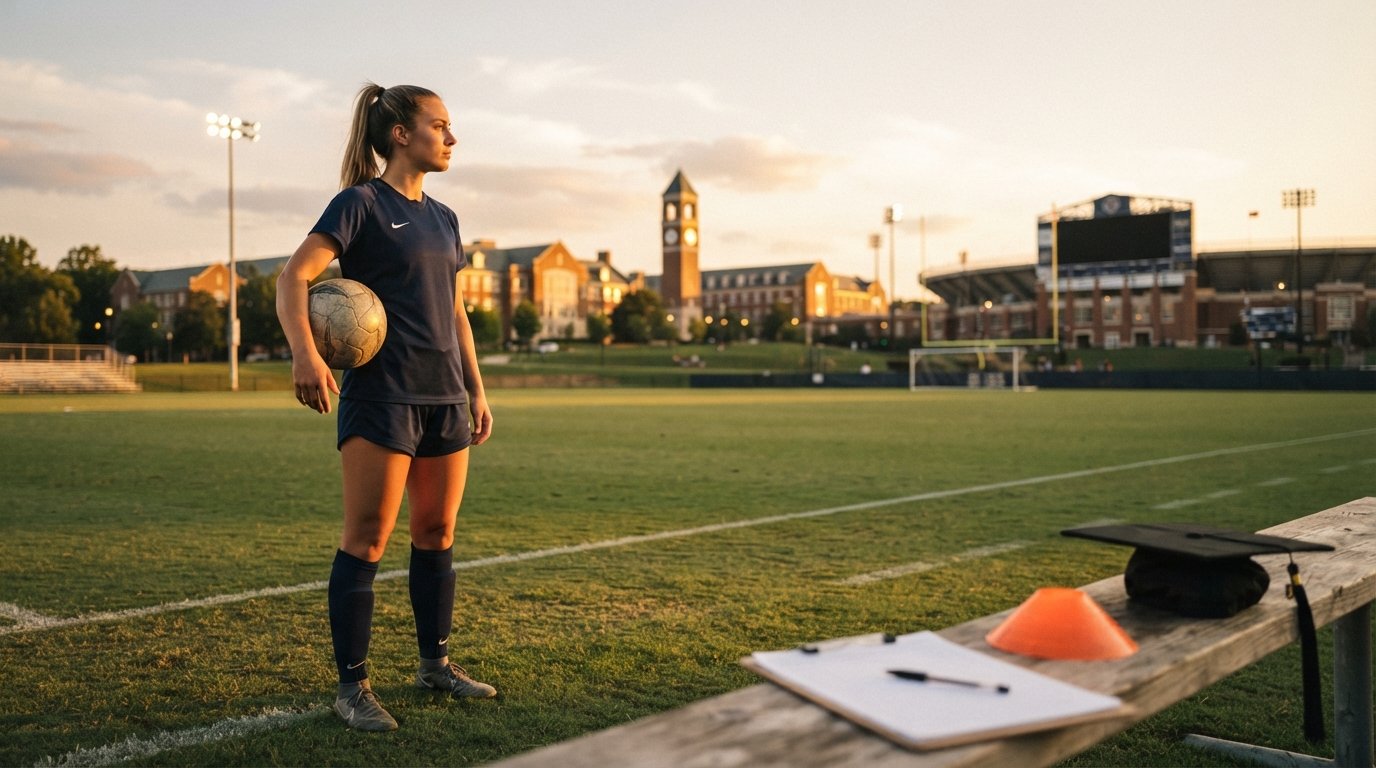
Soccer Scholarship Opportunities for Talented Players
Unlock soccer scholarship opportunities for talented players with our guide on divisions, recruiting, and academic aid to fund your college dreams.

By Rachel Nguyen
Every year, thousands of skilled soccer players dream of playing at the collegiate level while earning a degree without drowning in tuition debt. The reality is that soccer scholarship opportunities for talented players are real, but they are also highly competitive and often misunderstood. Many families assume that a strong left foot or a fast 40-yard dash is enough to secure a full ride. In truth, college coaches are looking for a complete package: athletic ability, academic eligibility, character, and a proactive approach to the recruiting process. Whether you are a high school sophomore just starting to think about college soccer or a club player entering your senior year, understanding the landscape of collegiate soccer funding is the first step toward turning your passion into a funded education.
The journey begins with education. You need to know which divisions offer athletic scholarships, how many roster spots are available, and what coaches expect from recruits. You also need to understand that soccer scholarships are not one-size-fits-all. Some programs are fully funded, while others operate with limited budgets and rely on academic aid to fill the gap. This guide will walk you through the pathways, the recruiting process, the academic requirements, and the alternative funding sources that can make your college soccer dreams a reality. Along the way, we will share practical steps and resources, including a useful recruiting guide from our partners at soccer scholarship recruiting and application tips, to help you navigate the competition with confidence.
Understanding the Collegiate Soccer Landscape
College soccer in the United States is governed by several athletic associations, each with its own rules regarding scholarships, eligibility, and recruiting calendars. The two largest are the NCAA (National Collegiate Athletic Association) and the NAIA (National Association of Intercollegiate Athletics), but the NJCAA (National Junior College Athletic Association) and NCCAA (National Christian College Athletic Association) also offer viable pathways. Each association divides its member schools into divisions, and the scholarship rules vary significantly from one division to the next.
In NCAA Division I, men's soccer programs are typically allowed a maximum of 9.9 full-team scholarships, which are often divided among many players as partial awards. Women's soccer programs in Division I have 14 full scholarships. NCAA Division II programs have 9.0 scholarships for men and 9.9 for women, but many Division II schools are not fully funded, meaning the actual number of athletic dollars available can be lower. Division III schools do not offer athletic scholarships at all, but they often provide generous academic and need-based aid that can make attendance affordable. The NAIA allows up to 12 scholarships for both men and women, and junior colleges in the NJCAA often offer full or partial athletic scholarships as a stepping stone to a four-year school.
Understanding these numbers is crucial because it helps you calibrate your expectations and your recruiting strategy. A talented player with professional aspirations might target Division I programs, while a student who values a liberal arts education and a strong academic scholarship might find a better fit at a Division III school. The key is to research each program's scholarship history and roster composition. Some coaches will tell you upfront how many scholarships they have available for your recruiting class; others will be more guarded. Do not be afraid to ask questions during the recruiting process. Knowing whether a program is fully funded or partially funded will save you time and help you focus on schools that can genuinely meet your financial needs.
Scholarship Pathways by Division and Association
Each division and association offers a different scholarship pathway, and the right fit depends on your athletic goals, academic profile, and financial situation. Here is a breakdown of the primary options available to talented soccer players.
- NCAA Division I: The highest level of competition, with the largest athletic budgets and the most visibility from professional scouts. Scholarships are often partial, and roster sizes can be large (up to 30 players). Coaches recruit nationally and internationally, so you need to stand out early.
- NCAA Division II: A strong balance of competitive soccer and academic opportunity. Many Division II schools offer partial athletic scholarships and combine them with academic aid. The recruiting timeline is often more flexible than Division I.
- NCAA Division III: No athletic scholarships, but generous academic, merit, and need-based aid. Division III schools emphasize the student-athlete experience and often have strong academic reputations.
- NAIA: Often overlooked but highly competitive, the NAIA allows up to 12 scholarships per team and has fewer restrictions on transfer rules. Many NAIA schools are smaller private institutions that offer strong academic support.
- NJCAA (Junior College): A valuable pathway for players who need to improve their grades, gain more playing time, or develop physically before moving to a four-year school. Many junior colleges offer full athletic scholarships and have transfer agreements with NCAA and NAIA programs.
Beyond these primary pathways, some players consider playing abroad in countries like Canada or the United Kingdom, where university soccer programs operate differently but still offer athletic and academic funding. The key is to match your ambitions with the right level of competition and financial support. A player who is a standout in high school but not quite ready for Division I can thrive at a Division II or NAIA program, earn a scholarship, and potentially transfer to a larger program later. The important thing is to keep playing, keep improving, and keep your academic eligibility intact.
Balancing Athletic Recruiting with Academic Requirements
One of the biggest mistakes talented soccer players make is focusing exclusively on their athletic development while neglecting their academic responsibilities. College coaches at every level will tell you that they cannot recruit a player who is not academically eligible. The NCAA Eligibility Center, the NAIA Eligibility Center, and individual university admissions offices all have specific requirements for GPA, core course completion, and standardized test scores. Falling short in the classroom can disqualify you from receiving a scholarship, no matter how impressive your highlight reel is.
For NCAA Division I and II, you must complete a certain number of core courses in English, math, science, social studies, and foreign language. Your GPA in these core courses is a major factor in eligibility. The NCAA uses a sliding scale that combines your core GPA and test scores (if required) to determine your eligibility status. The NAIA has its own eligibility requirements, which typically include a minimum GPA and test scores, but the standards are slightly different. Division III schools set their own admissions standards and do not use the NCAA Eligibility Center, but you still need to be admitted academically.
To stay on track, create a four-year academic plan with your high school counselor. Take challenging courses, but do not overload yourself to the point where your grades suffer. College coaches appreciate players who challenge themselves academically, but they also want to see consistency. If you are struggling in a subject, seek tutoring early. Remember that your academic record is a reflection of your discipline and work ethic, two qualities that coaches value highly. A strong GPA can also open doors to academic scholarships that can be combined with athletic aid, effectively increasing your total financial package. In fact, many college soccer players receive more funding from academic merit scholarships than from athletic scholarships alone.
Building a Recruiting Profile and Contacting Coaches
The recruiting process is a two-way street. Coaches are looking for talent, but they also expect you to take initiative. Building a compelling recruiting profile is your first step. Your profile should include a highlight video, your soccer resume (positions played, clubs, honors, statistics), your academic transcript, and your contact information. The highlight video is often the most important piece because coaches use it to evaluate your technical ability, tactical awareness, and athleticism. Keep it short (three to five minutes), show your best moments, and include a title card with your name, graduation year, position, and contact details.
Once your profile is ready, you can begin contacting coaches. The NCAA has specific rules about when coaches can respond to you, depending on your graduation year and division. Generally, you can initiate contact with coaches at any time, but they may not be able to respond until a certain date. Division I coaches cannot call you until June 15 of your sophomore year (for men's soccer) or September 1 of your junior year (for women's soccer). However, you can send emails and highlight videos earlier. Be respectful of these rules and do not bombard coaches with messages. A well-crafted email that introduces yourself, explains why you are interested in their program, and includes a link to your highlight video and schedule is far more effective than a generic mass email.
When you contact coaches, personalize each message. Mention specific details about their program, such as their recent conference championship or the style of play you admire. Coaches receive hundreds of emails from recruits, so standing out requires effort. Follow up with a brief note if you do not hear back within a few weeks, but do not be pushy. If a coach is interested, they will typically invite you to a campus visit, a summer camp, or an official visit. These visits are your opportunity to evaluate the school, the team culture, and the coaching staff. Ask questions about scholarship availability, academic support, and player development. Remember that you are also evaluating them.
Alternative Funding Sources if a Full Athletic Award Is Not Available
Full athletic scholarships in soccer are rare, especially for men's programs. Even if you receive an athletic scholarship, it may only cover a portion of your tuition, fees, housing, and books. That is why you need to explore alternative funding sources. Academic scholarships are the most common supplement. Many universities offer merit scholarships based on GPA and test scores, and these can be combined with athletic aid. Some schools also offer need-based financial aid, which is determined by the FAFSA (Free Application for Federal Student Aid). Even if you receive an athletic scholarship, you should still file the FAFSA to see if you qualify for federal grants, work-study, or low-interest loans.
There are also numerous private scholarships available to soccer players and student-athletes in general. Organizations like the United States Soccer Federation, local soccer clubs, and community foundations often offer scholarships. You can search for these opportunities using scholarship databases, including the resources available at CollegeAndTuition, which provides guides on financial aid and college planning. Additionally, some states offer athletic scholarships or grants for residents who compete in certain sports. Do not overlook smaller awards; they can add up quickly and reduce your out-of-pocket costs.
Another option is to consider playing at a school that offers a strong academic scholarship package even if the athletic scholarship is modest. A Division III school, for example, might not offer athletic scholarships, but it could offer a generous merit award that makes the total cost lower than a Division I school with a partial athletic scholarship. Similarly, some NAIA schools are known for providing substantial academic and athletic aid packages. The key is to compare the total financial aid package from each school, not just the athletic scholarship amount. Use net price calculators and financial aid award letters to make informed comparisons.
Navigating the Recruiting Timeline and Avoiding Common Pitfalls
The recruiting timeline for soccer has shifted in recent years, with coaches identifying talent at younger ages. However, the most important years are your sophomore and junior years of high school. During this time, you should be actively communicating with coaches, attending camps, and building your highlight reel. Your senior year is when official visits and scholarship offers typically happen. It is important to stay organized and keep track of deadlines, eligibility requirements, and communication with coaches.
Common pitfalls include waiting too long to start the process, neglecting academic eligibility, and failing to research schools thoroughly. Another mistake is assuming that a coach will find you without any effort on your part. While some players are discovered at showcase tournaments, most recruits need to proactively market themselves. Additionally, be wary of recruiting services that promise scholarships in exchange for a fee. While some services can be helpful, no one can guarantee a scholarship. Do your due diligence and rely on reputable resources.
Finally, remember that the college soccer experience is about more than just the scholarship. It is about finding a school where you can grow as a player, a student, and a person. The right fit will challenge you athletically and academically while providing a supportive environment. Take the time to visit campuses, talk to current players, and ask tough questions. The more informed you are, the better your decision will be.
Soccer scholarship opportunities for talented players are within reach, but they require dedication, preparation, and a strategic approach. By understanding the collegiate landscape, maintaining academic eligibility, building a strong recruiting profile, and exploring all funding sources, you can maximize your chances of securing a scholarship that makes your college dreams affordable. Start early, stay organized, and never underestimate the power of a well-rounded student-athlete.