
Religion Bachelor's at Bethany Lutheran: 4-Year Guide
Explore the Religion/Religious Studies Bachelor's degree, usually 4 years In-person at Bethany Lutheran College, and see how it prepares you for ministry, graduate school, and beyond.

By Harper Davis
A four-year religion degree at a small Lutheran college is not just preparation for ministry. It is a structured encounter with scripture, ethics, church history, and theology that sharpens how you read, argue, write, and lead. If you are weighing a Religion/Religious Studies Bachelor's degree, usually 4 years In-person at Bethany Lutheran College, the real question is not whether faith and scholarship can coexist, but what you will actually do for four years and what doors that work opens afterward.
Bethany Lutheran College sits in Mankato, Minnesota, and its religious studies program reflects a confessional Lutheran tradition while still treating religion as an academic discipline. That means you will study texts in their original languages, trace how doctrine developed across centuries, and practice the kind of careful reasoning that employers, graduate schools, and congregations all value.
Why a Four-Year, In-Person Religion Degree Still Matters
Online degrees have made higher education more flexible than ever, and for many fields that flexibility is a genuine advantage. Religion and religious studies, however, depend heavily on something that is hard to replicate through a screen: sustained, face-to-face conversation about ideas that people hold sacred. In-person study puts you in a room with classmates who disagree with you, a professor who knows your name, and a chaplain who sees you between classes.
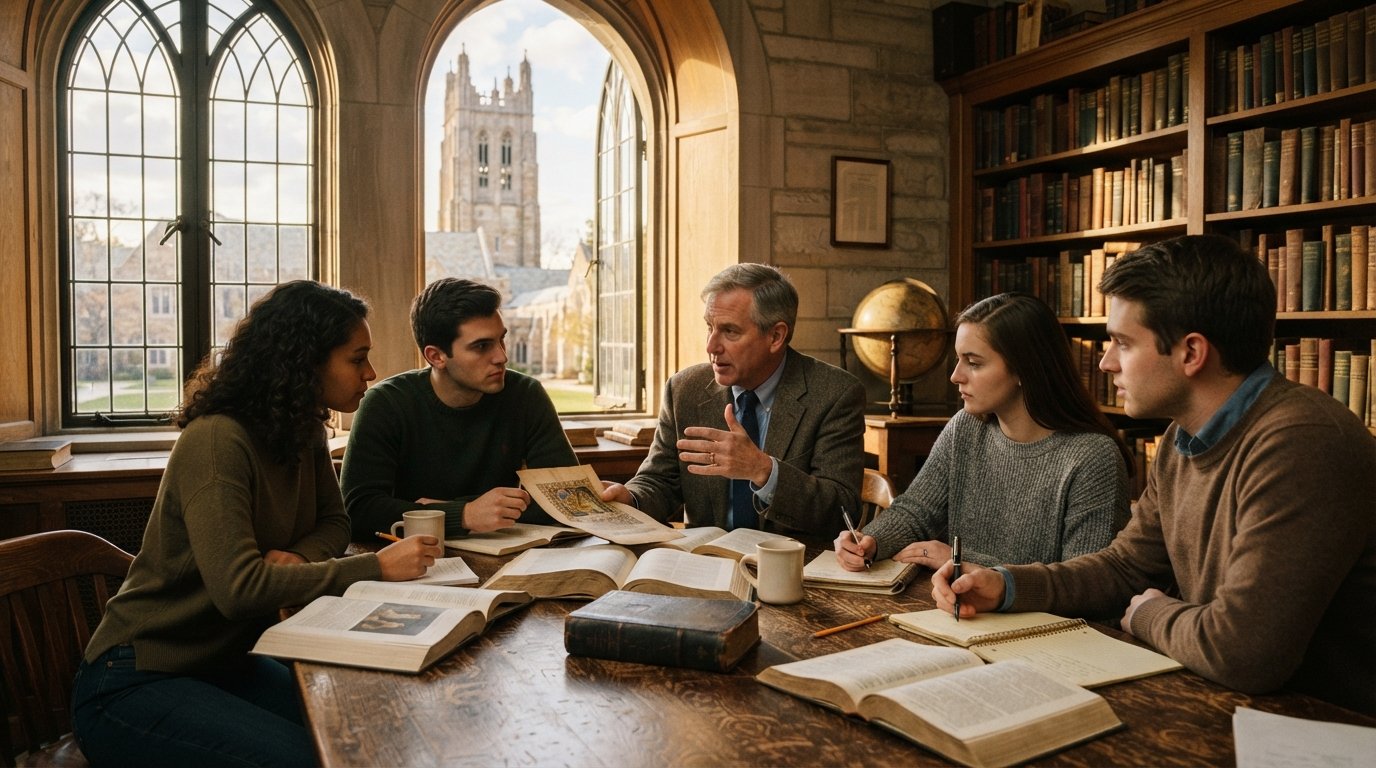
At Bethany Lutheran College, that residential rhythm is part of the curriculum. Chapel services, dorm conversations, and campus ministry events become informal laboratories for the material you are reading. A lecture on Augustinian grace lands differently when you discuss it over dinner with a roommate who grew up in a different tradition. This is why the program is typically designed as a four-year, in-person experience rather than a self-paced online track.
There is also a practical credentialing argument. Many churches, Lutheran schools, and religious nonprofits prefer candidates whose formation included supervised, communal learning. A four-year residential degree signals that you can show up consistently, work with others, and stay committed to a long project. Those soft skills matter as much as your transcript.
What the Curriculum Actually Covers
A religion major at a Lutheran college usually blends three streams of study: biblical content, historical and systematic theology, and practical ministry or ethics. You will not simply memorize Bible stories. You will learn to ask who wrote a text, for whom, in what historical moment, and what claims it makes on readers today.
Typical required courses include Old Testament and New Testament surveys, church history from the early church through the Reformation, Christian doctrine, and ethics. Many programs also require Greek or Hebrew, or at least offer them as electives, because reading scripture in its original language changes how you interpret it. Bethany Lutheran College, as a institution rooted in the Evangelical Lutheran Synod tradition, tends to emphasize confessional documents like the Augsburg Confession alongside broader Christian thought.
Beyond the core, you will choose electives that align with your goals. Someone heading to seminary might take advanced systematic theology and pastoral care. Someone interested in law or journalism might lean toward religion and public life, world religions, or philosophy of religion. Someone drawn to teaching might add courses in education and adolescent development.
- Biblical studies: Old and New Testament, exegesis, and original languages
- Historical theology: early church, Reformation, and modern Christianity
- Systematic theology: doctrine, apologetics, and philosophy of religion
- Practical theology: ethics, worship, pastoral care, and ministry practicums
- Electives: world religions, religion and culture, and interdisciplinary seminars
That spread is deliberate. A religion degree is not a trade school for pastors. It is a liberal arts major that teaches you to interpret complex texts, weigh competing arguments, and communicate clearly. Those skills travel well into fields that have nothing to do with Sunday services.
Admission, Cost, and Financial Aid Realities
Bethany Lutheran College is a private institution, which means sticker price is higher than in-state public tuition. That number, however, is rarely what families actually pay. Private colleges discount heavily through merit scholarships, need-based aid, church-related grants, and state or federal programs. The key is to apply for aid early and to treat the financial aid office as a partner rather than an obstacle.
Start with the Free Application for Federal Student Aid, usually called FAFSA, which determines your eligibility for Pell Grants, federal work-study, and subsidized loans. Then layer in institutional aid. Many Lutheran colleges offer scholarships for members of supporting congregations, for students who plan to enter church work, and for academic achievement. Outside scholarships from community organizations, synods, and religious foundations can close remaining gaps.
If you are balancing a job, family obligations, or a long commute during your studies, the strategies in our guide on balancing work, family, and studies can help you protect your GPA without burning out. The same principles apply whether you are on a residential campus or piecing together aid from multiple sources.
For a broader look at how degree pathways, costs, and career outcomes fit together, CollegeDegrees.School offers plain-language guides that complement what you will hear from admissions counselors. Use them as a cross-check, not a substitute for talking directly with Bethany's financial aid staff.
What You Can Do With a Religion Degree
The most visible career path is pastoral ministry, but it is far from the only one. Graduates of religion and religious studies programs go into teaching, nonprofit leadership, counseling, journalism, law, museum work, and even healthcare chaplaincy. The degree is less a job ticket than a foundation you build on with internships, graduate study, or additional certification.
If you sense a call to ministry, expect to continue into a Master of Divinity or a similar graduate program. A religion bachelor's degree gives you a head start on the languages, theology, and biblical content that seminaries expect. If you are not sure about ordination, you can still pursue roles in youth ministry, worship leadership, missions, or faith-based social services right after graduation.
For students who want to teach, a religion major pairs well with education courses and state licensure requirements. For those drawn to law, religion coursework builds the textual analysis and argumentation skills that law schools reward. For writers and communicators, the major provides a rich subject matter and constant practice in clear, persuasive prose.
Graduate Study and Seminary Pathways
Roughly a third of religion majors continue directly into graduate school, according to common patterns in liberal arts fields. Seminary, divinity school, and academic master's programs in theology or religious studies are the most common destinations. Some students also pursue dual degrees, such as a Master of Divinity combined with a master's in counseling or social work, to broaden their vocational options.
Admission to these programs typically requires a strong GPA, letters of recommendation, a personal statement, and sometimes entrance exams or interviews. Your undergraduate professors at a small college like Bethany can write detailed, personal recommendations because they actually know your work. That is one quiet advantage of a four-year in-person program over a large lecture-hall experience.
How to Get the Most Out of Four Years
Treat the degree as a set of building blocks rather than a checklist. The students who thrive are the ones who connect coursework to real communities: a local congregation, a campus ministry, a service organization, or a research project. Field education and internships turn abstract theology into practiced skill and give you stories to tell in interviews.
Build relationships with faculty early. At a college the size of Bethany Lutheran, professors notice whether you are engaged. Ask about their research, volunteer to help with a project, and take at least one course outside your comfort zone. A religion major who has also studied psychology, business, or communication is far more employable than one who has stayed in a single lane.
Finally, be honest about money from the start. Map out four years of tuition, fees, housing, and books, then match that against grants, scholarships, work-study, and loans. Reapply for aid every year, because circumstances and institutional priorities change. If the numbers do not work at one college, they may work at another with a different aid package.
A Religion/Religious Studies Bachelor's degree, usually 4 years In-person at Bethany Lutheran College, is a serious academic commitment wrapped in a supportive faith community. It asks you to read closely, think carefully, and live what you learn. For the right student, that combination is not just a degree. It is formation for a lifetime of work, service, and reflection.