
Medical/Clinical Assistant Certificate at Cape Fear CC
The Medical/Clinical Assistant Certificate, 1 year to less than 2 years In-person at Cape Fear Community College offers hands-on training and a fast path into patient care.

By Harper Davis
You want a healthcare career that gets you into patient care quickly, without spending four years in a classroom. The Medical/Clinical Assistant Certificate, 1 year to less than 2 years In-person at Cape Fear Community College is built for exactly that path. This short, hands-on program prepares you to work directly with patients in clinics, physician offices, and outpatient settings, and it does so in a timeframe that lets you enter the workforce fast. In this guide, you will see what the certificate covers, how the in-person format benefits your training, what it costs, and how to pay for it through financial aid, scholarships, and grants. You will also learn how this credential connects to larger career goals and how to make the enrollment decision with confidence.
Why This Short In-Person Certificate Deserves a Closer Look
Healthcare employers need reliable, trained staff at the front lines of patient care. Medical assistants and clinical assistants handle a mix of administrative and clinical duties: scheduling appointments, updating patient records, taking vital signs, preparing patients for exams, and assisting providers during procedures. A certificate program that runs between one and two years is designed to get you competent and employable without the time and expense of a full degree. That is the core appeal of the Medical/Clinical Assistant Certificate, 1 year to less than 2 years In-person at Cape Fear Community College.
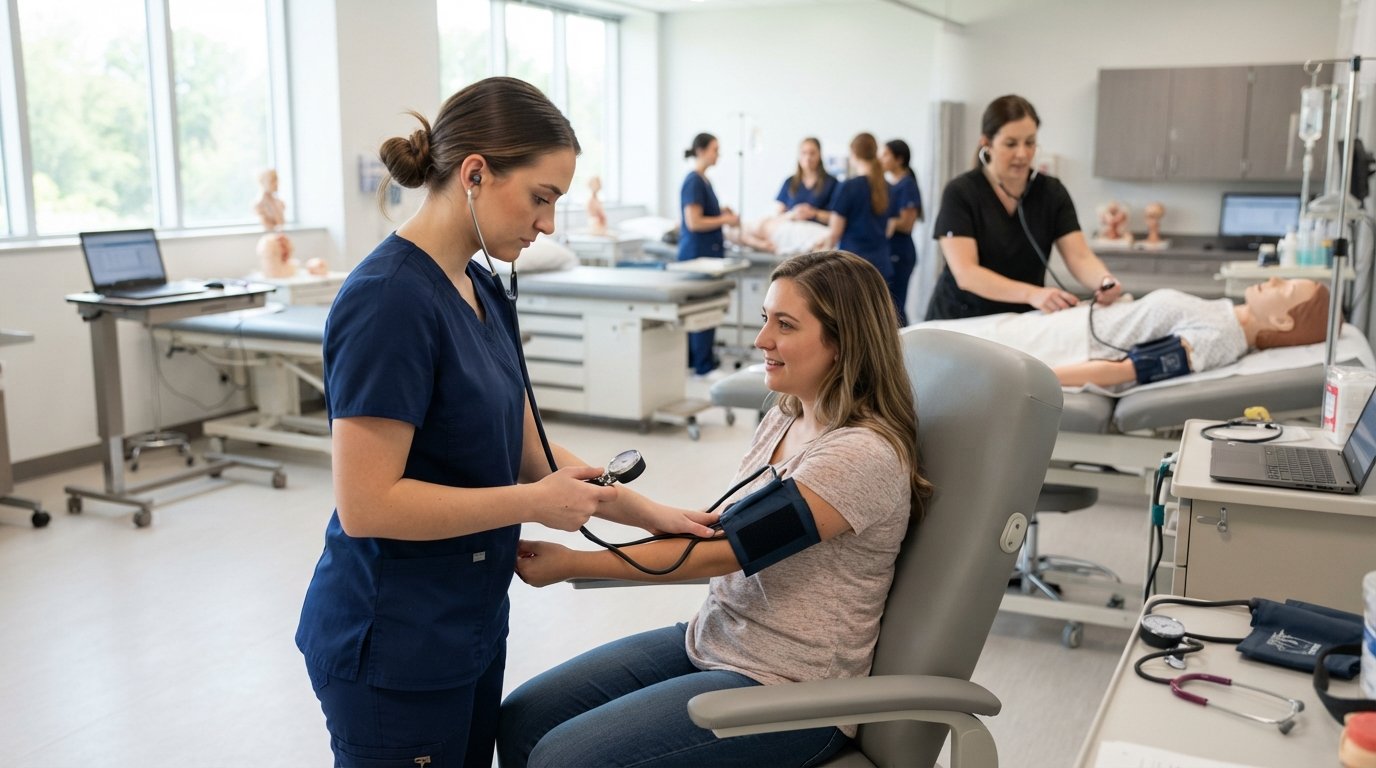
The in-person requirement is not a drawback; it is a strength. Clinical skills such as venipuncture, infection control, and patient positioning require supervised practice with real equipment and real feedback. At Cape Fear Community College, students train in campus labs and through clinical placements in local healthcare settings, which builds the muscle memory and confidence that employers expect on day one. Online simulations can teach theory, but they cannot replace guided hands-on repetition.
Another advantage is the regional job market. Cape Fear Community College serves the Wilmington, North Carolina area and surrounding communities, where physician practices, urgent care centers, and outpatient clinics continually hire clinical support staff. A local program gives you access to local clinical sites, local instructors with real practice experience, and a network that can help you land your first job. If you plan to stay in the region, that proximity is a practical asset.
What the Program Covers and How You Learn
The curriculum in a medical/clinical assistant certificate program typically blends administrative coursework with clinical skills training. You can expect coursework in medical terminology, anatomy and physiology basics, medical office procedures, insurance and billing fundamentals, and clinical procedures such as vital signs, specimen collection, and assisting with examinations. Programs also build in professionalism, communication, and legal and ethical responsibilities, because medical assistants work with confidential patient information and must understand privacy rules.
Because this is an in-person program, the learning model is largely lab-based and practical. A typical week might include lectures that introduce a concept, lab sessions where you practice the skill under supervision, and clinical rotations where you apply what you learned with actual patients. Instructors observe your technique, correct errors in real time, and help you build speed and accuracy. This feedback loop is difficult to replicate in a fully online format.
Here are the kinds of skills and knowledge areas you can expect to develop:
- Clinical skills: vital signs, infection control, patient preparation, and assisting with exams and minor procedures
- Administrative skills: scheduling, patient records, medical terminology, and front-office communication
- Technical skills: electronic health records, basic lab procedures, and specimen handling
- Professional skills: patient privacy, ethics, teamwork, and clear communication with diverse patients
Each of these areas matters to employers. A clinic needs someone who can move between the front desk and the exam room without dropping the ball. The certificate structure ensures you get exposure to both sides of the role, which makes you more versatile and more attractive in the hiring process. You should confirm the exact course list, credit hours, and clinical hour requirements with the college, because program details can be updated from year to year.
Admissions, Timeline, and What to Expect
Community college certificate programs are generally more accessible than four-year degree programs. Admission typically requires a high school diploma or equivalent, completion of placement requirements, and sometimes a background check or health documentation before clinical placements. Because the program is in-person, you should also plan for a schedule that includes daytime classes and lab sessions, plus clinical rotations that may occur at partner sites during business hours.
The one-year-to-less-than-two-years timeframe is realistic but requires focus. Students who treat the program like a full-time commitment, attend every lab, and prepare for skills check-offs tend to do well. If you need to work while enrolled, talk with an advisor early about scheduling options and whether part-time sequencing is available. Some students complete general education requirements first and then enter the clinical portion, which can make the workload more manageable.
Before you apply, take these steps to keep the process smooth:
- Review the program page and confirm current admission requirements, deadlines, and any prerequisite courses.
- Complete your financial aid application early so your funding is in place before the term starts.
- Ask about clinical placement requirements such as immunizations, background checks, and CPR certification.
- Meet with an academic advisor to map a schedule that fits your work and family obligations.
Planning ahead matters because clinical placements often require paperwork that takes time to complete. Missing a deadline can delay your start by a full term, so build in buffer time. Also ask about program accreditation and whether graduates are eligible for certification exams, since some employers prefer or require certification. The college can clarify which credentials the program prepares you for and what the pass rates look like.
Cost, Financial Aid, and Smart Funding Strategies
Cost is often the deciding factor for career-training programs, and community college certificates are usually far less expensive than degree programs. Tuition is charged per credit hour, and additional costs include books, uniforms, lab fees, and certification exam fees. The total is manageable compared with a four-year degree, but you should still build a realistic budget before you enroll.
Financial aid options for certificate programs include federal student aid, state grants, institutional scholarships, and workforce development funding. To access federal aid, you complete the Free Application for Federal Student Aid (FAFSA). Community college financial aid offices can help you understand eligibility, and our guide on community college grants and financial aid options walks through the main funding sources step by step. Workforce grants and employer tuition assistance are also worth exploring, especially if you already work in a healthcare setting.
Scholarships deserve special attention because they do not need to be repaid. Many local foundations, hospital auxiliaries, and professional associations offer awards for healthcare students, and some are specifically for career-training and certificate students. Smaller awards add up quickly when you stack them. For a broader view of how college costs and funding fit together, the planning resources at CollegeAndTuition can help you compare options and make informed decisions about affordability.
Here are practical ways to reduce your out-of-pocket cost:
- File the FAFSA as early as possible and check whether your state grants apply to certificate programs
- Apply for local scholarships through hospitals, clinics, and community foundations
- Ask your employer about tuition reimbursement if you already work in healthcare
- Buy used books and check whether the program provides uniforms or lab supplies
Keep in mind that financial aid rules can differ for certificate programs compared with degree programs, so confirm eligibility with the financial aid office rather than assuming. A short conversation can save you time and prevent surprises later in the term.
Career Outcomes and Next Steps After the Certificate
Graduates of medical/clinical assistant certificate programs typically find work in physician offices, outpatient clinics, urgent care centers, hospitals, and specialty practices. The role is often a stepping stone: some assistants later pursue nursing, health administration, or specialized clinical roles. The certificate gives you paid healthcare experience, which strengthens future applications and clarifies whether direct patient care is the right long-term fit for you.
Earning potential varies by region and setting, but the short training period means you can start earning and gaining experience sooner than students in longer programs. Many employers also offer on-the-job training and advancement for reliable staff who demonstrate strong clinical and communication skills. If you are considering further education later, the credits and experience from a certificate program can support a smooth transition into an associate degree or beyond.
The Medical/Clinical Assistant Certificate, 1 year to less than 2 years In-person at Cape Fear Community College is a practical, efficient route into healthcare for students who want hands-on training and a fast path to employment. Verify current program details with the college, line up your financial aid early, and treat the clinical portion as the heart of your training. With a clear plan, this short certificate can open the door to a stable career and a foundation for whatever comes next.