
FTCC Nursing Associate Degree: 2-Year Path to RN
The FTCC Registered Nursing associate degree takes about two years in person and leads straight to the NCLEX-RN. See costs, admission tips, and funding options.

By William Bennett
If you want to become a registered nurse without spending four years in a university classroom, the Registered Nursing/Registered Nurse Associate's degree, usually 2 years In-person at Fayetteville Technical Community College offers one of the most direct routes into the profession. This program combines rigorous science coursework with hands-on clinical training, and it is designed for students who are ready to commit to a full-time, face-to-face learning schedule. For many future nurses in North Carolina, this associate degree is the fastest way to sit for the NCLEX-RN exam, earn an RN license, and start working in hospitals, clinics, and long-term care facilities.
The appeal is practical. You finish in two years, you pay community college tuition rates, and you enter a field with strong demand. But the program is also competitive, and the in-person requirement means you need to plan your life around class and clinical schedules. This guide walks through what the degree involves, how to get admitted, what it costs, and how to fund it without drowning in debt. Whether you are a recent high school graduate, a career changer, or a military-connected student in the Fayetteville area, understanding the details before you apply can save you time and money.
What the Registered Nursing Associate Degree at FTCC Actually Involves
The Registered Nursing/Registered Nurse Associate's degree, usually 2 years In-person at Fayetteville Technical Community College is a structured, cohort-based program. That means you move through courses with the same group of students, and the sequence is fixed. You cannot cherry-pick classes or take a semester off without delaying graduation. The curriculum blends general education requirements (English, psychology, anatomy and physiology, microbiology) with nursing-specific courses such as health assessment, pharmacology, medical-surgical nursing, maternal-newborn nursing, and pediatric nursing.
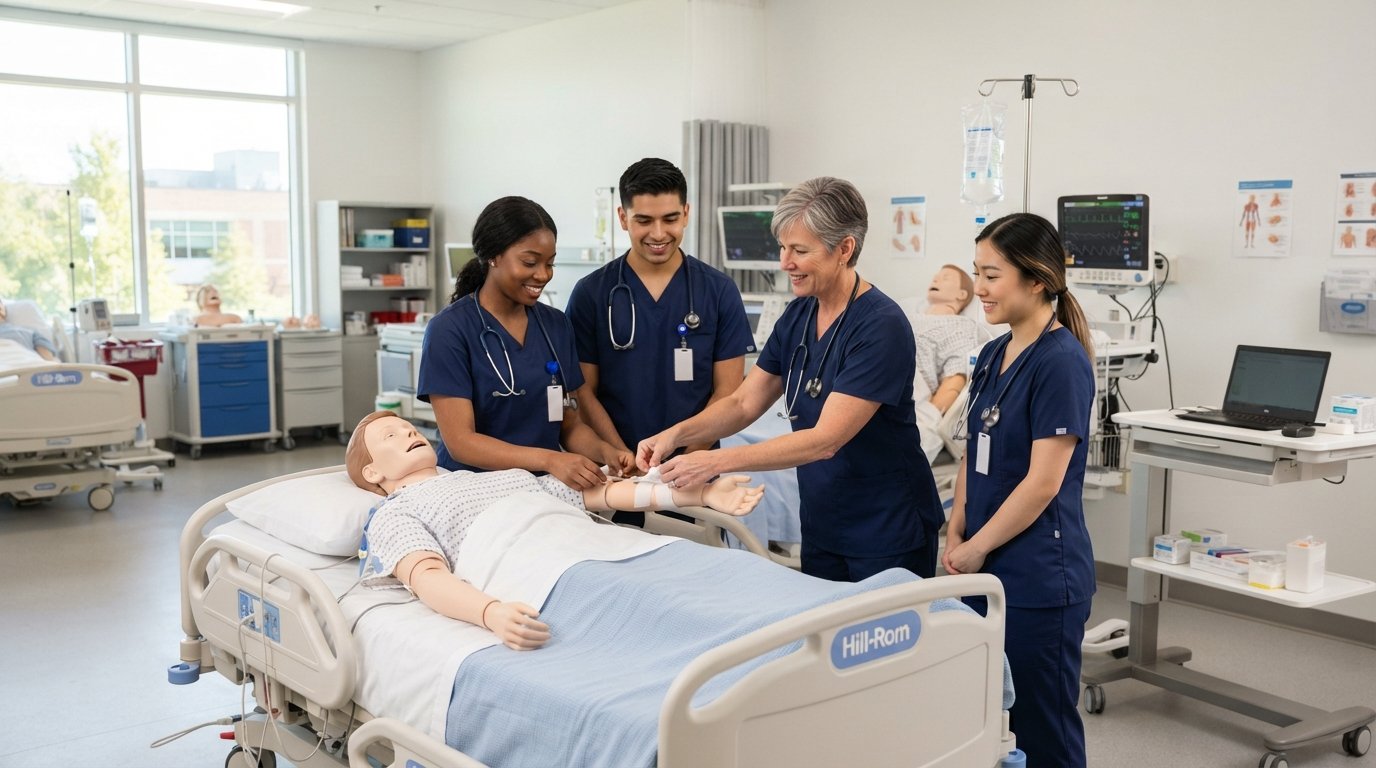
What separates this program from an online degree is the clinical component. Students spend significant hours in simulation labs and at partner healthcare facilities, practicing direct patient care under supervision. The in-person format is not a bureaucratic detail; it is central to how nurses learn. You need to physically assess a patient, respond to changing conditions, and communicate with a care team in real time. Those skills do not translate well through a screen.
The program typically prepares you for the NCLEX-RN, the national licensing exam required to practice as a registered nurse. Passing that exam is the gate to your license and your first job. FTCC structures its final semester around readiness for that exam, including review sessions and practice tests.
Admission Requirements and the Competitive Selection Process
Getting into the nursing program is harder than getting into the college. FTCC, like most community college nursing programs, uses a competitive admissions process. Meeting the minimum requirements does not guarantee a seat. You need strong grades in prerequisite courses, especially anatomy and physiology and microbiology, because those are often weighted heavily in the ranking system.
Most applicants complete a set of prerequisite courses before applying: college-level English, psychology, human anatomy and physiology I and II, and microbiology. Some programs also require a chemistry or statistics course. You will also take the TEAS (Test of Essential Academic Skills) or a similar standardized entrance exam. A strong TEAS score can offset a weaker GPA, and vice versa, so check the current rubric before you apply.
Here is a practical checklist for building a competitive application:
- Complete all prerequisites with the highest grades possible, prioritizing science courses.
- Take the TEAS early enough to retake it if your score is below the competitive range.
- Attend a mandatory information session and confirm the current application deadline, which changes year to year.
- Gather documentation for any healthcare experience, certifications (such as CNA), or volunteer hours that may earn points.
- Submit transcripts and test scores well before the deadline to avoid processing delays.
Once admitted, you should expect a full-time commitment. Many students are surprised by the intensity of the first semester. Working full time while enrolled is difficult, and the program strongly discourages it during clinical rotations. Planning your finances and schedule before you start is not optional; it is part of being a successful student.
Costs, Financial Aid, and Funding Strategies for Nursing Students
One of the biggest advantages of the Registered Nursing/Registered Nurse Associate's degree, usually 2 years In-person at Fayetteville Technical Community College is the cost structure. Community college tuition is significantly lower than a four-year university, and you finish faster, which means you enter the workforce and start earning sooner. That said, the total cost includes more than tuition: fees, textbooks, uniforms, stethoscopes, immunizations, background checks, drug screens, and NCLEX review materials all add up.
Financial aid for nursing students comes from several sources. The FAFSA is the starting point for federal grants, work-study, and student loans. North Carolina also offers state grants and forgivable loan programs for health professionals, and some hospitals offer tuition reimbursement or sign-on bonuses in exchange for a work commitment after graduation. Scholarships specifically for nursing students can cover a meaningful portion of your costs, and it is worth applying to several rather than relying on a single source. For a deeper walkthrough of major awards, see this guide on how to secure full ride nursing scholarships.
If you are exploring degree options beyond the associate level, or you want to compare programs and colleges, an educational matching service such as CollegeDegree.Education can help you identify accredited institutions and program formats that fit your goals. It is a useful starting point for students who are not sure whether an associate degree, a bachelor's degree, or an accelerated pathway is the right fit.
Here are the main funding categories to pursue:
- Federal Pell Grants and North Carolina state grants, which do not need to be repaid.
- Nursing-specific scholarships from professional associations, hospitals, and community foundations.
- Employer tuition assistance if you already work in a healthcare setting as a CNA or medical assistant.
- Forgivable loan programs that repay part of your tuition in exchange for service in underserved areas.
- Low-interest federal student loans as a last resort, borrowed conservatively.
A realistic budget matters. Students who underestimate ancillary costs often find themselves short in the final semester, exactly when NCLEX prep materials and licensing fees come due. Build a cushion of several hundred dollars for those expenses, and apply for scholarships early in the year when deadlines are less crowded.
Career Outcomes and Licensure After Graduation
After completing the Registered Nursing/Registered Nurse Associate's degree, usually 2 years In-person at Fayetteville Technical Community College, graduates apply to take the NCLEX-RN. Passing the exam earns you a registered nurse license, which opens roles in hospitals, outpatient clinics, home health, long-term care, and public health. In the Fayetteville region, healthcare systems and military-connected facilities provide a steady stream of entry-level RN positions.
Associate-prepared nurses often start in medical-surgical units, which build a broad foundation of clinical skills. From there, nurses can specialize in emergency care, critical care, labor and delivery, or behavioral health, often with additional on-the-job training or certifications. Many employers offer tuition assistance for RN-to-BSN completion, which allows associate-prepared nurses to earn a bachelor's degree while working. That pathway matters for long-term career growth, because some leadership and advanced practice roles require a BSN or higher.
Salary varies by setting, shift, and experience, but registered nursing consistently ranks among the most stable career choices in terms of demand. The in-person training you receive at FTCC is designed to make you job-ready, not just exam-ready, and that practical preparation is what employers value in new graduates.
Is the In-Person Associate Degree Right for You?
The in-person format is a strength for students who learn best through direct interaction, immediate feedback, and hands-on practice. It is also a constraint for students who need maximum flexibility. If you are a working adult with unpredictable hours, a parent with limited childcare options, or someone who cannot relocate near campus, the schedule may be challenging. Before you apply, visit the campus, talk to current students, and review a sample weekly schedule that includes clinical shifts.
For military-connected students and veterans in the Fayetteville area, the program can align well with education benefits, but timing and approval matter. Confirm that the program is approved for the benefits you plan to use, and coordinate with your education office early. For everyone else, the key question is simple: can you commit two years of focused, full-time study to earn a credential that leads directly to a licensed profession? If the answer is yes, this pathway is one of the most efficient routes available.
Take the next step by reviewing the current admissions packet, meeting with an advisor, and building a financial plan that includes scholarships, grants, and a realistic budget for program costs. The Registered Nursing/Registered Nurse Associate's degree, usually 2 years In-person at Fayetteville Technical Community College is demanding, but it is also one of the most direct and affordable ways to launch a nursing career in North Carolina.