
Fire Science Certificate at Aparicio-Levy: 12-Week Path
The Fire Science/Fire-fighting Certificate at Aparicio-Levy trains you in 12 weeks to under a year, with in-person drills that prepare you for entry-level hiring.

By Harper Davis
What if you could start training for a firefighting career in as little as 12 weeks, without committing to a four-year degree? The Fire Science/Fire-fighting Certificate, 12 weeks to less than 1 year In-person at Aparicio-Levy Technical Center-Vs represents exactly that kind of accelerated pathway. For career changers, recent high school graduates, and working adults in the Tampa Bay area, this program compresses essential fire science instruction and hands-on firefighting drills into a focused, in-person format that gets you job-ready faster than traditional degree tracks. But before you enroll, you need to understand what the certificate covers, how it compares to other training options, what it costs, and how to pay for it. This guide breaks down every practical detail so you can decide whether this fast-track program fits your goals.
What Is the Fire Science/Fire-fighting Certificate at Aparicio-Levy Technical Center?
Aparicio-Levy Technical Center, part of the Hillsborough County Public Schools system in Tampa, Florida, offers career and technical education designed to move adults into the workforce quickly. The Fire Science/Fire-fighting Certificate falls under that mission: it is a non-degree credential that combines classroom instruction in fire behavior, building construction, hazardous materials, and emergency medical basics with live fire training and physical fitness conditioning. The program is delivered entirely in person, which matters because firefighting is a psychomotor skill. You cannot learn to advance a hose line or perform a primary search through a video lecture.
The certificate is designed to articulate toward the Florida Minimum Standards firefighter certification, often called Firefighter I and II, depending on the specific course sequence and state approval status at the time you enroll. Because program details can shift, always confirm the current curriculum map with the admissions office. What remains consistent is the structure: a cohort-based, clock-hour program that can be completed in roughly 12 weeks of full-time study, or stretched to just under a year for students who need a part-time schedule. That flexibility is rare among fire academies, many of which lock students into a single full-time cohort.
Inside the 12-Week to Under-1-Year Timeline
The compressed timeline is the headline feature, but it deserves a realistic look. Twelve weeks sounds aggressive because it is. Full-time students typically attend class and drills five days a week, often with early morning physical training sessions before academic blocks. The pace mimics the shift schedule and discipline of a working fire station, which is intentional: instructors want to see how you perform under fatigue before a department invests in you.
Here is how the training hours typically break down across the certificate:
- Classroom instruction: fire chemistry, building construction, fire prevention codes, and incident command fundamentals.
- Practical evolutions: hose handling, ladder placement, ventilation, forcible entry, and self-contained breathing apparatus (SCBA) drills.
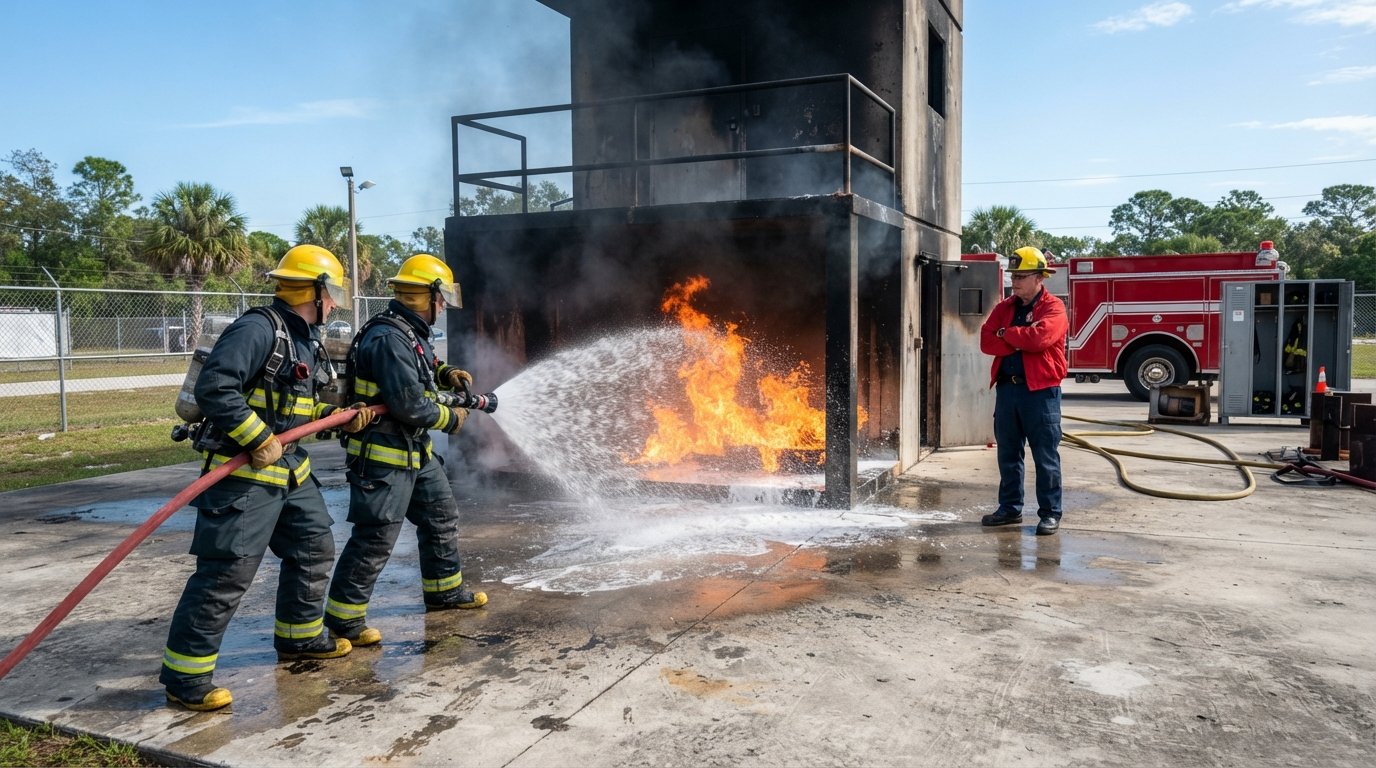
- Live fire exercises: controlled burn scenarios that teach you to read smoke, manage heat, and work as part of a team under supervision.
- Physical fitness and wellness: structured conditioning aligned with the Candidate Physical Ability Test (CPAT) standards used by many hiring departments.
Students who choose the extended track (up to 11 months) usually do so because they are balancing a job or family obligations. The tradeoff is simple: you spread the same clock hours across more weeks, which reduces weekly intensity but delays your eligibility for entry-level hiring. Neither path is inherently better; the right choice depends on your financial runway and how quickly you need to start earning.
Admission Requirements and How to Enroll
Admission to the Fire Science/Fire-fighting Certificate at Aparicio-Levy is not open enrollment. Firefighting programs carry physical and safety prerequisites because the training itself is hazardous. Expect to clear several gates before your first day in turnout gear. Requirements can vary by cohort, so treat the following as a general checklist rather than a guarantee.
- Age and education: you must be at least 18 years old and hold a high school diploma or GED.
- Physical examination: a physician must clear you for strenuous activity, often including a spirometry test for respiratory fitness.
- Background screening: fingerprinting and a criminal history check, since fire departments are public safety agencies.
- CPAT or fitness assessment: some cohorts require a passing Candidate Physical Ability Test score or an equivalent in-house assessment.
- Application and orientation: submit transcripts, complete the application packet, and attend a mandatory program orientation.
Because cohort sizes are limited by apparatus availability and instructor ratios, seats fill quickly. The practical move is to contact the admissions office early, ask which prerequisites can be completed concurrently, and get your physical and background check scheduled before the application window closes. Students exploring other accelerated technical credentials sometimes compare timelines across fields; a resource like the guide to an online BSC electrical engineering tech certificate fast track shows how other programs structure compressed schedules, which helps you benchmark what 12 weeks of full-time study really demands.
Costs, Financial Aid, and Funding Options
Tuition for public technical center programs is generally far lower than private academy or associate degree pricing, but fire programs carry extra costs that surprise students: turnout gear, boots, gloves, a hood, and sometimes textbooks or exam fees. Budget for both tuition and equipment, and ask the program whether gear is provided or purchased separately. Florida residents should also confirm residency documentation early, since in-state rates depend on it.
Funding sources worth investigating include:
- Federal student aid: some clock-hour certificate programs qualify for Pell Grants and federal loans; check the school's Title IV eligibility status before assuming.
- State and local workforce grants: Florida offers career training grants and veteran-specific funding that can cover technical certificates.
- Scholarships: fire service associations, local unions, and community foundations frequently offer small awards for academy students.
- Employer sponsorship: some fire departments and emergency services agencies sponsor employees through certification training.
Scholarship.Education maintains a searchable database of scholarships and financial aid guides that can help you match your profile to available awards, and its tools for comparing programs can save hours of research. Note that Scholarship.Education receives compensation from listed schools through advertising, links, and search placement, which may influence how institutions appear and rank; the information is for general reference and does not guarantee admission, funding, or employment. Treat any single source as a starting point, not a final answer.
Fire Science Certificate vs. Associate Degree vs. Academy-Only Training
The biggest decision prospective firefighters face is credential strategy. A certificate from a technical center sits between two extremes: a short standalone academy and a two-year associate degree in fire science. Each has a distinct purpose, and the right choice depends on what hiring departments in your target region actually prefer.
A certificate program like the one at Aparicio-Levy gets you trained and certified fastest, which matters if you want to test for entry-level positions within a year. An associate degree adds general education coursework, fire administration, and inspection courses that help later when you pursue promotion to lieutenant or captain. Academy-only training is the narrowest option, covering minimum standards without broader fire science context. In practice, many firefighters earn a certificate first, get hired, and then complete an associate or bachelor's degree part-time using tuition reimbursement. That sequencing keeps income flowing while you build credentials.
If you are still weighing whether a certificate or a degree is the better financial bet, it helps to understand how educational matching services work. Platforms such as CollegeDegree.Education connect prospective students with accredited colleges and programs, which can clarify how a certificate might articulate into a degree later. Knowing your transfer options before you enroll prevents duplicated coursework and wasted tuition.
Career Outcomes and Hiring Realities
Completing the certificate does not guarantee a firefighting job, and any program that implies otherwise is overselling. Hiring is competitive, and departments use written exams, physical ability tests, oral boards, background investigations, polygraphs, and medical evaluations. What the certificate does is make you eligible to sit for those processes with credible training behind you. Graduates typically pursue roles as municipal or county firefighters, airport rescue firefighters, wildland fire crew members, and emergency medical technicians if they add EMT or paramedic certification.
Salary varies widely by jurisdiction, but entry-level municipal firefighters in Florida generally earn in the low-to-mid $40,000s before overtime, with substantial overtime opportunities and pension benefits that raise total compensation. The Bureau of Labor Statistics projects steady demand for firefighters nationally, driven by retirements and population growth, though competition in desirable departments remains stiff. Your practical advantage comes from stacking credentials: certificate plus EMT certification plus a clean driving record plus CPAT readiness puts you in a stronger applicant pool than any single item alone.
Is the Aparicio-Levy Fast Track Right for You?
This program fits a specific profile well. You should consider it seriously if you live in or near Hillsborough County, you can commit to full-time daytime training for roughly three months, you are physically prepared for daily conditioning, and you want to enter the fire service without taking on four-year degree debt. It is a poor fit if you need evening-only classes, if you are not yet physically conditioned for CPAT-level exertion, or if you plan to move out of state immediately, since certification reciprocity varies by state and often requires additional testing.
Before committing, do three things: visit the campus and watch a practical evolution, talk to at least two working firefighters about their hiring timeline, and map your funding plan down to equipment costs. The 12-week timeline is real, but it is only the beginning of a longer process that includes state certification exams and department hiring pipelines. Students who succeed treat the certificate as a launchpad, not a finish line.
If you are ready to explore funding, compare programs, and find the training path that matches your budget and timeline, start with a structured search rather than a single phone call. The Fire Science/Fire-fighting Certificate, 12 weeks to less than 1 year In-person at Aparicio-Levy Technical Center-Vs can be the fastest route into the fire service for the right candidate, provided you go in with clear eyes about cost, competition, and the work that comes after graduation.