
Environmental Science Associate Degree at Diablo Valley College
Launch your green career in just 2 years with the in-person Environmental Science Associate degree at Diablo Valley College, featuring hands-on labs and field work.

By James Miller
If you are looking for a fast, affordable, and hands-on path into the growing green economy, the Environmental Science Associate's degree, usually 2 years In-person at Diablo Valley College, is a smart choice. This program is designed for students who want to understand the natural world, solve environmental problems, and build a career in a field that is expanding every year. In the next two years, you can gain the scientific foundation and technical skills needed to transfer to a four-year university or step directly into entry-level environmental jobs in California and beyond.
This degree is not just about memorizing facts; it is about applying knowledge to real issues like climate change, water quality, and habitat restoration. As a student at Diablo Valley College, you will learn from experienced faculty in modern labs, work in the field on local ecosystems, and use the same tools and techniques that professionals use daily. For anyone who is passionate about the environment and wants a practical, career-focused education, this program is an excellent first step.
Why Earn an Environmental Science Associate Degree?
An associate degree in environmental science offers several distinct benefits that go beyond the classroom. First, it provides a structured, comprehensive introduction to the major branches of environmental science, including ecology, geology, chemistry, and biology. You will explore how these fields interact to shape our world and how human activity influences natural systems. This broad base of knowledge is essential whether you plan to transfer to a bachelor's program or enter the workforce right away.
Second, the program emphasizes practical, employable skills. At Diablo Valley College, you will not just read about environmental challenges; you will learn how to collect and analyze data, use geographic information systems (GIS), conduct water and soil quality tests, and write scientific reports. These are the exact skills employers seek in environmental technicians, field assistants, and lab analysts. The degree also opens doors to internships and networking opportunities, often through the college's connections with local agencies and environmental organizations.
Third, an associate degree is an affordable and time-efficient route to a rewarding career. Tuition at community colleges like Diablo Valley College is significantly lower than at four-year universities, and the program is designed to be completed in about two years of full-time study. This means you can start earning sooner, with less student debt, while still having the option to transfer credits toward a bachelor's degree later. Many students use this degree as a stepping stone to a career in environmental science, which is projected to grow faster than average in the coming years.
In-Person Learning at Diablo Valley College: What to Expect
Choosing the in-person format is a key advantage of this program. While online options exist for some courses, the Environmental Science Associate's degree at Diablo Valley College is delivered primarily in person, and for good reason. Environmental science is a hands-on discipline. You need to be physically present to handle lab equipment, observe natural phenomena, and collaborate with classmates on field projects. In-person learning gives you direct access to instructors who can provide immediate feedback and mentorship, which is invaluable when mastering complex techniques.
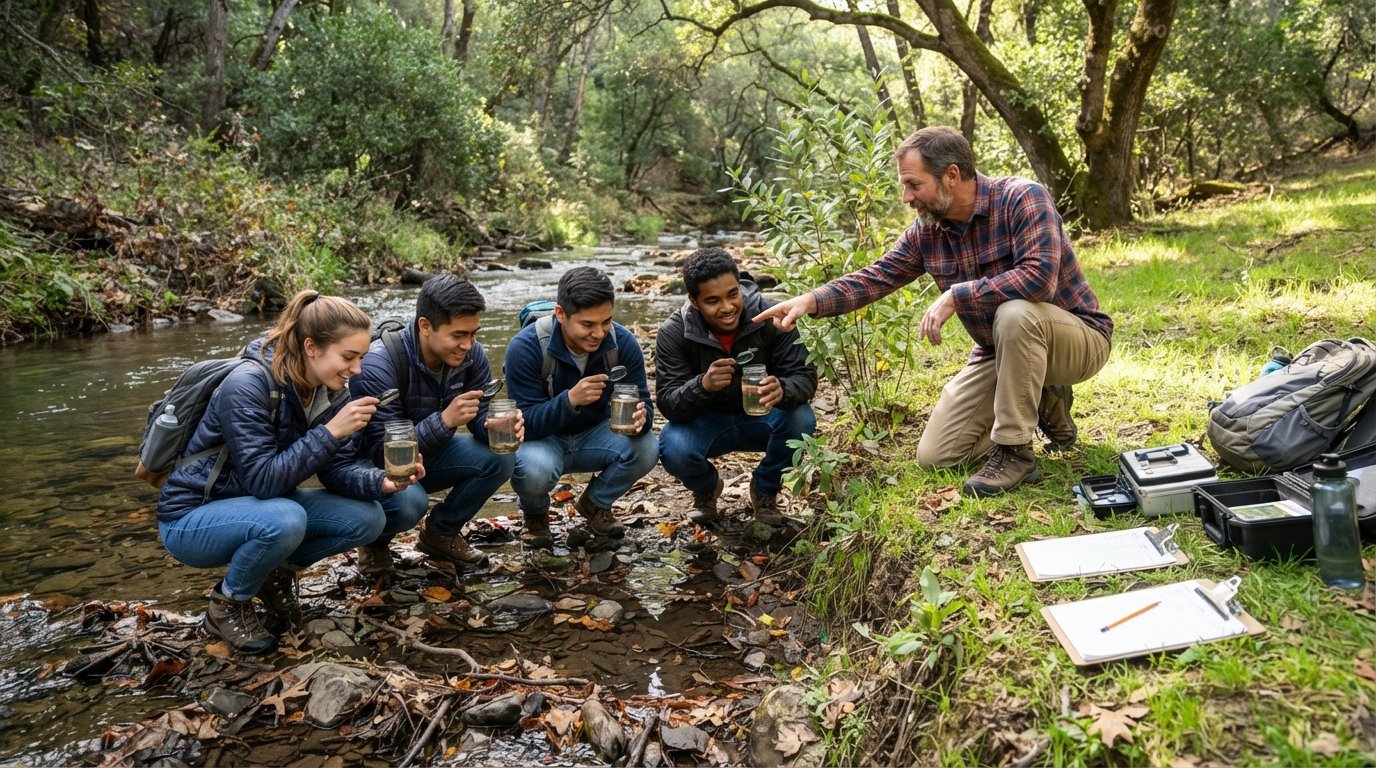
Diablo Valley College is located in Pleasant Hill, California, and offers an ideal setting for environmental studies. The campus itself is a living laboratory, with native plant gardens, a wildlife sanctuary, and access to nearby creeks and open spaces. You will spend time outdoors during class, learning how to identify species, measure biodiversity, and assess ecosystem health. The college also maintains strong partnerships with local parks, water districts, and environmental nonprofits, so you can gain real-world experience through field trips and service-learning projects.
Here are some of the key features of the in-person experience at Diablo Valley College:
- Hands-on labs in well-equipped science buildings, where you will analyze samples and operate environmental monitoring instruments.
- Small class sizes that encourage discussion and individualized attention from professors who are experts in their fields.
- Field-based learning in diverse habitats, from the campus creek to the Sacramento-San Joaquin Delta, providing direct observation of ecological processes.
- Access to a dedicated environmental science club and student organizations that host speakers, volunteer events, and career workshops.
- Collaborative projects that mirror the teamwork common in environmental consulting and government agencies.
These elements create a rich, immersive learning environment that is difficult to replicate online. By the time you graduate, you will have a portfolio of practical experiences and a network of peers and mentors who can support your career ambitions. If you are a student who thrives on interaction and inquiry-based learning, this in-person program will keep you engaged and motivated.
Curriculum and Core Subjects
The curriculum for the Environmental Science Associate's degree at Diablo Valley College is carefully designed to give you a solid scientific foundation while allowing you to explore areas of personal interest. Most students take a common set of core courses that cover the essentials of environmental science, then choose electives to specialize. The program typically requires 60 semester units, which you can complete in about two years if you attend full-time.
Core coursework often includes classes such as Environmental Science, Ecology, General Chemistry with lab, and either a biology or geology sequence. You will also take courses in environmental policy, data analysis, and Geographic Information Systems (GIS), which are critical for modern environmental work. These subjects provide the vocabulary and concepts you need to understand complex issues and communicate your findings effectively. In addition, you will complete general education requirements in math, English, and social sciences, which are necessary for an associate degree and for transferring to a four-year institution.
As you progress, you can choose electives that align with your career goals. For example, you might take classes in environmental toxicology, restoration ecology, or energy and climate. This flexibility allows you to tailor your degree to your interests, whether you are drawn to policy and advocacy, laboratory analysis, or field conservation. The college also offers opportunities for independent research and internships, which can be arranged with a faculty advisor.
Below is a sample of what your schedule might look like in the first two semesters, but please consult the college catalog for the most current requirements:
- Semester 1: Environmental Science (with lab), General Chemistry I (with lab), English Composition, and a math course.
- Semester 2: Ecology (with lab), General Chemistry II (with lab), Public Speaking, and an introductory GIS course.
- Semester 3: Environmental Policy, Statistics for Scientists, Field Methods in Ecology, and a humanities elective.
- Semester 4: Capstone Project, Environmental Geology, and two electives such as Environmental Ethics or Water Resources.
This structure ensures that you build both breadth and depth. By the end of the program, you will have a robust understanding of the science behind environmental issues and the practical skills to address them. You will also be prepared to transfer to a university with junior standing if you choose to pursue a bachelor's degree, thanks to the California State University transfer agreements that Diablo Valley College maintains.
Career Opportunities After Graduation
An Environmental Science Associate's degree opens the door to a surprising range of entry-level positions that are both meaningful and in demand. Many graduates start as environmental technicians, collecting and analyzing samples from water, air, and soil for consulting firms or government agencies. Others become field assistants for research projects, helping scientists track wildlife, monitor vegetation, or measure pollution. Some find work in parks and recreation, leading educational programs or maintaining natural areas. The skills you learn in data collection, lab analysis, and report writing are highly transferable across these roles.
According to the U.S. Bureau of Labor Statistics, employment for environmental science and protection technicians is projected to grow by 6% from 2023 to 2033, about as fast as the average for all occupations. This growth is driven by increasing regulatory requirements, the need to clean up contaminated sites, and a push toward sustainable practices in both the public and private sectors. The median annual wage for environmental science technicians was around $49,000 in 2023, though entry-level positions in California may offer more. With an associate degree, you can qualify for many of these jobs, and experience can lead to advancement.
If you decide to continue your education, the associate degree transfers seamlessly to many four-year colleges. For example, you could pursue a bachelor's degree in environmental science, environmental studies, or a related field, which would unlock higher-level positions such as environmental scientist, policy analyst, or conservation planner. Diablo Valley College has articulation agreements with several University of California and California State University campuses, making it easier to transfer without losing credits. Many students find that the hands-on experience they gain in the associate program makes them stronger candidates for competitive universities and gives them a head start in their upper-division coursework.
Your career path might even be shaped by the internships you complete during your studies. The college's location in the San Francisco Bay Area means you are close to a huge number of environmental organizations, from large federal agencies like the EPA and USGS to innovative non-profits and green tech start-ups. Taking advantage of these opportunities can lead to job offers before you even graduate. You can explore more about specific career pathways and degree options on resources like CollegeDegrees.School, which provides detailed guides on environmental programs and related fields.
Financial Aid and Scholarship Opportunities
Financing your education is a critical concern for many students, and Diablo Valley College is committed to making this degree affordable. The cost of tuition at a community college is already a fraction of what you would pay at a private university, but there are additional ways to reduce your out-of-pocket expenses. The first step is to complete the Free Application for Federal Student Aid (FAFSA) or the California Dream Act Application, which determines your eligibility for federal grants, work-study programs, and student loans. Many students qualify for a full Pell Grant, which can cover tuition and even provide money for books and supplies.
In addition to federal aid, Diablo Valley College offers its own scholarships and grants through the Diablo Valley College Foundation. These are often based on academic merit, financial need, or specific fields of study, and they require a separate application. The college also participates in state programs like the California College Promise Grant, which waives tuition fees for eligible California residents. To maximize your funding, you should apply early each year and meet all deadlines. For more detailed guidance on financial aid, you can visit the Scholarship.Education website, which lists a variety of scholarships and grants for environmental science students.
Here are a few types of financial support you might pursue:
- Federal Pell Grants, which do not need to be repaid and are awarded to students with significant financial need.
- California College Promise Grant, which waives enrollment fees for eligible students, often covering the full cost of tuition.
- Diablo Valley College Foundation scholarships, which offer awards ranging from a few hundred to several thousand dollars.
- Transfer scholarships from four-year universities, if you plan to continue your education after Diablo Valley College.
It is also wise to apply for private scholarships from environmental organizations, such as the Udall Foundation or the Environmental Education Association, which support students committed to environmental careers. Many of these scholarships have manageable application requirements, and even a few thousand dollars can make a significant difference in your budget. Your college's financial aid office is an excellent resource for finding local opportunities and understanding the application process.
How to Apply and Get Started
Getting started in the Environmental Science Associate's degree program at Diablo Valley College is straightforward. The first step is to apply for admission to the college, which you can do online through the California Community Colleges application portal. Admission is open to all who are eligible, and there is no application fee. You will need to complete a short application that includes your personal information, educational history, and residency status. Once admitted, you will receive a student ID and instructions for setting up your student email and portal account.
Next, you should take the college's placement assessments, unless you have prior college credits or AP scores that exempt you. These assessments help determine your starting point in English and math, which is important because these courses are part of your degree plan. If you need to build your skills, the college offers free tutoring and support programs to help you succeed. After your assessment, you will meet with an academic counselor to create a Student Education Plan that outlines the courses you need each semester to graduate in two years.
Before the semester starts, you will register for classes through the online portal. Because environmental science courses can fill up quickly, it is wise to register as soon as your appointment opens. Once you are enrolled, you will attend an orientation session where you will learn about campus resources, student services, and club activities. You will also receive information about purchasing books and lab supplies, though many materials are available at the library or through open educational resources.
Finally, do not forget to complete your financial aid applications well in advance of the semester. The FAFSA opens on October 1 each year, and you should submit it as soon as possible to maximize your awards. The college also has a priority enrollment period, so meeting all deadlines is crucial. If you have any questions, the admissions and financial aid offices are available to help you navigate each step. You can also attend an info session or campus tour to get a feel for the college and its facilities.
In summary, this degree program offers an affordable, practical, and rewarding path to a career in environmental science. The in-person experience at Diablo Valley College provides the skills, knowledge, and connections you need to succeed, whether you choose to enter the workforce or transfer to a four-year university. By taking advantage of financial aid and support services, you can focus on your studies and develop a passion for protecting the planet into a fulfilling profession.
If you are ready to take the next step, begin by researching the program further on the Diablo Valley College website, and then reach out to the counseling department for a personalized plan. Your future in environmental science starts with a single application, and this associate degree is the key to unlocking it.