
EMT Paramedic Certificate at COCC: 1-Year In-Person
Earn your paramedic certificate in 1-2 years at COCC with hands-on, in-person training that prepares you for Oregon licensure and real emergency care.

By William Bennett
When a heart stops or a car crash leaves someone critically injured, the first ten minutes often determine the outcome. Paramedics are the professionals who bring hospital-level care to the street, and the demand for them is rising across Oregon and the nation. If you live in Central Oregon and want a fast, hands-on route into this high-stakes, high-reward field, the Emergency Medical Technology/Technician (EMT Paramedic) Certificate, 1 year to less than 2 years In-person at Central Oregon Community College (COCC) deserves a close look. This program is designed for people who want to move quickly from classroom to ambulance, and it combines rigorous clinical training with the kind of face-to-face instruction that builds real confidence on scene.
Why This Paramedic Certificate Stands Out
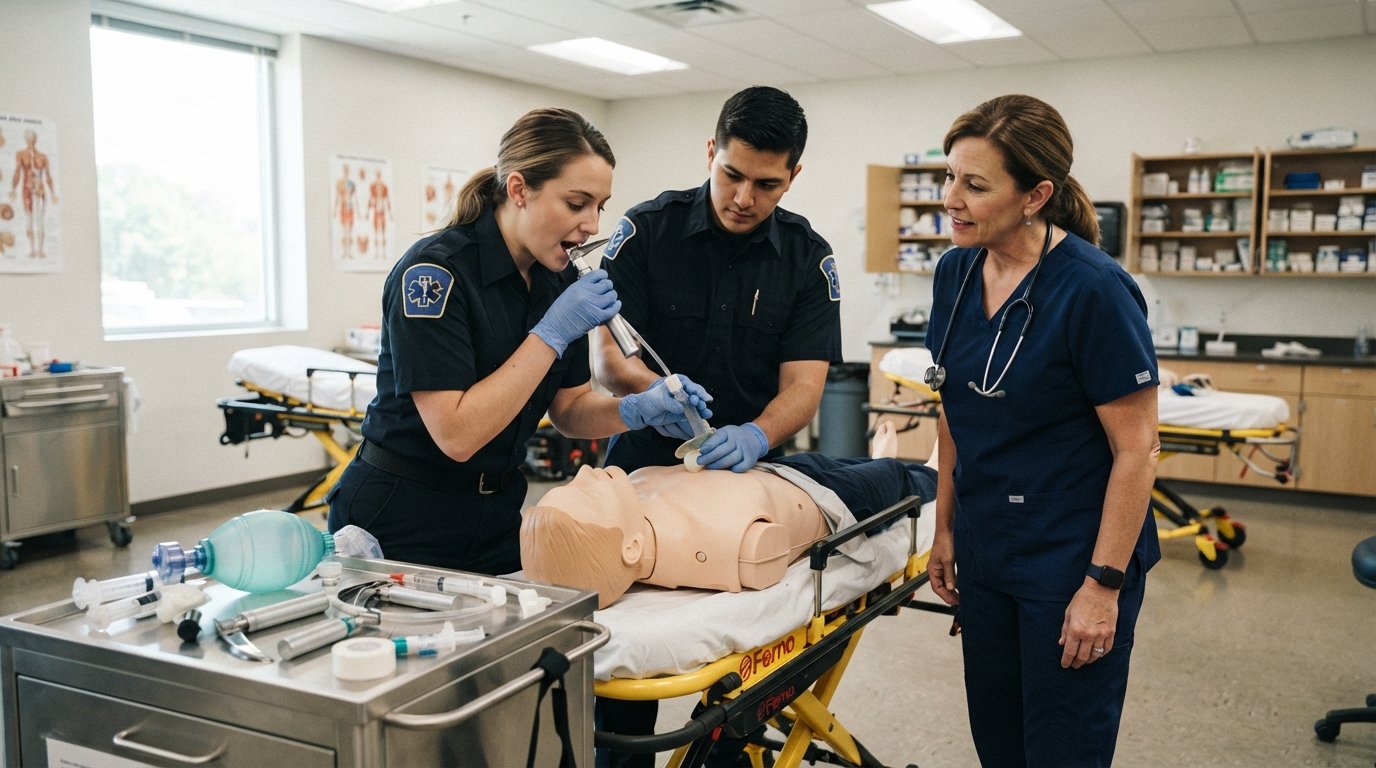
Central Oregon Community College sits in Bend, a city that serves as a hub for outdoor recreation, rural communities, and a growing healthcare sector. The paramedic certificate is a credit-bearing program that typically takes between one and two years to complete, depending on your prior certifications and course load. Unlike online-only alternatives, this program is delivered in person, which means you practice airway management, IV starts, and cardiac rhythm interpretation with real equipment and real instructors by your side. That hands-on repetition is exactly what employers and state licensure exams expect.
The curriculum is built around the National EMS Education Standards and aligns with Oregon Health Authority requirements for paramedic certification. You will move through foundational coursework in anatomy, physiology, and pharmacology, then advance to advanced life support skills, trauma management, and field internships. Because the program is cohort-based, you progress with the same group of peers, which creates a tight learning community and mirrors the team dynamics you will rely on in the field. Many graduates say the in-person format was the single biggest factor in passing their practical exams on the first attempt.
Another practical advantage is location. COCC maintains partnerships with local fire departments, ambulance services, and hospitals across Deschutes, Crook, and Jefferson counties. These partnerships translate into clinical rotations where you ride along with working paramedics and treat real patients under supervision. That exposure not only strengthens your resume but also gives you a direct line to hiring managers who already know the quality of COCC training.
Admission Requirements and What to Expect
Before you can enroll in the paramedic certificate, you must already hold a current EMT certification (typically EMT Basic) and meet the college's general admission requirements. The program also expects proof of CPR certification for healthcare providers, a clean background check, immunization records, and a physical exam. Because you will be working with patients in clinical settings, drug screening and professional liability insurance are standard prerequisites. These steps sound bureaucratic, but they protect both you and the patients you serve, and the college provides clear checklists to keep the process manageable.
Competitive applicants often complete additional coursework in medical terminology or emergency medical responder training before applying. If you are coming from a non-healthcare background, that extra preparation can strengthen your application and ease the transition into the fast pace of paramedic coursework. The program also looks for evidence of maturity and communication skills, since paramedics frequently interact with frightened patients, grieving families, and interprofessional teams under pressure. A short interview or essay may be part of the application, depending on the cohort.
Here are the core requirements most applicants need to satisfy before starting the program:
- Current EMT Basic certification and CPR for healthcare providers
- Completed background check and drug screen
- Up-to-date immunizations, including hepatitis B and TB testing
- Physical examination and professional liability insurance
- College placement in reading, writing, and math, or equivalent coursework
Once admitted, you should plan for a full-time schedule. The program combines classroom lectures, skills labs, and clinical shifts that may include evenings and weekends. Many students reduce their work hours during the clinical phase, so budgeting for that period is a smart move. The college's financial aid office can help you map out a plan, and external resources like medical student research grants can also supplement your funding strategy if you are interested in the research side of emergency medicine.
Cost, Financial Aid, and Funding Options
Tuition for the paramedic certificate is billed per credit, and the total cost depends on how many credits you transfer and whether you need preparatory courses. In addition to tuition, budget for uniforms, stethoscope, textbooks, certification exam fees, and travel to clinical sites. These ancillary costs can add several hundred to a few thousand dollars, so build them into your total estimate rather than focusing only on tuition. COCC publishes current tuition rates on its website, and the financial aid office can provide a personalized cost breakdown.
Federal student aid is available for eligible students in the form of Pell Grants and Direct Loans. Oregon also offers state-level grants and workforce development funds that can apply to allied health programs. Many students in emergency medical services qualify for employer sponsorship if they already work for a fire department or ambulance service, so ask your employer about tuition assistance before assuming you must pay out of pocket. Scholarships specific to first responders, rural healthcare, and public safety are also worth pursuing, and deadline calendars can help you stay on track.
If you are comparing funding sources, consider these options in roughly the order most students pursue them:
- Complete the FAFSA to establish eligibility for federal and state aid.
- Apply for COCC foundation scholarships and local service club awards.
- Ask your employer about tuition reimbursement or sponsorship.
- Search national first responder and rural health scholarships.
- Use federal work-study or part-time employment in a healthcare setting to offset living costs.
One caution: avoid private loans until you have exhausted grants, scholarships, and federal aid, because private loans often carry higher interest rates and fewer repayment protections. For a one-to-two-year certificate, the total borrowing should stay modest if you combine aid with part-time work. Prospective students can also explore broader funding databases through resources such as CollegeDegree.Education, which connects learners with accredited programs and financial options without obligating them to enroll.
What You Will Learn: Curriculum and Clinical Training
The paramedic certificate curriculum is sequenced to build competence layer by layer. Early courses cover advanced anatomy and physiology, pathophysiology, and pharmacology, giving you the scientific foundation to understand why treatments work. You then move into advanced life support, including cardiac monitoring, defibrillation, medication administration, and airway management. Trauma modules cover bleeding control, fracture stabilization, and scene safety, while medical modules address respiratory, neurological, and endocrine emergencies. Each course pairs lecture with lab practice so you apply concepts immediately.
Clinical rotations are the heart of the program. You will complete hours in hospital emergency departments, operating rooms, intensive care units, and on ambulances. During these rotations, you perform patient assessments, assist with procedures, and document care under the supervision of licensed paramedics and nurses. The program also includes a field internship where you function as the lead caregiver on an ambulance crew, with a preceptor evaluating your decision-making. This capstone experience is often the most demanding part of the certificate, but it is also where students report the greatest growth in confidence.
Skills you can expect to master include:
- Advanced airway management and ventilation
- Cardiac rhythm interpretation and electrical therapy
- IV access and medication administration
- Trauma assessment and immobilization
- Patient assessment and clinical decision-making
- Documentation and radio communication
Assessment throughout the program includes written exams, practical skills check-offs, and clinical performance evaluations. You must pass a comprehensive final practical exam before sitting for the national certification exam. The in-person format gives you repeated opportunities to practice until your skills become automatic, which matters when you are working in a dark, noisy environment with a critical patient.
Career Outcomes and Licensure in Oregon
After completing the certificate, you are eligible to sit for the National Registry of Emergency Medical Technicians (NREMT) paramedic exam. Passing that exam and completing Oregon Health Authority requirements allows you to apply for state licensure. Oregon paramedics work for fire departments, private ambulance services, hospitals, and special event medical teams. Employment settings range from rural volunteer agencies to busy urban 911 systems, and the scope of practice is among the broadest in prehospital care.
Salaries vary by region and employer, but paramedics in Oregon generally earn a living wage with opportunities for overtime and shift differentials. Career advancement can include roles as field training officers, clinical educators, operations supervisors, or flight paramedics. Some paramedics pursue additional credentials in critical care transport or community paramedicine, which expands their role into preventive care and chronic disease management. The certificate also serves as a stepping stone to associate or bachelor's degrees in emergency medical services or healthcare administration.
Job prospects in Central Oregon are tied to population growth and wildfire response, both of which increase demand for skilled prehospital providers. Rural agencies often struggle to fill paramedic positions, so graduates willing to serve in smaller communities may find strong hiring incentives. The program's local reputation and clinical partnerships give COCC graduates an edge when applying within the region.
Is the In-Person Format Right for You?
In-person training is not the only path to paramedic certification, but it offers distinct advantages for this particular field. Emergency medicine is physical, tactile, and team-based. Learning to intubate a manikin, manage a cardiac arrest scenario, or calm a combative patient requires feedback that is difficult to replicate through a screen. The COCC program's face-to-face structure ensures you practice under the direct observation of experienced instructors who can correct technique in real time.
The format also builds professional networks. Your classmates become colleagues, and your instructors become references. Many students secure their first paramedic jobs through connections made during clinical rotations. If you thrive in structured environments with clear schedules and hands-on learning, the in-person certificate is likely a better fit than a self-paced online course. On the other hand, if you need maximum flexibility due to work or family obligations, you should speak with an advisor about whether the program's schedule can accommodate your situation.
Before committing, visit the campus, meet faculty, and talk to current students if possible. Ask about pass rates on the national exam, clinical placement support, and job placement assistance. These questions will help you gauge whether the program matches your goals and learning style. The college also offers information sessions that provide a realistic preview of the workload and expectations.
How to Get Started
The first step is to confirm your EMT certification is current and to gather your immunization and background check documents. Then apply to Central Oregon Community College and complete the paramedic program application, which may include a personal statement and references. Meet with an academic advisor to map out your course sequence and financial aid plan. Because the program is cohort-based, application deadlines matter, and missing one can delay your start by a full year.
While you wait for admission decisions, strengthen your foundation by reviewing anatomy and medical terminology, shadowing local EMS crews, and volunteering with community events that need medical standby coverage. These experiences demonstrate commitment and give you a realistic sense of the work. They also help you decide whether the emergency services culture is a good personal fit, which is just as important as academic preparation.
Finally, plan your finances early. Submit the FAFSA, apply for local scholarships, and speak with your employer about sponsorship. A one-to-two-year certificate is a relatively short investment, but the clinical phase limits your availability for paid work, so having a budget cushion reduces stress and lets you focus on patient care. With careful planning, the Emergency Medical Technology/Technician (EMT Paramedic) Certificate, 1 year to less than 2 years In-person at Central Oregon Community College can launch you into a meaningful career in a fraction of the time required for a traditional degree.