
Emily Griffith Cinematography Certificate: 12 Weeks to 1 Year
Train for film and video work fast: the Cinematography and Film/Video Production Certificate at Emily Griffith runs 12 weeks to under a year, in person.

By James Miller
Breaking into film and video production rarely requires a four-year degree. What it does require is hands-on time with cameras, lighting kits, editing suites, and real sets, the kind of experience that builds a reel and a resume at the same time. The Cinematography and Film/Video Production Certificate, 12 weeks to less than 1 year In-person at Emily Griffith Technical College gives you exactly that: a compressed, career-focused path into an industry that rewards demonstrable skill over theory alone. If you have ever wondered whether you can train for a creative career without sinking years and tens of thousands of dollars into a traditional film school, this program is one of the most direct answers available.
Why a Short, In-Person Certificate Makes Sense in 2026
Film and video work has changed dramatically over the past decade. Streaming platforms, social video, corporate content teams, and independent production houses all need people who can light a scene, frame a shot, capture clean audio, and cut a story together. Employers in these spaces often care less about where you studied and more about what you can show them in a portfolio. A certificate program that runs between 12 weeks and under a year is built around that reality.
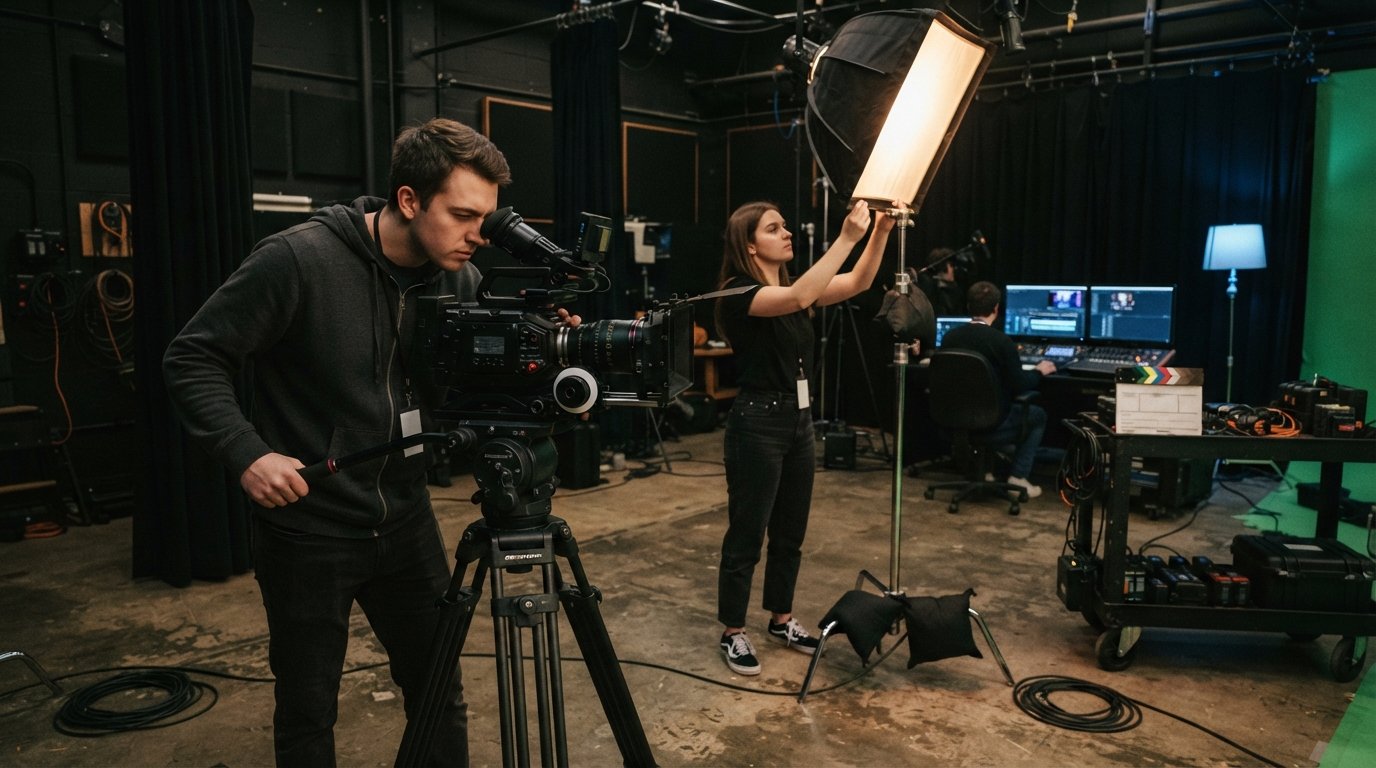
In-person training matters here in ways that online tutorials cannot replicate. You learn how a camera actually feels on your shoulder during a long take. You learn how to reposition a light when the talent moves. You learn how to solve problems on set when the schedule is tight and the director is waiting. Those instincts develop through repetition in a shared physical space, with instructors and classmates who are watching, correcting, and collaborating in real time.
The economics also favor this route. Instead of four years of tuition, you invest in a focused block of training and enter the workforce, or start freelancing, much sooner. That shorter runway can mean less debt, faster earning, and the ability to build a professional network while your peers are still in lecture halls. For career changers, recent high school graduates, and working adults who want to pivot, that matters enormously.
What You Learn in a Cinematography and Film/Video Production Certificate
Good production programs are built like a ladder. Each course adds a rung, and by the end you can climb from concept to finished project without falling. The Cinematography and Film/Video Production Certificate at Emily Griffith is designed to move you through the full production pipeline, from pre-production planning to final delivery.
Expect coursework to cover the core technical and creative disciplines that every production relies on. You will spend time behind professional cameras, learn how lenses, sensors, and frame rates affect the look of a shot, and study how lighting shapes mood and story. You will also work with audio gear, because clean sound is one of the fastest ways to make a project feel professional.
Editing and post-production are equally central. Cutting footage, color correcting, mixing audio, and exporting deliverables for different platforms are skills that turn raw material into finished work. Alongside the technical training, you will practice the collaborative habits that sets demand: communication, preparation, time management, and the ability to take and give feedback.
Here is a representative look at the skill areas a certificate like this typically develops:
- Camera operation, including manual exposure, focus, and movement
- Lighting design for interviews, narrative scenes, and product work
- Location and studio audio capture, including microphone selection and mixing
- Nonlinear editing, color grading, and basic motion graphics
- Pre-production planning, shot lists, and on-set roles and etiquette
Because the program is in person, each of these areas comes with immediate feedback. An instructor can watch you set up a three-point lighting scheme and adjust your angles on the spot. A classmate can point out that your audio levels are clipping before you shoot. That kind of correction is difficult to get from a video course, and it accelerates learning in a way that self-study rarely matches.
How the Timeline Works: 12 Weeks to Less Than 1 Year
The flexibility of the schedule is one of the program's strongest features. Depending on the track and course load you choose, you can complete your training in as little as 12 weeks or spread it across a longer period of under a year. That range accommodates very different lives.
If you are entering full time and want to move quickly into the job market, an accelerated 12-week schedule can get you camera-ready fast. If you are working while you study, a longer pathway lets you absorb the material without burning out. Either way, the compressed format means you are not committing to multiple years before you can start earning.
To plan your enrollment, it helps to think through a few practical steps:
- Decide how many hours per week you can realistically dedicate to class and lab time.
- Choose the track length (12 weeks versus a longer schedule under a year) that fits your budget and obligations.
- Confirm start dates and application deadlines with the college, since cohort schedules vary.
- Prepare your funding plan early, including scholarships, grants, and payment options.
- Line up a basic kit or confirm what equipment the program provides so you can practice outside class.
That fourth step deserves special attention. Short career programs are often more affordable than degree programs, but you still want a clear funding strategy before your first day. Tools like the CollegeDegrees.School resource can help you compare programs, understand credential options, and think through how a certificate fits into a longer education or career plan. Pairing that research with a scholarship search can reduce what you pay out of pocket.
Where This Certificate Can Take You
Graduates of film and video production certificates move into a surprisingly wide range of roles. Some go straight into freelance work, shooting weddings, corporate videos, music videos, or social media content. Others join production companies, local news operations, advertising agencies, or in-house marketing teams that need a dedicated video person.
The skills also transfer into adjacent fields. Real estate firms need property videos. Nonprofits need storytelling pieces for fundraising. Schools and sports programs need highlight reels and event coverage. Small businesses increasingly treat video as their primary marketing channel, which means steady demand for people who can plan, shoot, and edit without outsourcing.
Longer term, this certificate can serve as a foundation for more specialized work: cinematography for narrative films, documentary production, live event broadcasting, or post-production editing and color. Some students use it as a stepping stone toward an associate or bachelor's degree later, applying their credits and their portfolio to advanced study. Others never need a degree at all, because a strong reel and a track record of reliable work open more doors than a transcript in this industry.
Funding Your Film and Video Training
Cost is the question nearly every prospective student asks first, and it deserves a direct answer. Certificate programs at public technical colleges are generally far less expensive than private film schools, but you should still explore every funding avenue available. Scholarships, grants, and payment plans can meaningfully change what you owe.
Start with federal student aid. Completing the FAFSA determines whether you qualify for Pell Grants, federal student loans, or work-study opportunities, and many certificate programs at accredited institutions are eligible. Beyond federal aid, look for state workforce grants, which often prioritize short-term training that leads directly to employment. Local film commissions, arts councils, and community foundations also offer small scholarships that add up.
Private scholarships for media, communications, and visual arts students exist at the national level as well. They are competitive, but application effort is free, and even a modest award reduces your total cost. Because deadlines cluster around the academic calendar, build a simple tracking sheet with each opportunity, its requirements, and its due date so nothing slips past you.
One important note: many scholarship and college listing sites, including Scholarship.Education, receive compensation from listed schools through advertising, links, and search placement, which may influence how institutions appear, their position, and their ranking. That disclosure matters because it helps you evaluate sources critically. Use these directories as starting points, then verify details directly with the school and with official financial aid resources before making decisions.
Building a Portfolio Before You Graduate
The single most valuable thing you can leave a certificate program with is work you can show. A reel, a portfolio site, and a few complete projects demonstrate your abilities in ways a certificate alone cannot. The good news is that a 12-week to under-a-year program is intense enough to generate real material if you treat every assignment as portfolio-worthy.
Volunteer for extra shoots. Help classmates with their projects, even in roles outside your focus, because the person holding the boom mic today is the person someone calls when they need a second camera operator next month. Document your process, not just your finished pieces, since behind-the-scenes evidence of how you solve problems is compelling to employers and clients.
By the time you finish, you should aim to have:
- A short demo reel highlighting your strongest camera, lighting, or editing work
- Two or three complete projects across different formats, such as narrative, interview, or promotional
- A simple website or online profile where potential clients can reach you
- A list of contacts from instructors, classmates, and any outside shoots you joined
That combination, a recognized credential plus demonstrable work plus a network, is what turns training into income. The compressed timeline of this program is an advantage here: you are building professional assets from week one rather than waiting until senior year to touch a camera.
Is This Program Right for You?
The Cinematography and Film/Video Production Certificate, 12 weeks to less than 1 year In-person at Emily Griffith Technical College fits people who want practical skills quickly and are ready to learn by doing. It suits recent graduates who want a fast route into creative work, career changers who want to move out of unrelated jobs, and freelancers who want to formalize skills they have picked up on their own.
It is less suited to someone who wants a broad liberal arts education or whose schedule cannot accommodate any in-person attendance, since the hands-on format is the point. If that describes you, an online degree path may be a better match, and exploring options for online programs in art and design or related fields can help you compare.
Before enrolling, visit the campus if you can, talk to instructors, and ask about equipment access, class sizes, and job placement support. Those details tell you how much individual attention you will receive and how well the program connects to local production work. A short program moves fast, so the more you know going in, the more you will get out of it.
Film and video production rewards people who show up, practice, and finish things. A certificate that runs from 12 weeks to under a year is a practical, affordable way to prove you can do all three, and to start earning in a field where your next project is always the best argument for your last one.