
Corrections Certificate at Angelina College: 1-Year Path
Earn a Corrections Certificate, 1 year to less than 2 years In-person at Angelina College, and gain job-ready skills for criminal justice careers.

By Isaac Griffin
If you are looking for a fast, affordable route into the criminal justice workforce, a Corrections Certificate, 1 year to less than 2 years In-person at Angelina College deserves a close look. This program is designed for students who want practical, job-ready skills without committing to a four-year degree. In just three to four semesters, you can build a foundation in correctional operations, legal issues, and human relations that employers in Texas jails, prisons, and community supervision agencies value. The in-person format adds another layer of benefit: face-to-face instruction, immediate feedback from instructors with field experience, and access to campus resources that support completion. This article breaks down what the certificate covers, who it is for, how to pay for it, and how to turn it into a career or a stepping stone toward further education.
What the Corrections Certificate at Angelina College Covers
Angelina College, located in Lufkin, Texas, offers a Corrections Certificate that falls into the 1 year to less than 2 years award category. That means the program is longer than a short-term workforce credential but shorter than an associate degree. Students typically complete roughly 30 to 42 credit hours, depending on the catalog year and course sequence. The curriculum blends classroom instruction with practical exercises that mirror the daily realities of correctional work.
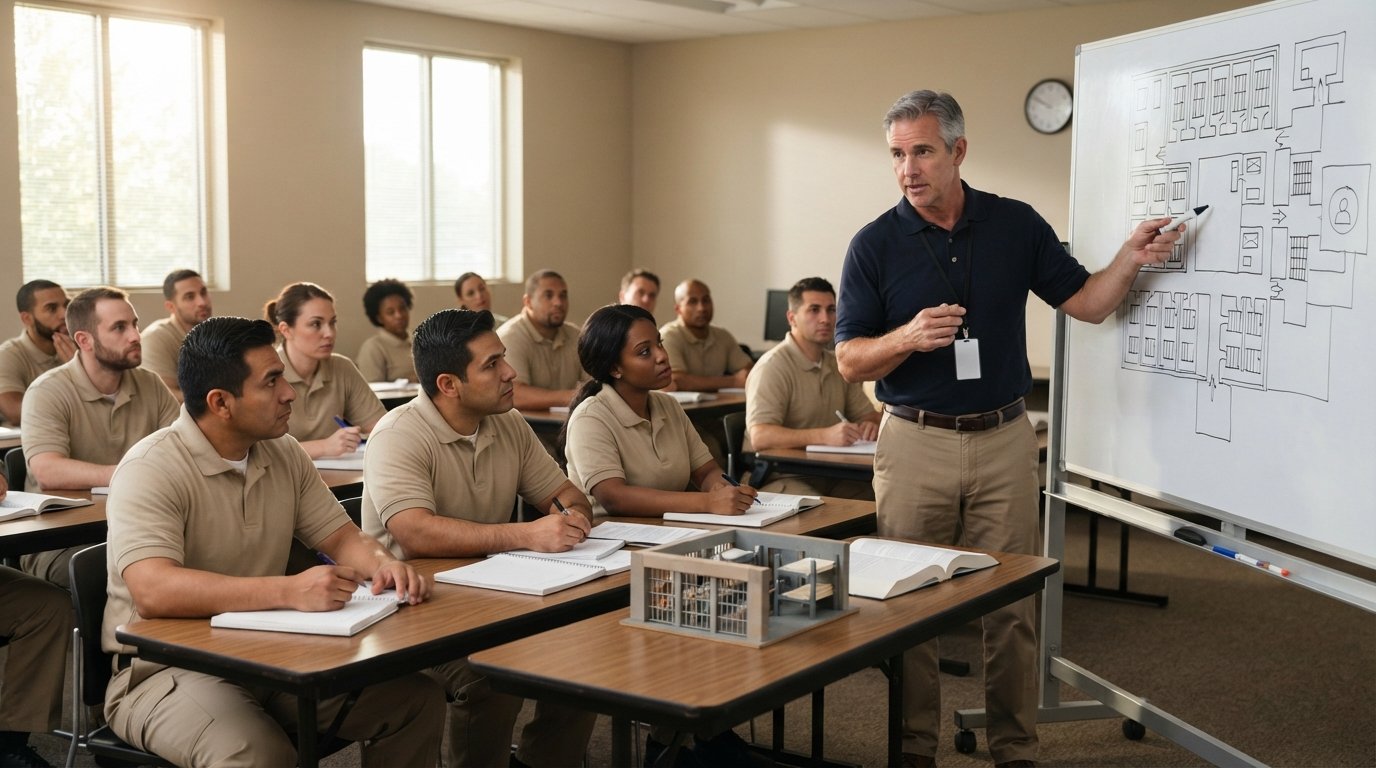
Core coursework usually includes introduction to corrections, criminal justice systems, legal aspects of corrections, report writing, and interpersonal communication. You will also encounter courses in ethics, cultural diversity, and crisis intervention, because modern correctional facilities require staff who can de-escalate conflicts and communicate across differences. Many programs embed physical fitness and defensive tactics components, though the exact mix varies by semester. Because the format is in-person, you can expect hands-on scenario training that online programs struggle to replicate.
One of the strengths of this certificate is its stackability. Credits earned in the Corrections Certificate often apply directly toward an Associate of Applied Science in Criminal Justice at Angelina College. That means you can enter the workforce quickly and still return later to complete a two-year degree without starting over. For students who are unsure about a long college commitment, this low-risk entry point offers a way to test the waters while building real credentials.
Who Should Consider This In-Person Certificate
The Corrections Certificate is not a one-size-fits-all program, but it fits several distinct groups. Recent high school graduates who want to start working soon find it appealing because it requires no prior college experience and keeps costs low. Career changers from retail, security, or military backgrounds often choose corrections because the skills are transferable and the demand for qualified staff remains steady. Current correctional officers who were hired without a formal credential may pursue the certificate to qualify for promotion or specialized units.
Working adults should note the in-person requirement. The program is not offered fully online, so you will need to attend classes on the Lufkin campus. That said, Angelina College typically schedules courses in a mix of daytime and evening blocks to accommodate students with jobs. Prospective students should confirm current scheduling options with an advisor before enrolling, since availability can shift from semester to semester.
If you are also exploring other two-year pathways at the college, it helps to compare programs side by side. For example, students with an interest in creative fields sometimes pair criminal justice planning with research on a Theatre Arts Degree at Angelina College, which shows how the same campus supports very different career tracks. The key is to match the credential to your actual job target, not to choose a program simply because it is short.
Admission Requirements and Enrollment Steps
Admission to Angelina College is generally open to students with a high school diploma or GED, though specific criminal justice programs may add requirements. For the Corrections Certificate, you should expect a standard college application, submission of official transcripts, and possibly a criminal background check before any field placement or internship. Because correctional agencies conduct their own background investigations, a prior record does not automatically disqualify you from the certificate, but it may affect hiring. Talk with an advisor early if you have questions about your specific situation.
The enrollment process is straightforward but benefits from planning. A typical sequence looks like this:
- Complete the Angelina College admissions application and submit transcripts.
- Take the Texas Success Initiative (TSI) assessment or submit qualifying scores if required.
- Meet with a criminal justice advisor to map your course sequence and confirm in-person scheduling.
- Apply for financial aid by completing the FAFSA, and search for local scholarships.
- Register for classes during the priority registration window to secure seats in required courses.
Students who wait until the last minute often find that required courses fill up or conflict with work schedules. Registering early also gives you time to adjust your financial aid package and budget for transportation, since the program requires commuting to campus. If you are the first in your family to attend college, ask about first-generation support services on campus; these programs can help with everything from paperwork to tutoring.
Cost, Financial Aid, and Scholarship Strategy
Cost is one of the strongest arguments for a certificate over a degree. Angelina College charges per-credit tuition and fees that are significantly lower than four-year universities, and Texas residents benefit from in-district or in-state rates. A 30-credit certificate can cost a fraction of a bachelor's degree, especially when you factor in savings on housing by living at home or working while enrolled. Books and supplies add a modest amount, and some courses may require uniforms or equipment for practical components.
Financial aid options for certificate programs include federal Pell Grants, Texas state grants, and institutional scholarships. Certificate programs that are eligible for federal aid must meet specific requirements, so confirm with the financial aid office that the Corrections Certificate qualifies for the aid you plan to use. Many students also overlook employer tuition assistance: if you already work in a related field, your agency may reimburse part of your tuition. Local civic organizations, faith groups, and criminal justice associations frequently offer small scholarships that add up quickly.
To maximize your funding, treat the scholarship search like a part-time job. Use a scholarship database to filter for criminal justice, public safety, and workforce credentials, and apply to every award for which you meet the basic criteria. Even a $500 scholarship reduces the amount you need to borrow. Keep your FAFSA current each year, and report any changes in income or dependency status promptly. For a broader look at how to compare costs across institutions, CollegeDegree.Education connects prospective students with accredited colleges and degree programs, which can help you benchmark tuition and program length before you commit.
Career Outcomes and Salary Expectations
Graduates of correctional certificate programs typically pursue roles as correctional officers, detention officers, probation aides, and community supervision assistants. In Texas, correctional officer salaries vary by agency, but entry-level pay often ranges from the mid-$30,000s to the mid-$40,000s, with overtime and shift differentials adding to total compensation. State and county facilities offer benefits such as health insurance, retirement contributions, and paid training academies. Some agencies pay for additional certification once you are hired, which means your certificate can function as a hiring advantage rather than a final credential.
Advancement opportunities matter here. With experience and additional training, correctional staff can move into supervisory roles, case management, investigations, or specialized units such as K-9 or tactical teams. Some officers use the certificate as a springboard to a bachelor's degree in criminal justice, which opens doors to parole, federal law enforcement, and administrative positions. Because the certificate is stackable, the credits you earn now count toward that longer-term goal.
It is important to approach salary research with realistic expectations. Pay varies widely by county, facility type, and shift assignment. Prospective students should contact local agencies directly to ask about current hiring ranges, sign-on incentives, and educational requirements. Job placement is not guaranteed by any certificate program, but completion signals to employers that you have foundational knowledge and the discipline to finish a multi-semester commitment.
Why the In-Person Format Matters
Online learning is convenient, but corrections work is inherently interpersonal. The in-person format at Angelina College allows instructors to model de-escalation techniques, run role-play scenarios, and observe student performance in real time. Students practice report writing with immediate feedback, participate in group discussions about ethical dilemmas, and build relationships with classmates who may become professional contacts. These experiences are difficult to replicate through a screen.
In-person attendance also connects you to campus services that improve completion rates: tutoring, advising, library resources, and career services. Students who engage with these services are more likely to persist when coursework gets demanding. If transportation or work schedules are a concern, speak with an advisor about course planning well before the semester begins. Small adjustments, such as clustering classes on two days per week, can make the in-person requirement manageable.
How This Certificate Fits Into a Larger Education Plan
Think of the Corrections Certificate as a modular building block rather than a terminal credential. The credits you earn can often transfer into an associate degree, and in some cases into bachelor's programs at four-year institutions with articulation agreements. That flexibility protects your investment of time and money. Students who complete the certificate and then decide to pursue a bachelor's degree do not lose the work they have already done.
For students weighing multiple options, it helps to compare the certificate with a full associate degree in criminal justice. The associate degree takes longer but may qualify you for higher-paying roles or specialized positions. The certificate gets you into the workforce faster and lets you earn while you learn. Neither path is universally better; the right choice depends on your timeline, financial situation, and career goals. Advisors at Angelina College can help you model both scenarios.
Finally, keep the big picture in view. Education is an investment, and the best program is the one you can finish. A Corrections Certificate, 1 year to less than 2 years In-person at Angelina College offers a practical, affordable, and structured entry point into a stable field. Verify current admission requirements, tuition, and course schedules directly with the college, apply for financial aid early, and use every scholarship resource available. With careful planning, you can turn a short certificate into a long-term career foundation.