
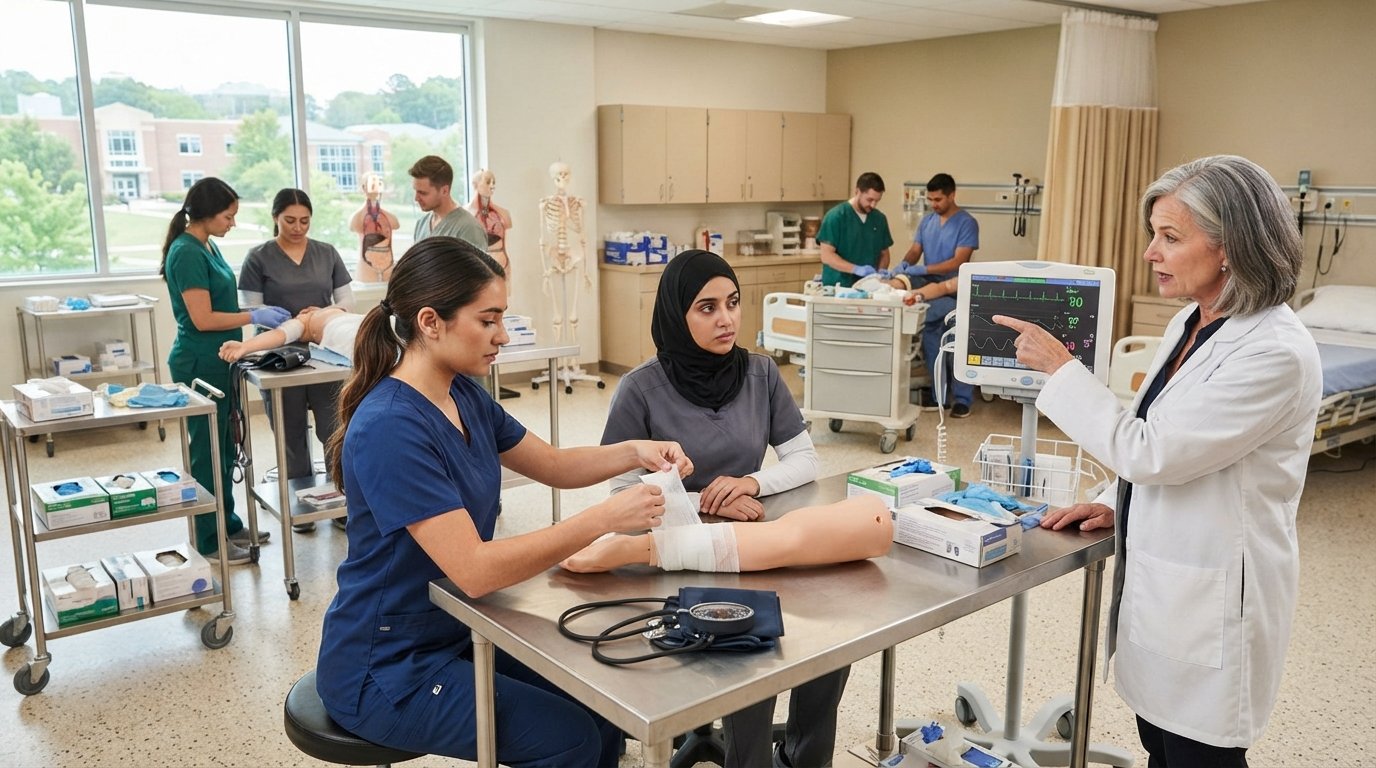
CCSF Health Professions Certificate: Fast Track to Care
Earn a Health Professions and Related Clinical Sciences, Other Certificate, 12 weeks to less than 1 year In-person at City College of San Francisco and start your healthcare career fast.

By Hannah Reed
You want a healthcare career, but you do not want to spend four years in a classroom before you can start helping patients. Maybe you are working a job you do not love, and you need a credential that opens doors quickly. Or you are a student who wants to test the waters of clinical work without committing to a full degree. The Health Professions and Related Clinical Sciences, Other Certificate, 12 weeks to less than 1 year In-person at City College of San Francisco is designed for exactly this situation. It is a short, focused, face-to-face program that gives you marketable skills and a recognized credential in under a year. In a city with some of the busiest hospitals and clinics in California, that combination of speed and hands-on training can be the difference between talking about a healthcare career and actually starting one.
This article breaks down what the certificate covers, who it is for, how to fit it into your life, and how to pay for it. We will look at the in-person format, the timeline, the career paths it can lead to, and the financial aid options that make community college one of the smartest investments you can make. If you have been searching for a low-risk, high-value entry point into the health professions, keep reading. The details below will help you decide whether this program at City College of San Francisco is your next step.
What This Health Professions Certificate Actually Is
The Health Professions and Related Clinical Sciences, Other Certificate is a category of credential that falls under a broad umbrella in the healthcare education world. The "Other" designation means the program covers clinical sciences and health professions topics that do not fit neatly into a single traditional box like nursing or dental hygiene. Instead, it is designed to give students a foundation across multiple areas of clinical practice and health sciences. At City College of San Francisco, this certificate is delivered in person, which means you learn in labs, classrooms, and clinical settings with instructors and classmates by your side.
The 12 weeks to less than 1 year timeframe is one of the most attractive features. You are not signing up for a multi-year commitment. You are signing up for a concentrated period of study that gets you credentialed and into the workforce, or prepares you to continue toward a more advanced degree if you choose. Many students use certificates like this as a stepping stone: they earn the credential, start working in a healthcare setting, and then decide whether to pursue an associate or bachelor's degree while earning an income.
Because the program is in person at City College of San Francisco, you get access to campus resources that online-only programs cannot match. That includes hands-on lab equipment, face-to-face time with instructors who have worked in the field, and the kind of networking that happens naturally when you are in the same room as other students who share your goals. For clinical sciences, that physical presence matters. You are not just reading about procedures; you are practicing them under supervision.
Who Should Consider This Short Certificate Program
This certificate is not one-size-fits-all, but it fits a surprisingly wide range of students. The common thread is that you want to enter or advance in healthcare without a long, expensive degree program. Below are some of the groups who benefit most.
- Career changers: You have been working in retail, hospitality, or an office job and want to move into healthcare. A short certificate gives you a credible entry point without starting from zero.
- Recent high school graduates: You are not ready to commit to a four-year university, but you want to start building skills and earning money in a growing field.
- Current healthcare workers: You are already in an entry-level role and want formal training to move into a clinical or specialized position.
- Students exploring healthcare: You think you might want a career in medicine or allied health, and you want a low-cost, low-risk way to test that interest before committing to a longer program.
What these students share is a practical mindset. They want training that leads somewhere, and they want it without years of debt or delay. The in-person format at City College of San Francisco also suits students who learn best with structure, accountability, and direct access to instructors. If you thrive in a classroom environment and want to build relationships with people in the field, this format is a strong match.
It is also worth noting who this program is not ideal for. If you are looking for a fully online, self-paced experience, this is not that. If you want a guaranteed job placement or a specific licensed title like registered nurse, you will need a different program. This certificate is a foundation and a credential, not a guarantee. But for students who understand that, it is a remarkably efficient way to get started.
The In-Person Advantage at City College of San Francisco
City College of San Francisco is one of the largest community colleges in California, and its location in the heart of the city gives students access to a dense network of hospitals, clinics, community health centers, and research institutions. When you enroll in an in-person program there, you are not just taking classes; you are situating yourself in one of the most active healthcare ecosystems in the country. That proximity can translate into internships, volunteer opportunities, and job leads that remote students simply cannot access as easily.
The in-person requirement is also a quality signal. Clinical sciences involve skills that must be practiced and assessed in real time. Learning to take vital signs, assist with patient care, or handle equipment properly requires repetition and feedback. In a classroom lab, an instructor can watch you, correct you, and make sure you are doing it safely. That kind of supervised practice is difficult to replicate through a screen.
Beyond the technical training, in-person programs build professional habits. You learn how to communicate with patients and colleagues, how to show up on time, and how to work as part of a team. These soft skills are often what employers look for when hiring for clinical support roles. The certificate program at City College of San Francisco gives you a structured environment to develop them.
Another practical benefit is access to campus services. Students in person can use the library, tutoring centers, career services, and financial aid office. If you are the first in your family to attend college, or if you are returning to school after years away, having those resources on campus can make the difference between struggling and succeeding.
What You Can Do With the Certificate
The Health Professions and Related Clinical Sciences, Other Certificate prepares you for a range of entry-level and support roles in healthcare settings. Because the program is broad by design, the exact job titles vary, but the common thread is that you will be qualified for positions that require clinical knowledge and patient interaction without a full degree. Graduates often find work in hospitals, outpatient clinics, community health organizations, long-term care facilities, and public health agencies.
Typical roles include clinical support positions, patient services roles, and health education or outreach work. Some students use the certificate to qualify for jobs that require a healthcare credential, while others use it as a stepping stone to further study in nursing, public health, or allied health fields. The credential signals to employers that you have completed formal training and are ready to work in a clinical environment.
It is important to be realistic about what a short certificate can and cannot do. It will not make you a doctor or a nurse. It will not replace a degree program. But it can get you into the healthcare workforce faster than almost any other path, and it can give you the experience and income you need to decide on your next move. For many students, that is exactly the point: get in, get experience, and then decide whether to go further.
Career outcomes also depend on where you live and what kind of setting you want to work in. The San Francisco Bay Area has a high demand for healthcare workers, but it is also competitive. The certificate helps you stand out for roles that require formal training, and it gives you a credential to list on your resume while you continue building experience.
How to Fit the Program Into Your Life
One of the biggest concerns for students considering a certificate program is time. The good news is that the 12 weeks to less than 1 year format is designed for people who need to move quickly. But even a short program requires planning, especially if you are working or caring for family. Here is a step-by-step approach to fitting the certificate into your schedule.
- Check the class schedule early. City College of San Francisco publishes its course schedules ahead of each term. Look at when the required classes are offered and whether they are available in the morning, afternoon, or evening.
- Map out your weeks. Write down your work hours, commute time, and family commitments. Then block out the class times and study hours. Be honest about how much time you can realistically commit.
- Talk to an advisor. Before you enroll, meet with a counselor at City College of San Francisco to confirm the program requirements and discuss any transfer or financial aid implications.
- Arrange your finances. Apply for financial aid early, and look into scholarships and grants that can cover tuition, fees, and even living expenses.
- Plan for the unexpected. Short programs move fast. If you get sick or have a family emergency, you may not have much buffer. Build in a plan for how you will catch up if you miss a class.
Because the program is in person, you also need to plan for travel. City College of San Francisco has multiple campuses, and public transit is a practical option for many students. Factor in commute time when you build your schedule, and consider whether a morning or afternoon block works better for your daily routine.
Finally, remember that short programs are intense. You will cover a lot of material in a short time, and you will need to keep up. That intensity is part of what makes the program valuable: you finish quickly and move on. But it also means you should not overload yourself with other commitments during the program if you can avoid it.
Paying for the Certificate: Financial Aid and Scholarships
Cost is one of the biggest barriers to healthcare education, but a short certificate at a community college is one of the most affordable paths available. City College of San Francisco offers low tuition compared to four-year institutions, and California residents may qualify for fee waivers or reduced tuition through state programs. That said, you should still plan carefully and explore all the financial aid options available to you.
The first step is to complete the Free Application for Federal Student Aid (FAFSA). This form determines your eligibility for federal grants, work-study, and loans. Even if you think you will not qualify, fill it out. Many students are surprised by what they qualify for, and some scholarships require a FAFSA on file. The California Dream Act application is an alternative for students who are not eligible for federal aid but meet certain state requirements.
Beyond federal aid, look into institutional scholarships and local grants. Community colleges often have foundation scholarships that are less competitive than national awards. City College of San Francisco has its own scholarship opportunities, and local healthcare organizations sometimes offer funding for students entering the field. If you are a healthcare student, there are also specialized scholarships for nursing and allied health students that may apply to your program.
If you are an international student or you are supporting someone who is, it is worth understanding how health insurance and other costs fit into your budget. Our guide on international student health insurance for US colleges explains the coverage requirements and options that can affect your total cost of attendance.
For a broader look at how to plan and pay for college, including tools for comparing costs and finding scholarships, CollegeAndTuition is a useful resource. It focuses on higher education costs and financial aid, which makes it a good companion as you budget for your certificate program.
One more thing: do not overlook small expenses. Books, supplies, scrubs, background checks, and transportation can add up. Build a realistic budget that includes these costs, and look for scholarships or emergency funds that can help cover them. The financial aid office at City College of San Francisco can help you identify options you might not have considered.
Why Short Healthcare Certificates Are a Smart Investment
Healthcare is one of the few industries where demand for trained workers remains strong even when the economy slows. An aging population, expanding access to care, and ongoing workforce shortages mean that clinical support roles are in demand across the country. A short certificate positions you to enter that market quickly, without the debt and delay of a longer degree.
There is also a strategic advantage to starting small. You can earn a credential, get a job, and then use tuition reimbursement or employer support to continue your education. Many healthcare employers offer tuition assistance for employees who want to pursue additional certifications or degrees. By starting with a certificate, you get your foot in the door and gain access to those benefits sooner.
Finally, the certificate gives you information. You learn what healthcare work is actually like, what settings you enjoy, and what kind of further training would serve you best. That clarity is valuable. Students who jump straight into a four-year degree sometimes discover halfway through that the field is not what they expected. A short certificate lets you test the water before you dive in.
If you are ready to take the next step, start by visiting City College of San Francisco's website to review the program requirements and application deadlines. Talk to an advisor, fill out your financial aid forms, and build a plan that fits your life. The Health Professions and Related Clinical Sciences, Other Certificate, 12 weeks to less than 1 year In-person at City College of San Francisco is a practical, affordable, and fast way to begin a career in healthcare. For students who want to move forward without waiting years for a degree, it is a path worth serious consideration.