
Beyond the BSN: RN to Advanced Nursing at Fairleigh Dickinson
Explore the in-person post-bachelor's nursing programs at Fairleigh Dickinson University-Metropolitan Campus, from MSN to DNP, and advance your career.
By Ella Thompson
For registered nurses, the bachelor's degree is often celebrated as a major milestone. Yet for many, it also marks the beginning of a new question: what comes next? The healthcare landscape is shifting toward advanced practice, leadership, and specialized clinical expertise. If you are a nurse with a BSN looking to elevate your career without stepping away from patient care, the Registered Nursing/Registered Nurse Beyond bachelor's degree In-person at Fairleigh Dickinson University-Metropolitan Campus offers a structured, immersive path forward. This program is designed for working professionals who value face-to-face learning, hands-on clinical experiences, and the intellectual rigor of a university setting. It is not merely about earning another credential; it is about transforming your nursing practice and positioning yourself for roles that shape the future of healthcare.
Fairleigh Dickinson University's Metropolitan Campus, located in Teaneck and Hackensack, New Jersey, provides an ideal environment for this advanced study. The in-person format ensures that you are not learning in isolation. You are part of a cohort of peers who share your dedication, and you have direct access to faculty who are active practitioners and researchers. This article explores the nuances of pursuing a post-baccalaureate nursing education at FDU, the program options available, the admission requirements, and the financial strategies that can make this investment manageable. Whether you are considering a master's degree, a doctoral program, or a graduate certificate, understanding the specifics of FDU's offerings is your first step toward a more impactful nursing career.
Why Pursue a Post-Baccalaureate Nursing Degree at FDU?
The decision to continue your education beyond a BSN is significant, and choosing the right institution is just as important as choosing the right program. Fairleigh Dickinson University-Metropolitan Campus stands out for several reasons. First, the university has a long-standing reputation for academic excellence and a commitment to experiential learning. The nursing programs are accredited by the Commission on Collegiate Nursing Education (CCNE), which ensures that the curriculum meets rigorous national standards. This accreditation is not just a badge of honor; it directly affects your eligibility for advanced practice certification and your competitiveness in the job market.
Second, the in-person delivery model at FDU is a deliberate choice that benefits your professional growth. In advanced nursing education, much of the learning happens through discussion, simulation, and clinical placement. Being physically present allows you to build strong relationships with faculty who can mentor you, collaborate with peers who challenge your thinking, and fully engage with the resources of a comprehensive university. For nurses who are accustomed to the fast-paced, team-oriented environment of healthcare, this collaborative learning style feels natural and effective. Moreover, the Metropolitan Campus's proximity to New York City means you are in one of the most dynamic healthcare markets in the world, with access to top-tier clinical sites and networking opportunities.
The range of programs available under the umbrella of “beyond bachelor's degree” is another compelling reason. FDU offers master's degrees in Nursing (MSN) with various specializations, a Doctor of Nursing Practice (DNP) program, and post-master's certificates. This flexibility allows you to tailor your education to your career goals, whether you aspire to become a Nurse Practitioner, a Nurse Educator, a Clinical Nurse Leader, or a healthcare administrator. You are not locked into a single trajectory; you can choose the level and focus that aligns with your passion and the needs of the healthcare system.
Exploring the Program Options: MSN, DNP, and Certificates
Fairleigh Dickinson University-Metropolitan Campus provides a clear pathway for nurses to advance their practice. The Master of Science in Nursing (MSN) is often the first step for many. This degree is designed for BSN-prepared nurses who want to specialize in areas such as Adult-Gerontology Primary Care Nurse Practitioner, Family Nurse Practitioner, or Nursing Education. The curriculum blends advanced pathophysiology, pharmacology, and health assessment with specialized clinical coursework. You will spend significant hours in clinical rotations, applying evidence-based practice in real-world settings. The MSN program typically requires 40 to 50 credit hours, depending on the specialization, and can be completed in two to three years of part-time study, which is ideal for working nurses.
For those who aspire to the highest level of clinical practice or leadership, the Doctor of Nursing Practice (DNP) is an excellent choice. The DNP is a practice-focused doctorate that prepares nurses to translate research into practice, lead quality improvement initiatives, and influence healthcare policy. FDU's DNP program builds on your MSN or BSN education, with coursework in evidence-based practice, healthcare economics, and organizational leadership. The program culminates in a DNP project that addresses a real-world problem in your practice setting, demonstrating your ability to improve patient outcomes. The DNP is increasingly becoming the standard for advanced practice registered nurses (APRNs), so earning this degree now positions you for the future.
Additionally, FDU offers graduate certificates for nurses who want to gain specialized knowledge without committing to a full degree. These certificates, such as a Post-Master's Certificate in Nursing Education or a certificate in a specific clinical area, are perfect for nurses who already hold an MSN but want to expand their scope or transition to a new role. For example, a nurse with an MSN in administration might pursue a certificate in education to teach part-time. These certificates are also a valuable way to meet the educational requirements for certain certifications, such as the Certified Nurse Educator (CNE) credential.
Admission Requirements and Prerequisites
Gaining admission to the post-baccalaureate nursing programs at FDU requires careful preparation. The specific requirements vary by program, but there are common elements you should anticipate. For the MSN program, you must have a Bachelor of Science in Nursing (BSN) from an accredited institution, a current, unencumbered Registered Nurse (RN) license, and a minimum GPA of 3.0 on a 4.0 scale in your undergraduate work. You will also need to submit official transcripts, a professional resume, a personal statement outlining your career goals, and letters of recommendation, typically two or three, from academic or professional sources who can attest to your nursing abilities.
Some programs may also require a statistics course as a prerequisite, and you may need to complete a criminal background check and provide proof of immunizations and health insurance before starting clinical placements. For the DNP program, the requirements are more stringent. In addition to holding an MSN from an accredited program, you must have a minimum GPA of 3.3 in your graduate work, a current RN license, and often an APRN license if you are applying as a practicing advanced practice nurse. You will need to submit a more detailed personal statement that includes your proposed DNP project area, and you may be asked to participate in an interview with the admissions committee.
It is crucial to start the application process early. Deadlines are typically rolling or set for specific dates in the fall and spring, and the nursing programs are competitive. Contact the FDU Office of Graduate Admissions to request a program-specific checklist and to clarify any questions about prerequisites. Being proactive will ensure that you have all your materials ready and can submit a strong application that highlights your clinical experience and leadership potential.
Financial Aid and Funding Strategies for Advanced Nursing Education
Investing in a graduate nursing degree is a significant financial commitment, but there are numerous avenues to secure funding. As a nurse, you are in a fortunate position because many employers offer tuition reimbursement or loan repayment programs. Before you apply, check with your current employer's human resources department to see if they have a tuition assistance benefit. Many hospitals and healthcare systems will pay for a portion or all of your graduate education, especially if you commit to working for them for a certain period after graduation. This is often the most straightforward way to reduce your out-of-pocket costs.
In addition to employer support, you should explore federal financial aid options. The first step is to complete the Free Application for Federal Student Aid (FAFSA). Even if you think you might not qualify for need-based aid, completing the FAFSA is essential because it determines your eligibility for federal student loans, including the Direct Unsubsidized Loan and the Graduate PLUS Loan, which can cover the full cost of attendance. For nurses, there are also specific loan forgiveness programs, such as the Nurse Corps Loan Repayment Program, which offers up to 60% of your nursing education debt in exchange for two years of service in a critical shortage facility. The National Health Service Corps (NHSC) also provides loan repayment for primary care providers, including nurse practitioners, who work in underserved areas.
Scholarships are another critical resource. Many professional nursing organizations, such as the American Nurses Association (ANA) and the American Association of Nurse Practitioners (AANP), offer scholarships and grants to graduate nursing students. Your state's nurses association and local chapters may also have funding opportunities. For minority nurses, there are dedicated scholarships aimed at increasing diversity in the profession. To streamline your search, you can use the scholarship database at Scholarship.Education, which aggregates opportunities from various sources. In our guide on securing full-ride nursing scholarships, we explain how to build a compelling application that stands out to scholarship committees. Remember, scholarships are not only for undergraduate students; many are specifically for graduate and doctoral nursing students.
Career Outcomes and Advancement Opportunities
Earning a post-baccalaureate degree from FDU opens doors to a wide range of career paths that are financially rewarding and professionally fulfilling. For MSN graduates, the most common roles are Nurse Practitioner (NP), Clinical Nurse Specialist (CNS), Nurse Educator, and Nurse Administrator. NPs are in high demand, with the Bureau of Labor Statistics projecting a 45% growth in employment for nurse practitioners from 2022 to 2032, which is much faster than the average for all occupations. This demand is driven by an aging population, a shortage of primary care physicians, and an increased focus on preventive care. As an NP, you can work in primary care, specialty clinics, hospitals, or private practice, with the ability to diagnose, treat, and prescribe medications.
For DNP graduates, the career trajectory is even higher. DNP-prepared nurses are leaders in healthcare innovation, often taking on roles as Chief Nursing Officers, Directors of Clinical Quality, or Health Policy Advisors. They are also well-positioned to become faculty members in nursing schools, addressing the critical shortage of nursing educators. The DNP credential is increasingly required for positions in academic nursing and for those seeking to influence healthcare at a systemic level. The salary potential is substantial; according to the AANP, the average annual income for a full-time NP is over $120,000, and DNP-prepared nurses often earn significantly more, especially in administrative roles.
The in-person network you build at FDU is a career asset in itself. You will graduate with connections to a cohort of professionals who are leaders in the field, and you will have access to FDU's alumni network, which spans the healthcare industry in the New York-New Jersey area. This network can be invaluable when seeking new positions, collaborating on projects, or finding mentors. The university's career services office also provides support for resume writing, interview preparation, and job placement, ensuring that you are not just earning a degree, but building a career.
Making the Most of the In-Person Experience at FDU
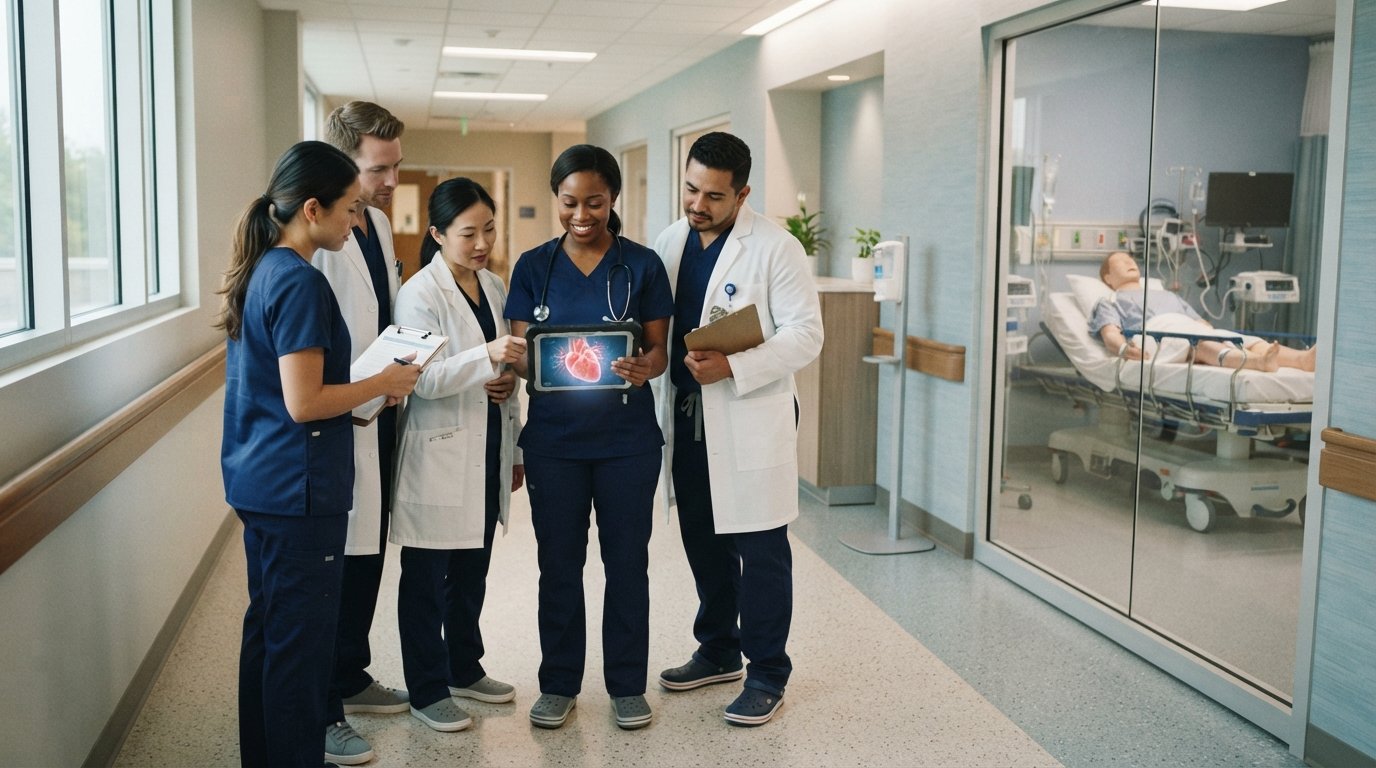
Choosing an in-person program is a decision to fully immerse yourself in your education. At FDU's Metropolitan Campus, you should plan to take advantage of everything the campus has to offer. Beyond the classroom, there are simulation labs where you can practice complex clinical skills in a safe, controlled environment. These labs are equipped with high-fidelity mannequins that mimic patient responses, allowing you to refine your critical thinking and technical abilities. You will also have the opportunity to participate in interprofessional education, working alongside students from other health disciplines, such as pharmacy, psychology, and public health, which mirrors the collaborative nature of modern healthcare.
Engage with your faculty beyond office hours. They are not just instructors; they are mentors who can guide you in your research, connect you with clinical preceptors, and advise you on your career path. Many FDU nursing faculty are involved in active research projects, and they welcome graduate students to assist. This hands-on research experience is invaluable, especially if you are considering a DNP or a future PhD. Additionally, attend campus events, seminars, and guest lectures. These are opportunities to learn about emerging trends in healthcare and to network with leaders in the field. The university often hosts career fairs and health conferences, which are prime occasions to make connections that can lead to job offers.
Balancing work, study, and personal life is a challenge, but the in-person structure actually helps you build a routine. You will have scheduled class times that require you to be present, which can prevent procrastination. You will also form study groups with your peers, creating a support system that encourages you through difficult courses. To manage your time effectively, use a planner or digital calendar to block out study hours, and communicate with your employer about your class schedule. Many FDU graduate students work part-time or in flexible roles, and your clinical preceptors are often accommodating of your academic commitments. Remember, this is a temporary investment in your future, and the discipline you develop now will serve you well in your advanced practice role.
As you weigh the decision to pursue a post-baccalaureate nursing degree, consider also the broader landscape of online vs. in-person education. While online programs offer flexibility, they often lack the direct, hands-on learning and networking that FDU provides. For nursing, where clinical skills and interpersonal communication are paramount, the in-person experience at FDU is particularly valuable. You can read more about the benefits of different learning formats on DegreesOnline.Education, a resource that compares various educational pathways. Ultimately, the choice depends on your personal learning style and career goals, but for those who thrive on interaction and want to maximize their clinical exposure, FDU's Metropolitan Campus is an excellent choice.
Your Next Steps: Applying to FDU
If you are ready to take the next step, the application process for FDU's nursing programs is straightforward, but it requires attention to detail. Begin by visiting the FDU website to explore the specific program pages for the MSN, DNP, or certificates. There, you will find detailed curriculum information, application deadlines, and links to the online application portal. Prepare your materials in advance: request your official transcripts, update your resume, and start drafting your personal statement. Your personal statement is your chance to articulate your vision for your nursing career and explain why FDU is the right fit. Be specific about your goals, your clinical interests, and how the program will help you achieve them.
Reach out to the admissions office with any questions. They can provide guidance on prerequisites, help you understand the application requirements, and connect you with faculty if you have academic questions. If you are local, consider scheduling a campus tour to see the simulation labs and meet with program directors. This firsthand experience can solidify your decision and give you a sense of the community. Once you submit your application, the wait can be nerve-wracking, but use that time to secure your financial aid. Complete the FAFSA, explore scholarship opportunities, and have conversations with your employer about tuition benefits.
Remember, pursuing a degree beyond your bachelor's is a transformative journey. It requires dedication, sacrifice, and a clear sense of purpose. But the rewards, both personal and professional, are immense. You will emerge as a more confident, competent, and influential nurse, ready to take on the challenges of a rapidly evolving healthcare system. Fairleigh Dickinson University-Metropolitan Campus offers the structure, the resources, and the community to support you in this endeavor. Take the first step today, and invest in a future that is as bright as the care you provide to your patients.