
Bellevue College Phlebotomy Certificate: 12-Week Path
Earn a phlebotomy certificate in 12 weeks to less than 1 year with hybrid training at Bellevue College. Call (877)-218-7081 to plan your healthcare career.

By Priya Foster
Landing a role in healthcare does not always require a four-year degree. For many students, a focused certificate is the fastest, most affordable route to a stable career with direct patient contact. The Phlebotomy Technician/Phlebotomist Certificate at Bellevue College is a standout option for anyone in the Pacific Northwest who wants to enter the medical field quickly. This program takes 12 weeks to less than 1 year and uses a mix of in-person and online instruction, giving you the flexibility to balance training with work or family obligations. Whether you are a recent high school graduate, a career changer, or a current healthcare worker looking to add a credential, this pathway deserves a close look.
Phlebotomists are the professionals who draw blood for tests, transfusions, donations, and research. They are essential to diagnosing illness, monitoring treatment, and keeping hospitals and clinics running smoothly. Demand for skilled phlebotomists remains strong across the country, and earning a certificate from a regionally accredited college like Bellevue College signals to employers that you have met rigorous training standards. In this guide, we break down what the program covers, how the hybrid format works, what it costs, and how to pay for it, so you can decide whether this certificate fits your career goals.
What the Phlebotomy Technician/Phlebotomist Certificate Covers
The Phlebotomy Technician/Phlebotomist Certificate at Bellevue College is built around the core competencies that employers expect from entry-level phlebotomists. Coursework blends classroom theory with hands-on practice, covering anatomy and physiology of the circulatory system, infection control, safety protocols, specimen collection techniques, and patient communication. You will learn how to perform venipuncture (drawing blood from a vein) and capillary puncture (finger or heel sticks), as well as how to label, handle, and transport specimens correctly. Legal and ethical issues, including patient privacy under HIPAA, are also part of the curriculum.
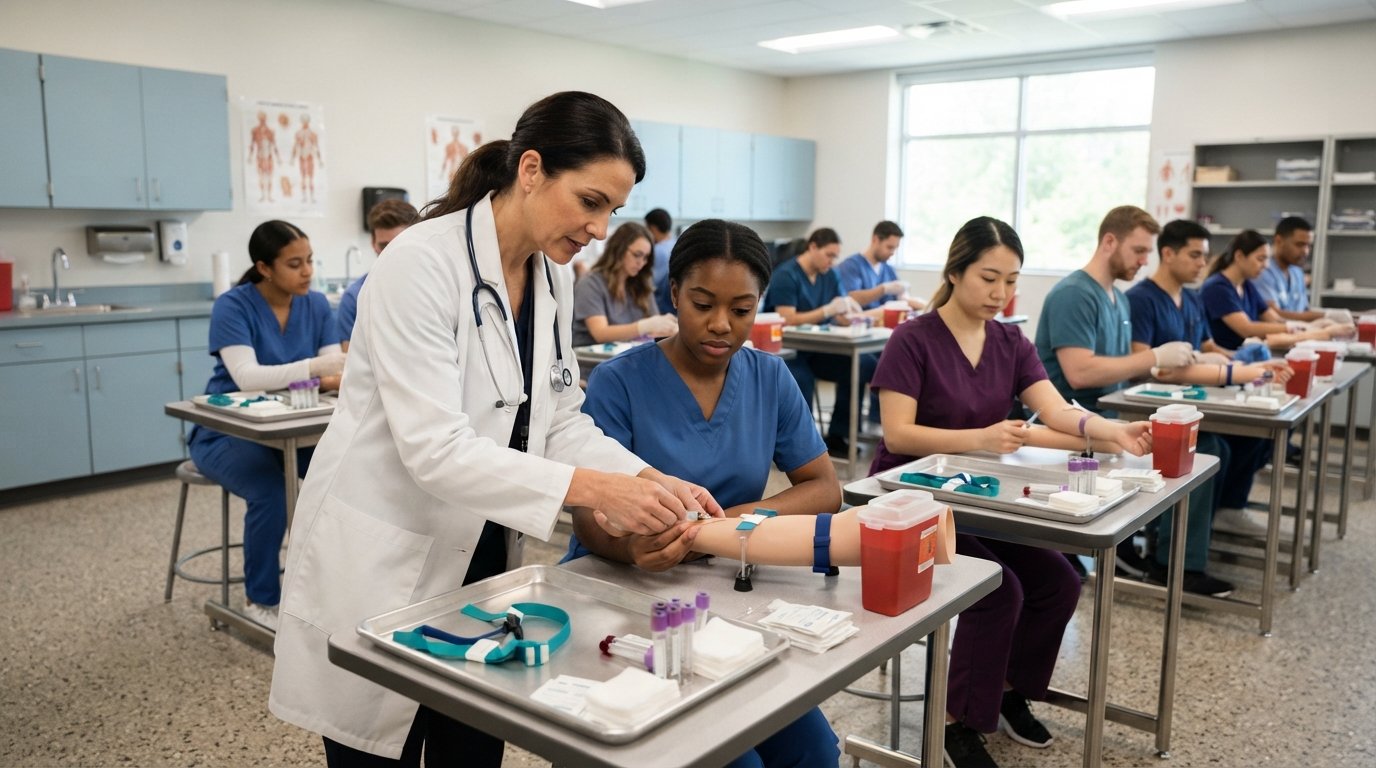
Because phlebotomy is a skill-based profession, the program places heavy emphasis on supervised practice. Students typically practice draws on training arms and, in many cases, on each other under instructor supervision. This hands-on component is why the program uses a mix of in-person and online delivery: lectures and quizzes can be completed online, while lab sessions and clinical experiences happen face to face. By the end of the certificate, you should be able to perform blood collection safely and confidently, explain procedures to nervous patients, and recognize complications such as hematomas or fainting.
Many students ask whether a certificate is enough to get hired. In most states, including Washington, employers look for a high school diploma or equivalent plus completion of an accredited phlebotomy program. Some employers also prefer or require national certification, which you can pursue after graduation through organizations such as ASCP or NHA. Bellevue College's program is designed to prepare you for those certification exams, though you should confirm current exam eligibility requirements with the credentialing body you choose.
How the 12-Week to Less Than 1 Year Format Works
One of the biggest advantages of this certificate is its compressed timeline. The program takes 12 weeks to less than 1 year, depending on whether you enroll full time or part time and how clinical placements are scheduled. That means you could be job-ready in a single academic quarter or a few months, far faster than a two-year associate degree. For adults who need to start earning quickly, this short runway is a major selling point.
The hybrid format is another practical benefit. Online coursework gives you the freedom to study around your existing job or caregiving responsibilities. You can watch lectures, complete readings, and take quizzes at night or on weekends, then attend in-person labs on scheduled days. This structure is especially helpful for students who live outside Bellevue or who commute. If you are new to online learning, it helps to review the tech requirements for online courses before you enroll, so you can confirm your laptop, internet connection, and software meet the program's needs.
Clinical or practicum hours are typically arranged with local healthcare partners. During this phase, you will work alongside experienced phlebotomists in clinics, hospitals, or labs, gaining real-world experience with actual patients. Because placement availability varies, it is wise to speak with an advisor early about timelines and any prerequisites, such as immunizations, background checks, or CPR certification. Planning ahead helps you avoid delays and keeps you on track to finish within the 12-week to less than 1 year window.
Admission Requirements and What to Expect
Admission to the phlebotomy certificate is generally straightforward, but there are steps you should complete well before the quarter starts. Most applicants need a high school diploma or GED, placement into college-level English and math (or completion of prerequisites), and a completed college application. Some programs also require a background check, drug screening, and proof of immunizations before clinical placement. Because requirements can change, always verify the latest admissions checklist on the Bellevue College website or with an academic advisor.
Here is a practical checklist to keep your application organized:
- Submit your Bellevue College application and obtain a student ID.
- Provide official high school or GED transcripts, plus any college transcripts if applicable.
- Complete placement testing or satisfy prerequisite courses in English and math.
- Attend a program information session or meet with an advisor to confirm cohort start dates.
- Prepare for clinical requirements: immunizations, background check, CPR card, and health insurance.
Once admitted, you will register for the phlebotomy courses in the sequence outlined by the program. Full-time students can often finish in one to two quarters, while part-time students may stretch the certificate closer to a year. Either way, the credential is the same, and employers do not distinguish between full-time and part-time completion.
Cost, Financial Aid, and Funding Options
Cost is a major consideration for any career training program, and the phlebotomy certificate is generally far less expensive than a degree. Tuition is charged per credit, and you will also need to budget for textbooks, lab fees, uniforms, and certification exam fees. Washington residents pay lower resident tuition rates, and some students qualify for waivers or workforce funding. Because exact costs change each year, check the college's tuition page or contact the financial aid office for a current estimate.
Financial aid for healthcare students is available through several channels. Federal student aid, state workforce programs, and private scholarships can all help offset costs. The first step is completing the FAFSA, which determines your eligibility for Pell Grants, work-study, and federal loans. Even if you plan to pay out of pocket, filing the FAFSA is smart because many scholarships and workforce programs use it to verify need. For a broader look at planning and paying for college, resources like CollegeAndTuition offer guides on tuition, aid, and affordability that can help you compare options.
Beyond federal aid, consider these funding sources:
- Washington state workforce grants for short-term career training in high-demand fields.
- Scholarships for healthcare students offered by hospitals, clinics, and professional associations.
- Employer tuition assistance if you already work in a healthcare setting.
- Payment plans through the college to spread tuition over the quarter.
Because phlebotomy is a short program, the return on investment can be favorable. Entry-level phlebotomists in the Seattle area typically earn an hourly wage that allows graduates to recoup tuition within a few months of full-time work. That said, wages and job availability vary by employer and region, so research local job postings before you enroll.
Career Outlook and Certification
Phlebotomy is often a stepping stone into other healthcare careers. Many phlebotomists go on to become medical assistants, lab technicians, or nurses, using their patient-care experience as a foundation. The Bureau of Labor Statistics projects steady demand for clinical laboratory workers, and phlebotomy skills are required in hospitals, diagnostic labs, blood banks, physician offices, and research facilities. Because blood draws are needed for so many medical decisions, the role is unlikely to disappear.
National certification is voluntary in many states but strongly preferred by employers. After completing your certificate, you can sit for exams offered by organizations such as the American Society for Clinical Pathology (ASCP) or the National Healthcareer Association (NHA). Certification typically requires passing a written exam and, in some cases, documented clinical hours. Maintaining certification may involve continuing education. Earning a credential can improve your job prospects and may lead to higher pay or specialized roles, such as pediatric phlebotomy or donor collection.
Soft skills matter just as much as technical ability in this field. Patients are often anxious about needles, so empathy, clear communication, and a calm demeanor are essential. The Bellevue College program incorporates patient interaction and professionalism into its training, helping graduates feel prepared for the realities of clinical work. If you enjoy working with people and want a career that directly contributes to patient care, phlebotomy can be a rewarding fit.
Is the Bellevue College Phlebotomy Certificate Right for You?
This program is ideal for students who want a fast, affordable entry into healthcare without committing to a multi-year degree. The 12 weeks to less than 1 year timeline and the mix of in-person and online instruction make it accessible for working adults, parents, and students who need flexibility. Bellevue College is regionally accredited, which means credits and credentials are recognized by employers and transferable to further study if you decide to pursue an associate or bachelor's degree later.
Before you apply, ask yourself a few practical questions. Can you commit to the in-person lab and clinical schedule? Are you comfortable with needles and the sight of blood? Do you have a plan to cover tuition and living expenses during the program? If the answers are yes, the certificate can be a smart investment. Speak with an advisor, attend an information session, and review the program's current requirements to make sure the timing and format align with your goals. With careful planning and a clear funding strategy, you can complete this certificate and start working in healthcare within a matter of months.
Taking the first step is often the hardest part. Whether you are drawn to phlebotomy as a long-term career or as a launchpad into nursing or lab science, the Bellevue College certificate offers a structured, efficient path. Explore the program details, connect with financial aid, and map out your schedule. A short-term certificate can open the door to a stable, in-demand role and give you the clinical experience that employers value.