
Astronomy Bachelor’s Degree at BYU: What to Expect
Explore the Astronomy Bachelor's degree at BYU: a 4-year in-person program with research, strong career prep, and unique faith-based campus life.

By James Miller
Looking up at the night sky can spark a lifelong curiosity about the universe, its origins, and our place within it. For students who want to turn that curiosity into a career, earning an Astronomy Bachelor's degree, usually 4 years In-person at Brigham Young University, offers a structured path through rigorous science and hands-on research. This degree is not just about stargazing; it builds a strong foundation in physics, mathematics, and computational methods, preparing graduates for graduate school or roles in data science, aerospace, and education. In this article, we explore the program's structure, research opportunities, career outcomes, and how to finance your education.
Why Choose an Astronomy Degree at BYU?
Brigham Young University (BYU) stands out for its unique blend of academic excellence and a supportive campus environment. The Department of Physics and Astronomy, housed within the College of Physical and Mathematical Sciences, offers a curriculum that is both challenging and rewarding. The program emphasizes small class sizes, allowing for direct interaction with faculty who are active researchers in fields like exoplanets, stellar formation, and cosmology. You will not be just a number; you will be part of a community that encourages questions and hands-on discovery.
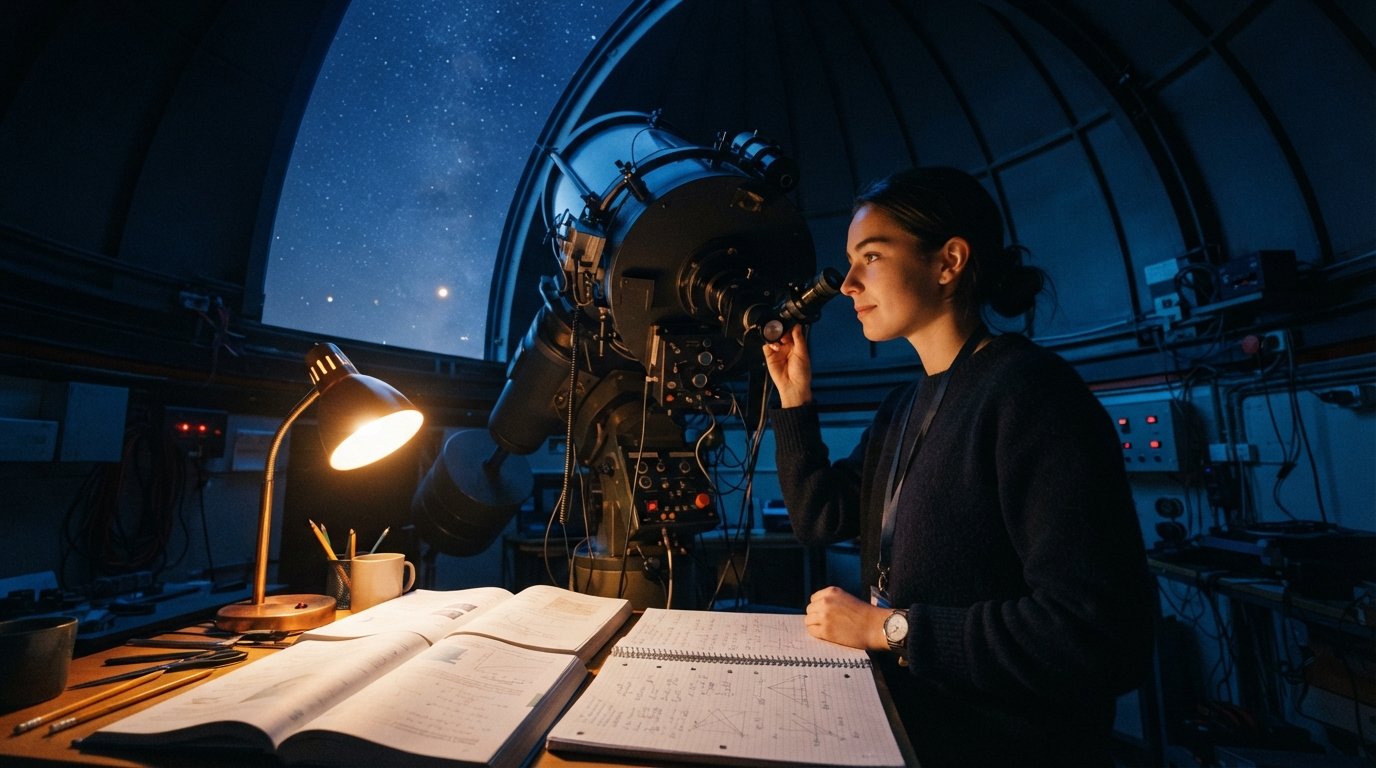
BYU's commitment to undergraduate research is a significant advantage. From your sophomore year, you can join faculty-led projects, using observatories like the West Mountain Observatory, which features a 0.9-meter telescope. This experience is invaluable for building a strong resume for graduate school applications. Furthermore, the university's unique honor code and values-based education foster a culture of integrity and service, which can be a refreshing contrast to larger, impersonal state institutions.
While the program is rigorous, the support structure helps students succeed. Academic advisors, peer mentors, and dedicated faculty are available to guide you through course selection and research paths. The community is tight-knit, and the shared passion for science creates lasting professional and personal connections. For many, the decision to enroll in this Astronomy Bachelor's degree, which is typically completed in 4 years and delivered In-person at Brigham Young University, is driven by both the academic reputation and the distinctive campus life.
Curriculum and Coursework: A Deep Dive into the Major
The Astronomy Bachelor's degree, usually 4 years In-person at Brigham Young University, is built on a core of physics and mathematics. You will start with foundational courses in calculus and classical mechanics, then move into advanced topics like quantum mechanics and electromagnetic theory. The astronomy-specific classes cover stellar structure, galactic astronomy, and observational techniques. This dual emphasis ensures that you graduate with the same theoretical toolkit as a physics major, plus the specialized knowledge of astronomical phenomena.
In your junior and senior years, you will have the opportunity to choose from upper-division electives. Options might include:
- Exoplanets and planetary formation
- Cosmology and the large-scale structure of the universe
- High-energy astrophysics, including black holes and neutron stars
- Observational astronomy with CCD imaging and spectroscopy
These courses are not just lectures; they often include labs where you reduce real data or write code to model physical processes. For example, a class on observational techniques might require you to use Python to calibrate images taken at the West Mountain Observatory. This practical application of theory is a hallmark of the program and a key reason why BYU graduates are well-prepared for competitive graduate programs or industry positions.
The required research component is often the capstone of the degree. Whether you are analyzing light curves of variable stars or simulating galaxy mergers, you will produce a thesis or a significant research paper. This experience teaches you how to ask a scientific question, design a methodology, and communicate your findings effectively, skills that are highly transferable to any career.
What Can You Do with a BYU Astronomy Degree?
A common misconception is that an astronomy degree only leads to a career as an academic astronomer. While many graduates do pursue PhDs and become professors or researchers at observatories and institutes, the skills you develop are also in high demand in the private sector. The ability to model complex systems, analyze large datasets, and code in languages like Python or C++ makes you an excellent candidate for jobs in data science, software engineering, and quantitative finance.
According to BYU's career services, recent graduates have found positions in:
- Data analysis at tech companies like Google and Intel
- Aerospace engineering and mission support at NASA or defense contractors
- Science communication and planetarium education
- Medical physics or other applied physics fields after further study
Graduate school remains a popular path, with alumni often accepted into top-tier PhD programs at institutions like Caltech, UC Berkeley, and the University of Arizona. The rigorous math and physics training you receive ensures you are competitive for fellowships and research assistantships. If you are interested in teaching, the degree also provides a solid foundation for a career in secondary education, especially if you add a teaching certificate.
The interdisciplinary nature of the field means you are not limited to a single career path. A 2022 survey by the American Astronomical Society found that only about half of astronomy PhDs stay in academia; the rest find rewarding careers in industry and government. BYU's broad curriculum, which includes computer science and writing-intensive courses, prepares you for this diverse job market.
Admissions and Requirements for the Program
Admission to BYU is competitive, and the astronomy major has an additional application process after you complete a set of prerequisite courses. To be admitted to the university, you will need a strong high school record, competitive ACT or SAT scores, and a commitment to the university's Honor Code, which includes standards for dress, grooming, and honesty. The university is looking for students who are not only academically gifted but also active members of their communities and the Church of Jesus Christ of Latter-day Saints, although students of all faiths are welcome.
Once you are enrolled at BYU, you will typically declare your intent to major in astronomy after completing introductory physics and calculus sequences. The program requires a minimum GPA, often around 3.0, in these foundational courses. You will also need to submit a departmental application, which may include a personal essay and letters of recommendation. This extra step ensures that students are genuinely committed to the field and have the foundational skills to succeed.
For transfer students, BYU has a robust articulation agreement with many community colleges. If you are considering transferring, it is crucial to work with a BYU academic advisor early to ensure that your credits will transfer and that you are taking the correct prerequisite courses. This planning can save you time and money, allowing you to complete your Astronomy Bachelor's degree in the usual 4 years, even if you start at another institution.
Financing Your Education: Scholarships and Financial Aid
Paying for college is a concern for many families, but BYU offers a remarkable value, particularly for members of the Church, where tuition is heavily subsidized. Even for non-LDS students, tuition is lower than many private universities. However, the cost of living in Provo, Utah, plus books and supplies, still adds up. Fortunately, there are numerous ways to finance your education without taking on excessive debt.
First, you should always complete the Free Application for Federal Student Aid (FAFSA) to see if you qualify for federal grants, work-study, or loans. BYU also has its own scholarship application, which is separate from admission. These scholarships are merit-based and can cover a significant portion of tuition. The Department of Physics and Astronomy also offers a few scholarships specifically for majors, funded by generous alumni donors.
Beyond internal scholarships, you can apply for external opportunities. Many organizations, including the American Astronomical Society and the National Science Foundation, offer scholarships for undergraduate astronomy students. Your high school or community may also have local scholarships. To navigate these options, you can refer to our guide on how to choose the best online college for a bachelor's degree, which offers tips on comparing costs and financial aid packages that apply to traditional programs as well.
It is also wise to consider research stipends. As an undergraduate researcher, you may be paid for your work on a faculty project, especially during the summer. The College of Physical and Mathematical Sciences has funds to support undergraduate research, and these stipends can help offset living expenses. Additionally, working as a teaching assistant in the physics department is another common way for students to earn money while deepening their understanding of the material.
Comparing BYU to Other Astronomy Programs
When you are deciding where to earn your astronomy degree, it is helpful to compare BYU to other institutions. Unlike some large state universities where introductory classes have hundreds of students, BYU's smaller size allows for a more personal learning environment. The focus on undergraduate research is also not universal; at many top-tier research universities, these opportunities are often reserved for graduate students. At BYU, you can get involved in a meaningful project from your sophomore year.
Another point of comparison is the campus culture. BYU's unique environment, with its emphasis on faith and community, is not for everyone. If you are not comfortable with a religiously-affiliated institution, you might be better suited to a secular university. However, if you value a supportive, values-based community, BYU can be an ideal place to grow both intellectually and personally. The university has a strong national reputation, and its graduates are well-regarded in academic and professional circles.
Cost is another differentiator. While BYU is not the cheapest option, it is very affordable compared to many private and out-of-state public universities. For example, out-of-state tuition at a school like the University of Colorado Boulder is more than double BYU's non-LDS tuition. When you factor in the high quality of instruction and research opportunities, BYU offers an excellent return on investment. To understand how your degree fits into the broader landscape of higher education, you can explore resources like DegreesOnline.Education, which provides comprehensive information on various programs and career outcomes.
Life as an Astronomy Major at BYU
Your daily life as an astronomy major will be a mix of challenging classes, late-night observing sessions, and collaborative problem solving. The physics and astronomy building is a hub of activity, with students often working together in study rooms or the computer lab. Faculty are accessible, and it is common to see professors eating lunch with students in the cafeteria. This close interaction is one of the most rewarding aspects of the program.
Outside of the classroom, the BYU Astronomical Society organizes star parties, guest lectures, and trips to local observatories. These activities are a great way to connect with fellow students who share your passion. You will also have the chance to participate in outreach events, showing the public the wonders of the night sky. These experiences not only reinforce your learning but also help you develop communication and leadership skills.
The city of Provo also offers a unique backdrop for your studies. The Wasatch Mountains provide dark skies just a short drive from campus, ideal for recreational stargazing. The nearby Clark Planetarium in Salt Lake City offers additional educational and volunteer opportunities. Balancing rigorous academics with a healthy social and outdoor life is possible, and the supportive environment helps you maintain that balance. Many students find that their time at BYU is transformative, both as a scientist and as a person.
Preparing for Graduate School and Future Success
If you are planning to apply to graduate school, your BYU experience will give you a competitive edge. The research you conduct will serve as the basis for a strong statement of purpose. Faculty mentors will write detailed letters of recommendation that carry weight with admissions committees. They know you personally and can speak to your potential as a researcher, which is often more valuable than a generic letter from a professor who taught you in a lecture hall of 200.
To maximize your chances, you should start preparing early. Aim to complete your core courses by your junior year so that you can spend your senior year focusing on research and advanced electives. Take advantage of opportunities to present your work at national conferences, such as the American Astronomical Society meetings. This exposure is excellent for your professional development and can even lead to networking opportunities that result in internship offers or graduate school interviews.
Your faculty advisor can help you identify which graduate programs are the best fit for your research interests. They may also connect you with colleagues at other institutions. The astronomy community is small, and a strong recommendation from a respected BYU professor can open many doors. With careful planning and the strong foundation you will receive, you will be well-positioned to continue your studies at the world's leading research universities.
Final Thoughts
Earning an Astronomy Bachelor's degree, usually 4 years In-person at Brigham Young University, is a significant commitment, but it is a journey that offers immense intellectual and professional rewards. The program's blend of rigorous coursework, hands-on research, and a supportive community prepares students for a wide range of careers in science and technology. If you are passionate about the cosmos and ready to work hard, this degree can be the first step toward a fulfilling life of discovery. The skills you will learn, from quantitative reasoning to data analysis, are timeless and transferable, ensuring that your education will serve you well regardless of the specific path you choose. With proper financial planning and the abundant scholarship resources available, this excellent program can be within your reach.