
Amherst College Film and Media Studies BA: 4-Year Guide
Amherst College offers a four-year, in-person Film and Media Studies BA with generous aid. See curriculum, admissions, and career outcomes.

Amherst College's Film and Media Studies department offers a distinctive Bachelor of Arts that blends rigorous academic inquiry with hands-on production, all within a small liberal arts setting. If you are considering a Film/Cinema/Media Studies Bachelor's degree, usually 4 years In-person at Amherst College, you are looking at a program that treats media as both an art form and a cultural force. The college's open curriculum means you can pair film theory with computer science, or documentary production with environmental studies, creating a personalized path that few larger universities can match.
This guide breaks down what the degree involves, how to get in, what it costs, and how to fund it. We will also cover the skills you will build, the facilities you will use, and the career outcomes that await graduates. Whether you are a high school student planning your applications or a parent helping your child navigate financial aid, the details below will give you a clear picture of what a four-year, in-person film and media studies degree at Amherst College actually delivers.
Inside the Film and Media Studies Major at Amherst College
Amherst College's Film and Media Studies program is housed within the Department of English, though it draws faculty from across the humanities and social sciences. The major requires a mix of foundational courses, upper-level electives, and a capstone project. You will study film history, media theory, and production techniques, but you will also engage with questions of representation, technology, and global media cultures. The program is deliberately interdisciplinary: you might analyze a documentary in one course and produce your own short film in another, all while discussing the ethics of image-making.
Because Amherst operates on a liberal arts model, you are not expected to declare the major immediately. Most students declare in their sophomore year, after exploring introductory courses. The major itself requires roughly 10 to 12 courses, including a senior seminar or thesis. Many students complement their film studies with courses in art history, sociology, or political science, and some pursue a double major. The flexibility is a hallmark of the Amherst experience, and it allows you to tailor the degree to your specific interests, whether that is experimental film, media activism, or screenwriting.
One of the standout features is the senior capstone, which can take the form of a written thesis or a production project. This is your chance to work closely with a faculty advisor on a substantial piece of scholarship or creative work. Recent projects have ranged from documentary shorts about local communities to analytical essays on streaming platforms. The capstone is not just a graduation requirement; it is a portfolio piece that can help you stand out in job applications or graduate school admissions.
Admissions: Getting Into Amherst's Film Program
Amherst College is highly selective, with an acceptance rate that hovers around 9 percent. The admissions committee looks for students who have challenged themselves academically in high school, demonstrated intellectual curiosity, and shown a genuine interest in media or the arts. There is no separate application for the film major; you apply to the college as a whole. However, you can use your essays and extracurricular activities to highlight your passion for film, media, or storytelling.
While Amherst does not require a portfolio for admission to the film program, submitting supplementary materials can strengthen your application if you have produced films, written screenplays, or engaged in media-related projects. The college values diverse forms of excellence, so a strong creative portfolio can complement your academic record. It is also helpful to demonstrate how your interest in film intersects with broader intellectual questions, since the program is grounded in the liberal arts.
Here is a quick overview of the application components and what admissions officers typically look for:
- Academic record: A rigorous high school curriculum with honors or advanced courses, especially in English, history, and the arts.
- Essays: Personal statements that reveal your voice and your specific interest in film or media, not just generic praise for the college.
- Extracurriculars: Film club, theater, journalism, or independent creative projects that show sustained commitment.
- Optional portfolio: A link to a short film, a screenplay excerpt, or a media analysis piece can provide tangible evidence of your skills.
- Recommendations: Letters from teachers who can speak to your creativity, work ethic, and ability to think critically about media.
Beyond the numbers, Amherst seeks students who will contribute to a vibrant campus community. The film department hosts screenings, workshops, and visiting artists, so showing that you are eager to engage with those opportunities can help your case. If you are applying from a community college or another institution, transfer admission is possible but highly competitive; you will need to demonstrate a strong fit with the liberal arts curriculum.
Cost and Financial Aid: Making a Four-Year Degree Affordable
A four-year, in-person degree at Amherst College comes with a substantial price tag, but the college's financial aid program is among the most generous in the country. For the 2025-2026 academic year, the total cost of attendance (tuition, fees, housing, and food) is approximately $88,000. However, Amherst meets 100 percent of demonstrated financial need without loans, and most families with incomes below $150,000 receive significant grant aid. Some students from lower-income backgrounds pay nothing at all.
Because the degree is typically completed in four years, planning your finances across that timeline is essential. You will need to account for annual cost increases, personal expenses, and possibly study abroad or summer production costs. Fortunately, Amherst's aid package can include allowances for books, supplies, and travel. The key is to file the FAFSA and CSS Profile on time each year and to communicate openly with the financial aid office about any changes in your family's circumstances.
Scholarships and grants can further reduce out-of-pocket costs. External scholarships for film and media students are available from organizations like the Academy of Motion Picture Arts and Sciences, the National Board of Review, and various local film societies. You can also explore resources like our guide on choosing the best online college for a bachelor's degree if you are considering hybrid options, though Amherst's program is fully in-person. For a broader look at college costs and financial planning, CollegeAndTuition offers tools and articles that can help you compare aid offers and budget for four years.
It is also worth noting that Amherst's career center and alumni network can help you find paid internships and summer fellowships that offset expenses while building your resume. Many film students take advantage of Amherst's internship funding, which provides stipends for unpaid opportunities in media production, festivals, or archival work. These experiences often lead to job offers after graduation, making the investment in a four-year degree even more worthwhile.
Curriculum and Hands-On Production Experience
The Film and Media Studies curriculum at Amherst is designed to balance theory and practice. Introductory courses like "Film and Media Studies 101" introduce you to key concepts in film analysis, while production courses teach you the basics of cinematography, editing, and sound design. As you progress, you can choose from electives such as "Documentary Film," "Global Cinema," "Screenwriting," and "Media Theory." The department also offers topics courses that change each year, covering subjects like surveillance cinema, eco-media, or video games.
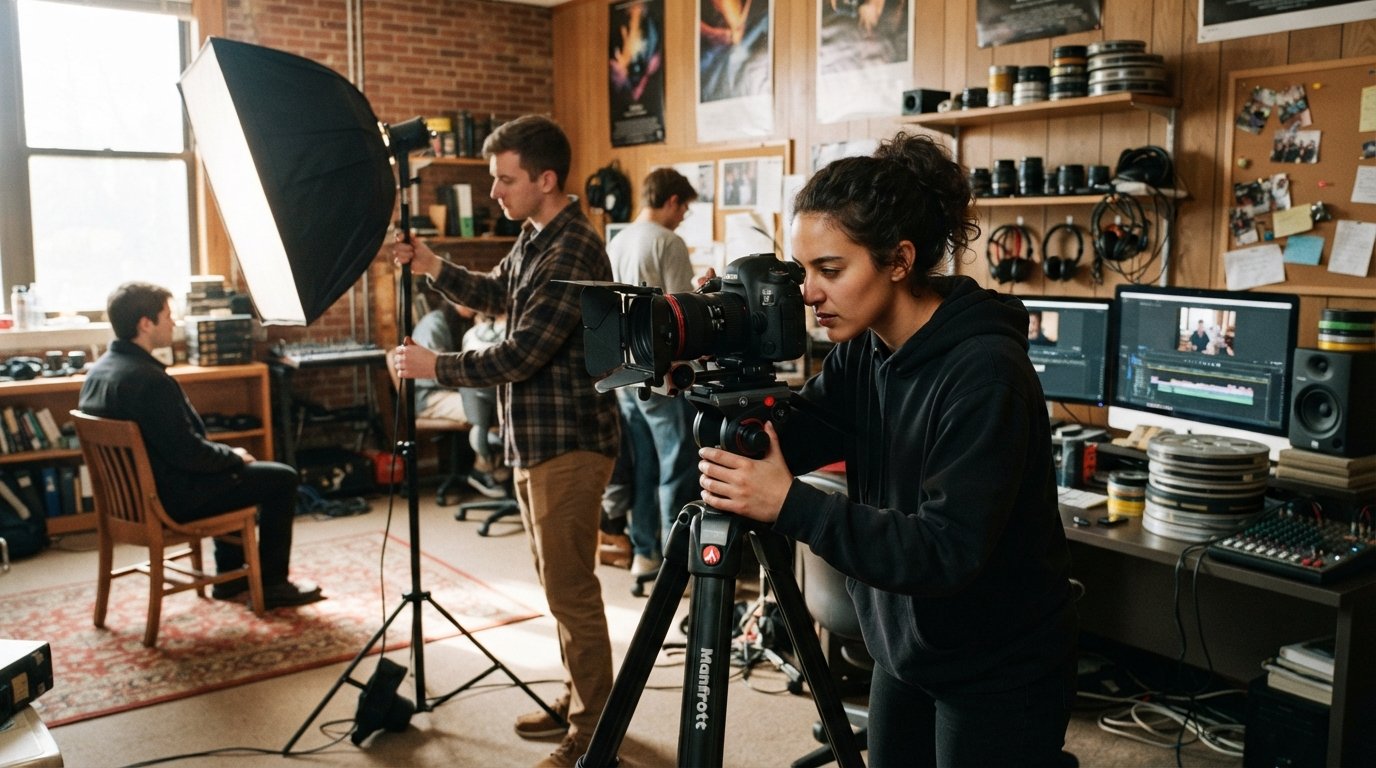
Production courses are capped at small enrollments to ensure access to equipment and individualized feedback. You will use digital cameras, lighting kits, and editing software in the college's media labs. Amherst has a dedicated screening room and a collection of film prints, and students often organize their own screenings and festivals. The program encourages experimentation, so you might find yourself making a 16mm film in one class and a podcast in another. The goal is to develop a critical understanding of media while also gaining practical skills that are directly applicable to creative industries.
Beyond the classroom, Amherst offers numerous opportunities to get involved in media production. The student-run film club produces short films and hosts workshops. The college's newspaper and radio station provide outlets for criticism and audio storytelling. Some students also collaborate with local organizations in nearby Northampton and Springfield to produce documentaries or public service announcements. These extracurricular activities are not just fun; they are chances to build a reel and learn to work in teams, which are exactly the skills employers look for.
Skills You Will Build and Career Outcomes
A Film/Cinema/Media Studies Bachelor's degree, usually 4 years In-person at Amherst College, equips you with a versatile skill set. You will learn to analyze visual narratives, communicate ideas clearly, and use media production tools proficiently. You will also develop research skills, critical thinking, and the ability to collaborate on creative projects. These competencies are valuable in a wide range of fields, from entertainment and journalism to marketing and education.
Graduates of Amherst's film program have gone on to careers in film and television production, advertising, public relations, digital media, and arts administration. Some pursue graduate study in film studies, law, or business. The college's alumni network is strong, and the liberal arts foundation means you are not narrowly trained for one job but prepared to adapt to a changing media landscape. According to Amherst's career center, recent film graduates have worked at production companies, streaming platforms, museums, and nonprofit media organizations.
Here are some of the key skills you can expect to gain and how they translate to the job market:
- Visual storytelling: Ability to craft compelling narratives for film, video, and social media.
- Critical analysis: Capacity to interpret media texts and understand their cultural contexts.
- Technical proficiency: Hands-on experience with cameras, editing software, and sound equipment.
- Research and writing: Strong written communication skills for grants, scripts, and criticism.
- Collaboration: Experience working in crews and creative teams, essential for production environments.
It is important to note that while the program provides excellent preparation, career outcomes depend on individual initiative. Internships, networking, and building a portfolio during your four years are crucial. Amherst's location in western Massachusetts is not a media hub, but the college's strong reputation and alumni connections help students secure opportunities in New York, Los Angeles, and beyond. Many students spend summers interning in these cities, and the career center provides funding and guidance to make those experiences possible.
Why Choose Amherst for Film and Media Studies?
Amherst College stands out for its intimate learning environment, generous financial aid, and interdisciplinary approach. The film and media studies program is small enough that you will know your professors well, yet rigorous enough to prepare you for top-tier graduate programs or industry roles. The open curriculum lets you explore adjacent fields, and the senior capstone ensures you graduate with a substantial piece of work. If you are looking for a Film/Cinema/Media Studies Bachelor's degree, usually 4 years In-person at Amherst College, you will find a program that values both critical thinking and creative practice.
Of course, Amherst is not the only option. Some students may prefer a specialized film school or a larger university with more production resources. But for those who want a liberal arts education that treats media as a vital part of a broad intellectual journey, Amherst is hard to beat. The four-year, in-person format allows for deep relationships with faculty and peers, and the campus culture encourages collaboration across disciplines. The college's commitment to affordability means that talented students from all backgrounds can attend without taking on crippling debt.
As you consider your college list, weigh factors like class size, access to equipment, alumni networks, and financial fit. Visit campus if you can, sit in on a film class, and talk to current students. The right program will challenge you and support you in equal measure, and Amherst's film department aims to do exactly that. For more guidance on planning your college journey, including scholarship searches and financial aid tips, explore the resources at Scholarship.Education, where you can find databases, application guides, and advice tailored to your goals.
In short, a Film/Cinema/Media Studies Bachelor's degree, usually 4 years In-person at Amherst College, is an investment in a well-rounded education that can open doors to a variety of creative and analytical careers. With careful planning and a proactive approach to financial aid, you can make the most of this distinctive program. Whether you dream of directing documentaries, writing about media, or working in digital strategy, Amherst provides a foundation that will serve you for years to come.