
Aiken Technical College Dental Hygiene Degree Guide
Earn a Dental Hygiene/Hygienist Associate's degree, usually 2 years In-person at Aiken Technical College, and start a stable healthcare career with strong demand.

By Harper Davis
What if you could enter one of the most stable and rewarding healthcare careers in about two years of hands-on training, without committing to a four-year university? That is the reality for many students who pursue a Dental Hygiene/Hygienist Associate's degree, usually 2 years In-person at Aiken Technical College. Located in Graniteville, South Carolina, Aiken Technical College (ATC) offers a campus-based program that prepares graduates for licensure and immediate employment in a field that consistently ranks among the best in allied health. For students weighing the cost of tuition, the time commitment, and the job outlook, this pathway deserves a close look.
This article walks through the program structure, admission requirements, costs, financial aid options, and career outcomes for the ATC dental hygiene associate degree. Along the way, you will find practical guidance on how to fund your education, including scholarships and federal aid, and how to position yourself as a competitive applicant. Whether you are a recent high school graduate, a career changer, or a parent helping a student plan, the details below will help you make an informed decision about this specific two-year, in-person program.
Why the Aiken Technical College Dental Hygiene Program Stands Out
Dental hygiene is a licensed profession, and employers expect graduates to hold a degree from an accredited program and pass national and regional board exams. ATC's program is designed around those requirements, combining classroom instruction in the sciences with extensive clinical practice in a supervised dental setting. Because the degree is an Associate of Applied Science, it is built for students who want to enter the workforce quickly rather than continue toward a bachelor's degree.
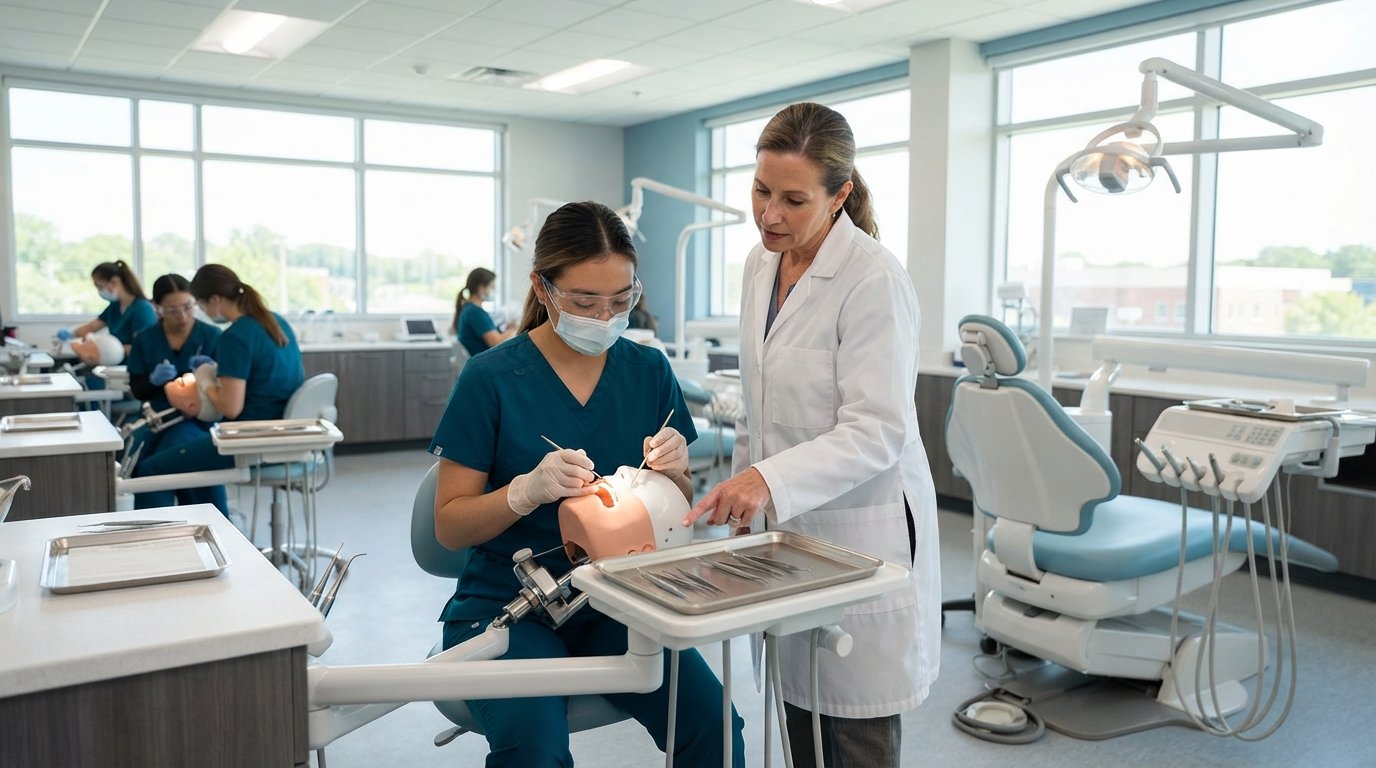
The in-person format is a major advantage in a clinical field. Students learn on actual equipment, treat patients under supervision, and receive immediate feedback from instructors. That hands-on time is difficult to replicate online, and it directly supports the development of the manual dexterity and patient communication skills that dental hygienists use every day. ATC's campus facilities include dental clinics where students complete the clinical hours required for graduation and licensure.
Another distinguishing feature is the program's focus on community oral health. Dental hygienists do more than clean teeth: they screen for oral diseases, educate patients on prevention, and often serve as the first line of defense in identifying conditions like periodontal disease. Graduates of the ATC program are prepared to work in private dental practices, community health centers, schools, and public health agencies. The combination of technical training and patient care experience makes the associate degree a practical credential with strong local demand.
Program Structure and What You Will Learn
The Dental Hygiene/Hygienist Associate's degree, usually 2 years In-person at Aiken Technical College, is a full-time, cohort-based program. Students progress through the curriculum as a group, which builds a collaborative learning environment and ensures that everyone completes the required sequence of courses. The first year typically emphasizes foundational sciences such as anatomy, physiology, microbiology, and chemistry, along with introductory dental hygiene courses and preclinical practice. The second year shifts toward advanced clinical work, community dental health, and preparation for board examinations.
Coursework covers both the science and the art of dental hygiene. Students study oral anatomy, tooth morphology, radiology, periodontology, pain management, and dental materials. They also learn how to assess patients, develop care plans, and document treatment. Clinical rotations give students the chance to apply these skills with real patients, including children, adults, and older adults with complex health histories.
Because the program is in-person, students should plan for a schedule that includes daytime classes, labs, and clinic sessions. The program is rigorous, and working full-time while enrolled can be challenging. Prospective students should review the program's sample schedule and speak with an advisor about time management and any support services available on campus.
Admission Requirements and How to Apply
Admission to the dental hygiene program at ATC is selective, and meeting minimum requirements does not guarantee a seat. Applicants typically need to complete prerequisite courses, take a placement test or submit standardized test scores, and demonstrate academic readiness in the sciences. A competitive GPA and strong performance in biology and chemistry courses can improve your chances, since the program receives more applications than it can accept.
The application process generally includes several steps that students should complete well before the deadline. A typical sequence looks like this:
- Apply to Aiken Technical College as a degree-seeking student and complete any required placement testing.
- Complete prerequisite courses in English, math, biology, chemistry, and related areas with the required minimum grades.
- Submit a separate application to the dental hygiene program by the published deadline, including transcripts and any required documentation.
- Attend an information session or advising appointment to confirm you understand the program's schedule, costs, and clinical requirements.
- Prepare for a competitive selection process, which may include a ranking based on GPA and prerequisite performance.
Prospective students should check the college's official program page for current prerequisites, deadlines, and selection criteria, since these details can change. It is also wise to speak with an academic advisor early, ideally a year before you plan to apply, so you can sequence your prerequisite courses correctly and avoid delays.
Costs, Financial Aid, and Funding Your Degree
Cost is one of the biggest concerns for students considering any healthcare program. The Dental Hygiene/Hygienist Associate's degree, usually 2 years In-person at Aiken Technical College, is generally more affordable than a four-year bachelor's program, especially when you factor in in-state tuition at a public technical college. However, dental hygiene programs often carry additional costs for instruments, uniforms, background checks, immunizations, and board examination fees. Students should budget for these program-specific expenses in addition to tuition and books.
Financial aid can significantly reduce out-of-pocket costs. Students should start by completing the Free Application for Federal Student Aid (FAFSA), which determines eligibility for federal grants, work-study, and student loans. South Carolina residents may also qualify for state scholarships and grants, and ATC's financial aid office can help students identify institutional aid and payment plan options.
Scholarships are another important funding source. Many dental hygiene students overlook scholarships because they assume they are only for four-year students, but that is not the case. Professional associations, community organizations, and employers often offer awards for students in accredited hygiene programs. For a broader look at funding opportunities, see this guide to dental hygiene scholarships and career funding, which covers awards, application strategies, and ways to reduce debt. Students should also explore general scholarship databases and apply to multiple awards, since even small scholarships can add up over two years.
For families comparing costs across colleges and programs, resources like CollegeAndTuition can help clarify tuition structures, financial aid options, and planning strategies so that students understand the full cost of attendance before enrolling. Combining federal aid, state grants, scholarships, and part-time work is often the most effective way to graduate with minimal debt.
Career Outlook and Licensure for Dental Hygienists
Dental hygiene offers strong job security and flexibility. The Bureau of Labor Statistics projects steady demand for dental hygienists, driven by an aging population, increased awareness of oral health, and the growing role of hygienists in preventive care. Graduates can work in private practices, community clinics, schools, nursing homes, and public health programs. Many hygienists work part-time or in flexible schedules, which appeals to people balancing career and family responsibilities.
To practice, graduates must pass the National Board Dental Hygiene Examination and a regional clinical board exam, then apply for licensure in the state where they plan to work. ATC's program is designed to prepare students for these steps, and faculty typically provide guidance on the application process. Licensure requirements vary by state, so students who plan to work outside South Carolina should review that state's rules early.
Salaries vary by region, experience, and setting, but dental hygiene is consistently ranked among the better-paying associate-degree careers. Many hygienists also pursue continuing education to expand their skills, such as local anesthesia or restorative functions, which can increase earning potential. The associate degree is a credential that can serve as a long-term career or as a stepping stone to a bachelor's degree in dental hygiene or a related field.
Is This Two-Year, In-Person Program Right for You?
The Dental Hygiene/Hygienist Associate's degree, usually 2 years In-person at Aiken Technical College, is a good fit for students who want a hands-on healthcare career, prefer structured learning with real patients, and are ready to commit to a rigorous full-time program. It suits recent high school graduates who have completed science prerequisites, career changers seeking a stable and in-demand field, and working adults who can arrange their schedules to attend daytime classes and clinics.
It may be less suitable for students who need a fully online program or who cannot commit to the in-person clinical schedule. Because the program is selective, applicants should plan ahead, strengthen their science grades, and apply early. Talking with an advisor, visiting campus, and shadowing a dental hygienist can help confirm whether the profession matches your interests and temperament.
For students who want to compare this program with other healthcare pathways, it helps to look at total cost, time to completion, licensure requirements, and job placement rates. ATC publishes outcome data and program information that can inform those comparisons. The key is to match your goals with a program that provides the training, support, and affordability you need.
Choosing a dental hygiene program is a financial and personal decision, and the right preparation makes all the difference. By completing prerequisites early, filing the FAFSA, applying for scholarships, and understanding the licensure process, you can move through the ATC program with fewer surprises and a clearer path to your first job. The two-year investment can lead to a career with strong demand, flexible schedules, and meaningful patient impact, which is why so many students consider dental hygiene a smart choice in allied health education.